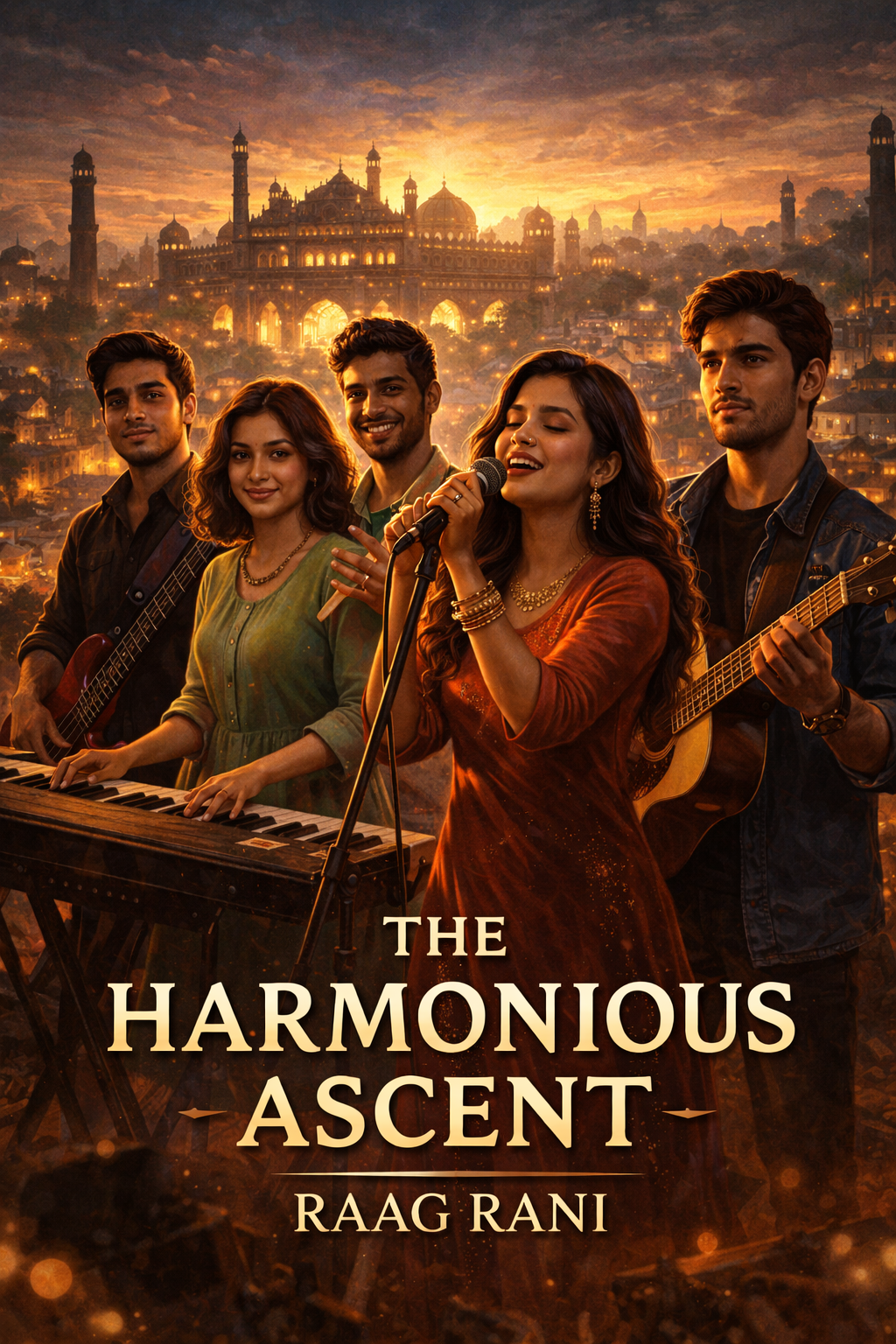
In the vibrant city of Lucknow, where echoes of history blend seamlessly with the elegance of modern life, a group of young musicians began their journey in a small, dimly lit room tucked away in a narrow alley. The band, known as Raag Rani, was formed by five friends bound by an unyielding passion for music. Each came from humble beginnings, yet their dreams soared high—like kites dancing in the sky during Makar Sankranti.
The band members were an eclectic mix, each bringing a distinct voice to their shared sound. Arjun, the guitarist, had a gift for weaving intricate melodies. Raised on his grandmother’s stories, he often found himself strumming an old guitar, imagining a stage bathed in light and applause. Meera, the lead vocalist, possessed a voice that could stir the soul. Her love for music began in childhood, singing folk songs at local gatherings. Vikram, the drummer, carried rhythm in his veins—his beats echoing the pulse of Lucknow itself. He had learned on makeshift drums fashioned from pots and pans, transforming the ordinary into instruments of joy. Then there was Leela, the keyboardist, who effortlessly fused classical undertones with modern soundscapes, guided by her formal training and fearless experimentation. Finally, Ravi, the bassist, was the quiet anchor of the group, his deep, steady grooves inspired by the rhythm of everyday life in the bustling streets around him.
Their rehearsals unfolded in that modest room, where dreams lingered in the air alongside the comforting aroma of chai. Night after night, their music spilled into the alley, drawing curious listeners who paused to soak in the sound. Every note they played carried their struggles, hopes, and the vibrant cultural essence of Lucknow. Their music became a seamless blend of tradition and modernity—a reflection of who they were.
As weeks turned into months, Raag Rani began to earn recognition within their community. They performed at small gatherings, weddings, and local festivals, gradually building a loyal audience. Their performances brimmed with energy, leaving listeners captivated and wanting more. Yet the journey was far from easy. Financial limitations often stood in their way, restricting access to better instruments and wider promotion. Still, their resolve only strengthened. They organized community events, inviting other local talents, transforming simple gatherings into celebrations of music and unity.
One fateful day, a renowned music producer, Nagendra Singh, happened to pass through their alley. Drawn by the haunting beauty of their sound, he followed the music to its source. What he discovered was raw, unfiltered talent—deeply rooted in culture and authenticity. Impressed, he approached the band after their rehearsal, expressing his desire to work with them. That encounter became a turning point, unlocking doors they had once only dreamed of.
With Singh’s guidance, Raag Rani began refining their sound and recording their debut album. The studio brought both excitement and pressure. There were moments of doubt—fears of losing the essence that made them unique. But they stayed grounded, reminding themselves that every lyric and melody was born from their lived experiences. They refused to compromise their authenticity.
Their album, Melodies of Lucknow, became a heartfelt tribute to their journey and their city. Its tracks painted vivid pictures of bustling markets, tranquil gardens, and vibrant festivals. Upon release, the album resonated far beyond Lucknow. Social media buzzed with praise, and soon the band found themselves performing at major concerts and music festivals across the country.
Despite their growing fame, they remained rooted. They frequently returned to the same alley where it all began, hosting free performances as a tribute to their beginnings. They inspired aspiring musicians, sharing their story and encouraging others to pursue their dreams—no matter how distant they might seem.

As opportunities expanded, so did the challenges. Offers from brands and sponsors poured in, many promising lucrative rewards. But Raag Rani chose carefully, aligning only with those who respected their values. For them, music was more than a career—it was a force for connection and change.
Then came an invitation that felt almost surreal: an international music festival in Europe. It was a dream realized, yet daunting. They had never traveled beyond India, and the thought of performing on a global stage was overwhelming. Still, they embraced the challenge, stepping into a new chapter of their journey.
The festival became a whirlwind of experiences—meeting artists from across the world, exchanging ideas, and building connections through music. When they finally took the stage, their performance was electric. Blending Indian classical influences with contemporary rhythms, they bridged cultures effortlessly. As their final note faded into the night, the audience rose in a thunderous standing ovation. In that moment, they understood something profound: their journey was not just about success, but about the bonds they created through music.
When they returned to Lucknow, they were welcomed like heroes. Their community celebrated their achievements, but more importantly, the band felt a renewed sense of purpose. They continued to create, each song carrying forward their story. They hosted workshops, mentored young musicians, and nurtured a growing community of dreamers.
Years later, standing on the balcony of their old rehearsal space, overlooking the lively streets of Lucknow, they reflected on how far they had come. From a dimly lit alley to stages across the world, Raag Rani had turned dreams into reality. More than that, they had inspired countless others to believe in their own journey.
Their music remained a harmonious ascent—an echo of hope, resilience, and the courage to dream.