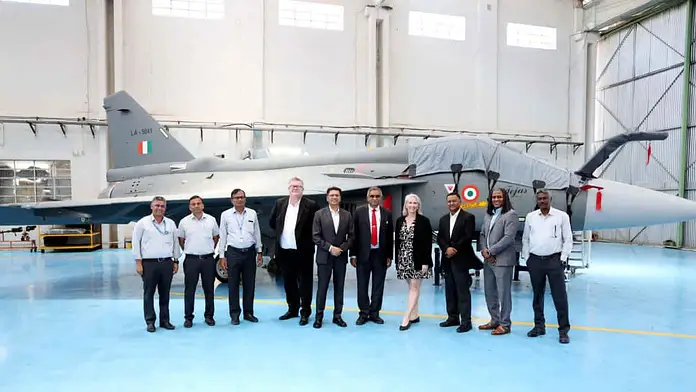
New Delhi/Bengaluru |A crucial meeting between GE Aerospace and Hindustan Aeronautics Limited (HAL) was held in Bengaluru to address delays in engine deliveries for India’s indigenous HAL Tejas Mk1A fighter jet programme.
The high-level GE delegation, led by Vice President Rita Flaherty, met HAL Chairman and Managing Director Dr. D. K. Sunil and senior officials to review progress and identify solutions to ongoing supply challenges.
Engine Delays Impact Production
The primary concern discussed was the delayed supply of F404 engines, which power the Tejas Mk1A jets. HAL had placed an order for 99 engines in 2021 to support the production of 83 aircraft. However, only six engines have been delivered so far, significantly affecting the production schedule.
Expectations to receive five additional engines by March 2026 were not met, further compounding delays. As a result, several Tejas Mk1A aircraft are fully assembled but remain grounded due to the absence of engines.
Despite these challenges, the Tejas fleet resumed flying operations on April 8 after nearly two months of limited activity.
Supply Chain Issues Behind Delays
Sources indicate that global supply chain disruptions, lingering since the COVID-19 pandemic, have played a major role in slowing manufacturing and logistics. Complex export procedures and international shipment timelines have also contributed to the delays.
HAL Imposes Penalties
Taking a firm stance, HAL has begun imposing contractual penalties, or liquidated damages, on GE Aerospace for delayed deliveries. The move is aimed at ensuring accountability and expediting future shipments.

During the meeting, both sides reviewed delivery timelines and discussed ways to accelerate supply. GE Aerospace has assured HAL that around 20 engines are expected to be delivered between June and December 2026, which could provide much-needed relief to the programme.
Impact on Indian Air Force Plans
The delays have had a cascading effect on the entire production line. Multiple aircraft, though structurally complete and tested, are awaiting engines before they can be cleared for induction into the Indian Air Force.
The Tejas Mk1A is a critical component of the Air Force’s modernization plan, intended to replace aging fighter jets and enhance combat capabilities.
F414 Engine Programme Also Reviewed
The meeting also touched upon the more advanced F414 engine programme, which is slated to power the future Tejas Mk2 variant. Discussions around transfer of technology (ToT) remain ongoing, with India seeking greater domestic manufacturing capabilities as part of its self-reliance push.
Long-Term Partnership Under Focus
The collaboration between GE Aerospace and HAL has been central to the Tejas programme. While no new agreements were announced, the meeting focused on resolving existing bottlenecks and ensuring smoother execution going forward.
Officials emphasized close monitoring of deliveries in the coming months, as timely engine supply remains crucial to keeping the Tejas Mk1A programme on track.