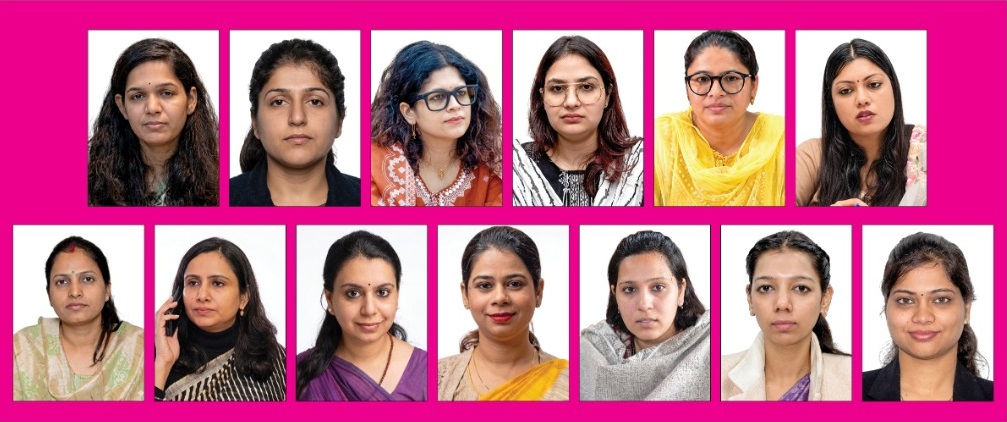
Lucknow: Uttar Pradesh is witnessing a notable administrative transformation under the leadership of Yogi Adityanath, as women officers increasingly take charge of key district-level roles. Following a major reshuffle involving 86 IAS officers, 13 out of the state’s 75 districts are now headed by women District Magistrates (DMs). This rise in representation is not merely symbolic—it reflects a conscious push toward gender-balanced governance, efficiency, and people-centric administration.
At the forefront is Medha Roopam, the District Magistrate of Noida. A 2014-batch IAS officer, she became the first woman DM of Noida in August 2025. With an academic background in Economics from St. Stephen’s College and experience as a national-level rifle shooter, Medha brings both discipline and strategic thinking to governance. Her administrative journey spans Bareilly, Meerut, Unnao, Lucknow, Barabanki, Hapur, and Kasganj. In Noida, she now oversees complex urban challenges such as industrial growth, labour management, and law and order.

Another inspiring figure is Priyanka Niranjan, DM of Gonda. A 2012-batch officer, she secured an All India Rank of 20 after several attempts, demonstrating remarkable perseverance. Known for her firm and result-oriented approach, she has previously served as DM in Jalaun, Basti, and Mirzapur, consistently delivering impactful governance.
In Bijnor, Jasjeet Kaur (2012 batch) is recognized for her disciplined administrative style. With experience in the National Health Mission and leadership roles in districts like Shamli and Sultanpur, she brings both policy and field expertise. Similarly, Divya Mittal, DM of Deoria, left a lucrative career in London to serve the country. A 2012-batch officer, she has held key positions including DM of Sant Kabir Nagar and Mirzapur, showcasing dedication to public service.
Kritika Jyotsna, DM of Basti, secured AIR 30 after multiple attempts and later transitioned to the UP cadre. Her diverse experience includes roles in Jammu & Kashmir deputation and senior positions in excise and food departments. In Baghpat, Asmita Lal (2015 batch) is known for her empathetic and sensitive governance style, often highlighted for her human-centric approach.
Among top achievers is Nidhi Gupta Vats, DM of Fatehpur, who secured AIR 3 in the UPSC examination. Her administrative experience ranges from municipal governance in Bareilly to district leadership in Amroha. Ghazal Bhardwaj (2016 batch), DM of Mahoba, is known for ensuring effective last-mile delivery of government schemes, particularly in rural areas.

Recent appointments include Annapurna Garg in Shravasti and Kavita Meena in Hapur, both known for disciplined and result-driven administration. Isha Priya now leads Ambedkar Nagar, bringing valuable experience from tourism and district-level roles.
In Rae Bareli, Sarneet Kaur Broka, an IIT Delhi graduate, has made notable contributions in women and child welfare, nutrition, and public service delivery systems. Completing this inspiring list is Dr Ankur Lather, DM of Farrukhabad. A former doctor from AIIMS Delhi, her journey from medicine to civil services highlights determination and a deep commitment to national service.
This growing presence of women in leadership roles marks a shift from traditional administrative patterns. Currently, women account for around 16% of DMs in Uttar Pradesh, with plans to increase representation further—possibly up to 33% in the coming years. With nearly half of the state’s electorate being women, this move aligns governance with demographic realities and strengthens trust among citizens.
Beyond numbers, these officers are redefining governance through a blend of firmness, empathy, transparency, and efficiency. Whether managing industrial districts like Noida or addressing developmental challenges in regions like Shravasti, they are ensuring that policies translate into real impact on the ground.
The rise of these 13 women District Magistrates is not just an administrative update—it is a powerful narrative of resilience, merit, and change. Their journeys—from overcoming failures to balancing personal and professional challenges—serve as inspiration for aspiring civil servants across the country. As Uttar Pradesh moves toward a more inclusive administrative framework, these women leaders stand at the forefront, shaping a governance model that is both effective and equitable.











 https://www.youtube.com/watch?si=RtToJsBhYBatUrym&v=mOuYNSdhjHA&feature=youtu.be