By Arvind Singh Bisht
The nationwide students’ agitation over the NEET paper leak will be remembered for exposing more than the vulnerabilities of India’s examination system. It also exposed a deeper crisis—the changing role of sections of the mainstream and social media in a democracy.
The issue before the nation was simple. Had the integrity of a national examination, on which the future of lakhs of students depended, been compromised? Yet, instead of pursuing this fundamental question, sections of the media chose another path. The debate gradually shifted from the credibility of the examination system to the credibility of the agitation itself.
From the very outset, several narratives were advanced. Some described the agitation as a foreign-funded attempt to malign India’s image. Others hinted at Chinese involvement. Still others dismissed it as a politically engineered campaign designed to create disorder. Instead of examining the allegations of paper leak and institutional failure, considerable energy was spent questioning the motives of those demanding accountability.
The demand for the resignation of Union Education Minister Dharmendra Pradhan also became the subject of animated television debates. Many commentators argued that accepting such a demand would establish an undesirable precedent. Whether one agreed with that demand or not, the larger issue remained unanswered. Should public debate not have centred first on the credibility of the examination process before evaluating its political consequences?
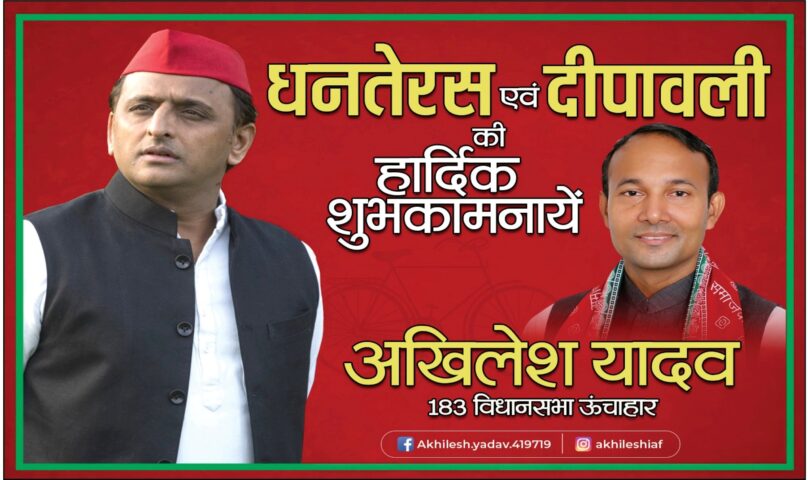
An equally disturbing feature of the debate was the tendency to portray the entire agitation through the prism of partisan politics. Considerable attention was devoted to the role of Opposition leaders, particularly Rahul Gandhi and Akhilesh Yadav, as though their support had somehow diminished the legitimacy of the students’ concerns.
This approach reflects a fundamental misunderstanding of parliamentary democracy. Governments govern, but the Opposition exists to question governments and articulate public grievances. If political parties raise issues affecting millions of students, the media’s responsibility is not to speculate about political motives but to examine the merits of those issues. Journalism should investigate facts, not prejudge intentions.
This experience compelled me to ask a disturbing question: Has Indian journalism begun to confuse the defence of governments with the defence of the nation?
Having spent more than four decades in journalism—from the era of hot-metal printing to satellite television and now the age of social media—I have witnessed the remarkable transformation of the Indian press. I have seen journalism when it regarded itself as a public trust, and I have also seen it increasingly becoming a contest of narratives. Never before has this transformation appeared more visible than during the NEET agitation.
The media is often described as the fourth pillar of democracy. Yet freedom of expression neither originated with democracy nor with written constitutions. It is an inherent human freedom—one of nature’s greatest gifts. Democracy merely provides the institutional framework within which that freedom flourishes. But every freedom carries an equal responsibility. Freedom without responsibility ultimately degenerates into licence.
The institution of journalism has travelled a long historical journey. From the Acta Diurna of ancient Rome to today’s digital platforms, its essential purpose has remained unchanged—to inform society truthfully and enable citizens to make informed choices. Technology has transformed communication, but it has not altered journalism’s moral obligation.
In India, journalism earned its noblest place during the freedom movement. Newspapers became the voice of millions who possessed neither wealth nor political power. They inspired ordinary Indians to challenge colonial rule and awaken the national conscience. Journalism was then a mission before it became a profession.
Many of the architects of India’s freedom struggle—Mahatma Gandhi, Jawaharlal Nehru, Madan Mohan Malaviya, Ganesh Shankar Vidyarthi, Atal Bihari Vajpayee and countless others—were journalists at different stages of their lives. They understood that journalism derives its authority not from proximity to power but from the confidence of the people.

Independent India has witnessed extraordinary political, economic and technological transformation. Newspapers multiplied. Television revolutionised communication. Digital media erased geographical barriers. Social media converted every smartphone into a printing press and every citizen into a publisher.
This democratisation of communication is undoubtedly a remarkable achievement. Yet it has also produced an unintended consequence. Information has become limitless, but credibility has become scarce. Today, rights are asserted with increasing vigour, but responsibilities are often forgotten. Sections of the mainstream media function under intense commercial pressures where ratings, advertising revenue and competition frequently overshadow editorial judgment. Journalism increasingly risks becoming a business before remaining a public service.
Social media has magnified this challenge. It has democratised expression, but it has also legitimised instant opinions without verification, editorial restraint or accountability. Every smartphone owner today is a publisher. Truth competes with rumour, facts with forwarded messages, and evidence with manufactured perceptions. Social media rewards speed over accuracy, outrage over reason, and sensation over substance.
The greatest casualty of this transformation is public trust.
Unfortunately, a growing tendency has emerged in which every public issue is immediately viewed through the prism of political advantage. Before facts are established, conclusions are announced. Before investigations are completed, motives are assigned. Public discourse is increasingly shaped by perception rather than evidence.
This is dangerous because perception has become the most powerful political weapon of our times. Facts demand proof; perceptions demand only repetition. Repeated often enough, perceptions begin to masquerade as truth.
The distinction between journalism and propaganda has always been simple. Journalism asks difficult questions of those in authority. Propaganda asks difficult questions of those who question authority. The two must never be confused.
I still remember a conversation with the late Vishnukant Shastri, former Governor of Uttar Pradesh. Reflecting on the changing character of journalism, he remarked: “During the freedom movement, journalism was a mission; later it became a profession; today much of it has become a nuisance.” At that time the observation appeared harsh. Today it sounds remarkably prophetic.
A similar concern was once expressed to me by senior Samajwadi Party leader Shivpal Singh Yadav. He remarked, “Earlier we used to read newspapers; today we merely look at them.” His comment was not about literacy but about substance. Presentation has increasingly overtaken content, and sensation often substitutes for thoughtful analysis.
The NEET agitation will eventually become history. The controversy over the paper leak will pass. Governments will change. Ministers will come and go. Political parties will continue their endless contest for power. But one question will remain.
Did journalism stand with truth, or did it stand with a narrative?
The answer to that question will determine not merely the reputation of the media but also the health of Indian democracy. Democracies are not weakened because governments commit mistakes. They are weakened when institutions entrusted with questioning those mistakes begin to rationalise them.
A democracy certainly requires a strong government. It equally requires a vigilant Opposition. But above all, it requires an independent media that fears neither government nor Opposition and remains answerable only to truth.
History judges governments by the manner in which they exercise power. It judges the Opposition by the issues it chooses to raise. But it judges the media by an even higher standard—its fidelity to truth. The day the watchdog begins to guard power instead of the people, democracy may continue to exist in form, yet it begins to lose its soul.













 https://www.youtube.com/watch?si=RtToJsBhYBatUrym&v=mOuYNSdhjHA&feature=youtu.be