New Delhi: India has moved a step closer to a major expansion of its naval capabilities, with the Ministry of Defence completing internal procurement procedures for two submarine acquisition programmes worth a combined Rs 1.11 lakh crore. The proposals are now awaiting final approval from the country’s top political leadership, including the Cabinet Committee on Security (CCS).
Defence Secretary Rajesh Kumar Singh confirmed the development while speaking at the ANI National Security Summit 3.0 in New Delhi.
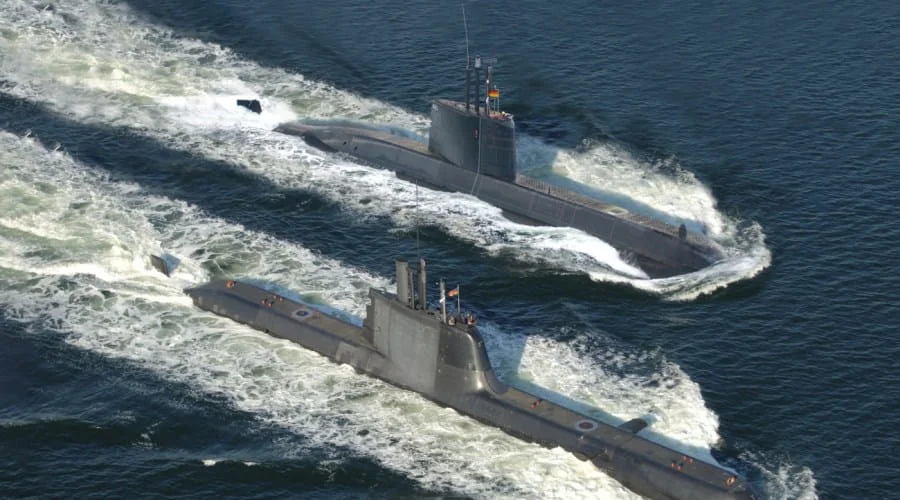
The proposed acquisitions involve nine conventional submarines under two separate programmes aimed at strengthening the Indian Navy’s underwater warfare capabilities.
The larger project, Project-75(I), is estimated to cost around Rs 75,000 crore. Under the proposed arrangement, Germany’s Thyssenkrupp Marine Systems (TKMS) will partner with Mumbai-based Mazagon Dock Shipbuilders Limited (MDL) to manufacture six advanced conventional submarines in India. The programme is expected to facilitate technology transfer and strengthen the country’s domestic defence manufacturing capabilities.
The second proposal, valued at approximately Rs 36,000 crore, involves the construction of three additional Scorpene-class submarines. The plan seeks to use MDL’s existing production infrastructure, which was earlier employed to manufacture Scorpene submarines, allowing the Navy to induct additional vessels without waiting for a new production facility.
The submarine expansion comes amid growing naval competition in the Indian Ocean Region, particularly with Pakistan inducting Chinese-built Hangor-class submarines. The proposed acquisitions are expected to strengthen India’s underwater deterrence and maintain its maritime capabilities.


Alongside new acquisitions, the Defence Ministry is working to upgrade the existing submarine fleet through indigenous technology development, improved sonar systems and faster procurement of critical equipment, including torpedoes.
One of the key initiatives is the SONAR Engineering Assembly, Test and Evaluation Centre (SEATEC) in Kochi, which is intended to improve India’s domestic sonar testing and evaluation capabilities.
Singh also referred to the lessons from Operation Sindoor in 2025, stressing that future military conflicts will involve conventional warfare, cyber operations and threats to critical infrastructure. He underlined the need for stronger domestic manufacturing, operational preparedness and coordination among the armed forces.
The government is also progressing with a formal report on Mission Sudarshan Chakra, which envisages an integrated air defence framework incorporating systems such as Kusha, S-400 and Akash to protect Indian airspace against emerging aerial threats.












 https://www.youtube.com/watch?si=RtToJsBhYBatUrym&v=mOuYNSdhjHA&feature=youtu.be