Rs 1,425 crore worth of projects launched to boost heritage conservation, tourism and local employment beyond Ayodhya, Varanasi and Mathura
LUCKNOW: Uttar Pradesh is expanding its tourism development strategy beyond established destinations such as Ayodhya, Varanasi and Mathura, with projects worth approximately Rs 1,425 crore initiated at 97 lesser-known heritage sites across 35 districts between 2021-22 and 2025-26.

Under Chief Minister Yogi Adityanath’s leadership, the state is focusing on religious, historical, literary and natural attractions that have remained outside the mainstream tourism circuit. The initiative aims to improve infrastructure, preserve local heritage, provide better visitor facilities and create new economic opportunities for surrounding communities.
One of the major projects is underway at Bateshwar in Agra district, where nine projects involving an investment of more than Rs 200 crore are planned. Located along the Yamuna, the ancient temple complex is also associated with the ancestral roots of former Prime Minister Atal Bihari Vajpayee. Development works cover temple conservation, ponds, riverfront ghats, lighting and tourist amenities.
In Varanasi, tourism is being diversified beyond the Kashi Vishwanath Temple and the Ganga ghats. A project worth more than Rs 17 crore aims to develop Chandrawati, regarded as the birthplace of Jain Tirthankara Chandraprabhu. Meanwhile, Munshi Premchand’s ancestral home in Lamhi is being developed as a museum to highlight the region’s literary heritage.
Tourism Minister Jaiveer Singh said Mathura’s tourism circuit would also incorporate the conservation and eco-tourism development of Jodhpur Jhal. In Prayagraj, the Nishadraj Park at Shringverpur is expected to showcase the traditional association between Lord Ram and Nishadraj.
Amethi district is witnessing three projects worth around Rs 35 crore to promote Jais, known for its association with Sufi poet Malik Muhammad Jayasi and the spiritual traditions linked to Guru Gorakhnath.
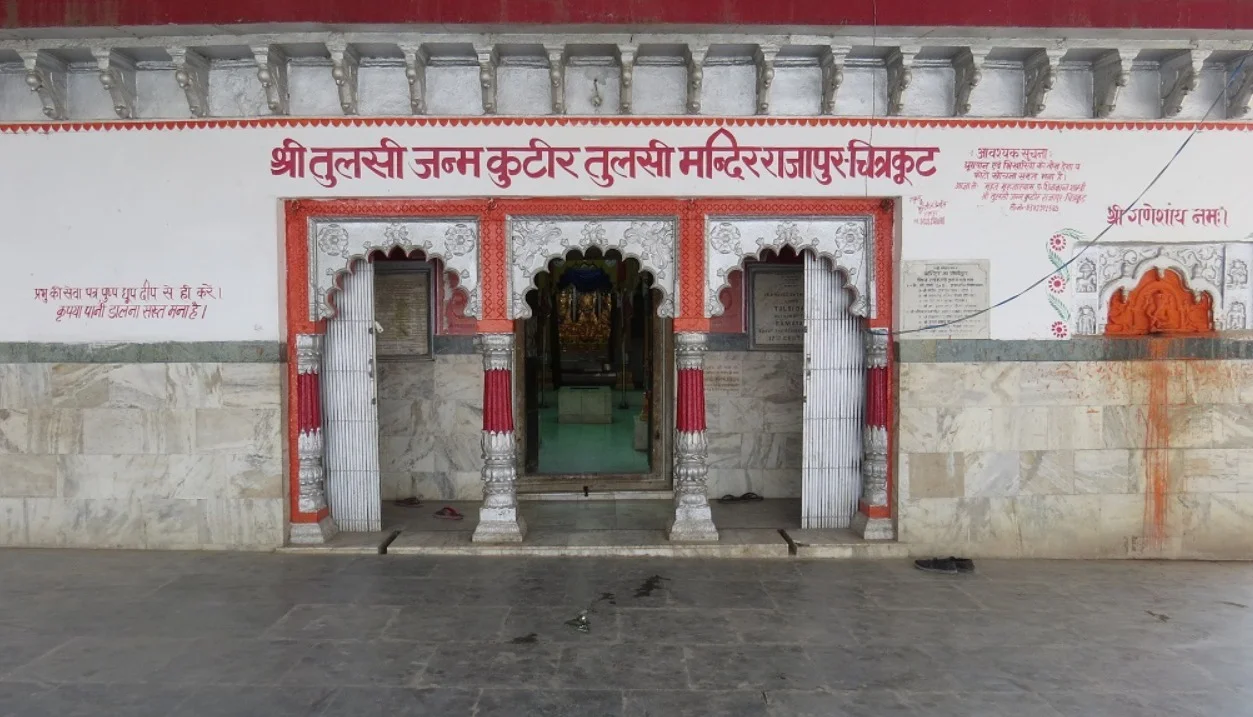
In Chitrakoot, development is extending beyond Ramghat and Kamadgiri to include the Maharishi Valmiki Ashram at Lalapur, the birthplace of Tulsidas in Rajapur, and the Shri Ram Vatika Eco Park near Ganesh Bagh.
Other destinations receiving attention include Maharishi Bhrigu Ashram in Ballia, Baba Keenaram Aghor Peeth in Chandauli and the birthplace of Paramahansa Yogananda in Gorakhpur, where two projects worth approximately Rs 47 crore have been taken up.
The initiative also covers Buddhist heritage and nature-based tourism. In Maharajganj, Ramgram and Devdaha are being developed to broaden the Buddhist tourism circuit beyond established destinations such as Sarnath, Kushinagar and Shravasti.

In Mahoba, Gorakhgiri Hill and a proposed Sun Temple Interpretation Centre will connect archaeology, yoga traditions and astronomical knowledge. A planetarium planned within the Sun Temple complex is expected to offer educational experiences for children and families.
Kannauj’s Gugrapur is another focus area, with a project worth Rs 81.35 lakh at Chyavan Rishi Ashram linking the region’s traditional knowledge of Ayurveda with its cultural and religious heritage.
The state is also developing the Vedaryanyam project at Naimisharanya in Sitapur, with an allocation of Rs 14.09 crore. The initiative envisages dedicated experience zones associated with the Rigveda, Yajurveda, Samaveda and Atharvaveda, incorporating medicinal plants, yoga, meditation, music and traditional learning.
To encourage grassroots participation, the Chief Minister’s Tourism Development Participation Scheme allows MPs, MLAs, local bodies, trusts, institutions and other eligible stakeholders to propose projects for religious, historical, cultural and natural attractions in their areas.
Under the scheme, eligible projects costing between Rs 25 lakh and Rs 5 crore can receive financial assistance covering up to 50 per cent of the eligible project cost. Larger projects are taken up under other state tourism programmes.
Jaiveer Singh said the objective was to ensure that tourism benefits reached destinations beyond the established centres and generated employment for local guides, artisans, transport operators, hospitality businesses and small entrepreneurs.
Amrit Abhijat, Additional Chief Secretary for Tourism, Culture and Religious Affairs, emphasised that developing a destination required more than construction. Accessibility, visitor amenities and effective communication of a site’s history were equally important.
Accordingly, the government is focusing on digital information, mapping, themed tourism circuits, QR-code-based guides and multilingual content to help visitors discover literary villages, Buddhist sites, traditional knowledge centres and natural attractions.
The broader strategy seeks to give lesser-known heritage destinations greater visibility while strengthening conservation, supporting local livelihoods and distributing the economic benefits of tourism more widely across Uttar Pradesh.