Lucknow: Uttar Pradesh Deputy Chief Minister Keshav Prasad Maurya strongly endorsed the ‘One Nation, One Election’ proposal, describing it as a national necessity that would reduce the economic burden of frequent elections, strengthen democratic governance and accelerate development across the country.
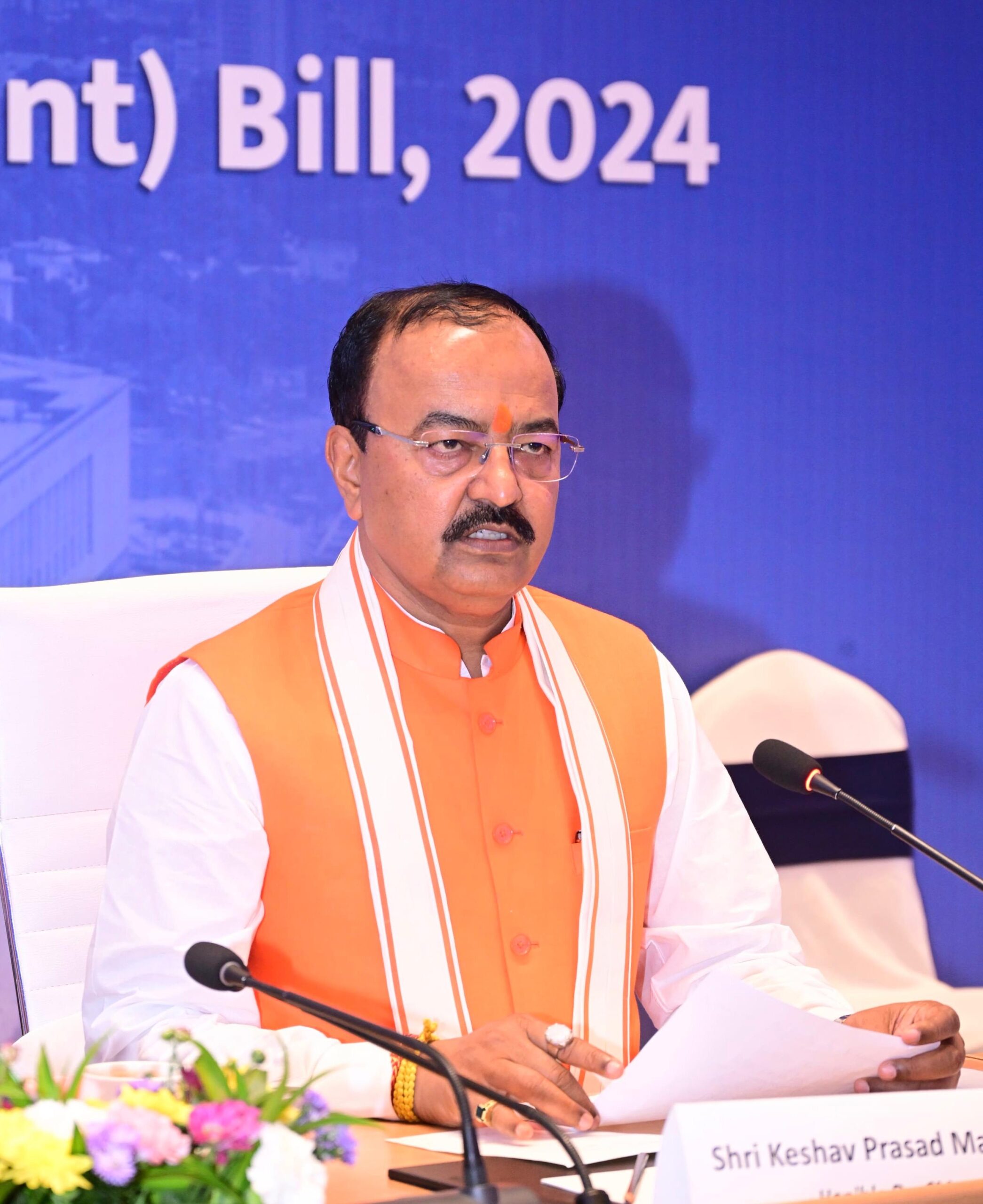
Maurya shared his views during a discussion held at a study visit of the Joint Parliamentary Committee (JPC) constituted to examine the Constitution (129th Amendment) Bill, 2024 and the Union Territories Laws (Amendment) Bill, 2024. The meeting, held at Hotel Taj in Gomti Nagar, Lucknow, was chaired by P.P. Chaudhary, Chairman of the Uttar Pradesh State Committee on ‘One Nation, One Election’.
Addressing the committee, Maurya said the recommendations of the high-level committee headed by former President Ramnath Kovind would make India’s democratic framework more efficient, accountable and resource-efficient. He reaffirmed the Uttar Pradesh government’s full support for the proposal, stating that simultaneous elections would further strengthen democratic processes while ensuring better utilisation of public resources.
The Deputy Chief Minister noted that repeated elections impose a significant financial burden on both the Centre and the states. He said prolonged deployment of administrative machinery, police personnel and security forces for election duties often disrupts governance and slows development projects. Holding Lok Sabha and State Assembly elections simultaneously, he said, would minimise these disruptions and allow governments to focus on implementing welfare and infrastructure initiatives without frequent interruptions.
Maurya highlighted that the Constitution (129th Amendment) Bill, 2024, and the Union Territories Laws (Amendment) Bill, 2024, provide the constitutional framework necessary to implement simultaneous elections. He explained that the proposed insertion of Article 82A would establish a constitutional mechanism for conducting Lok Sabha and State Assembly elections together, with the President notifying a designated date for synchronising their terms. The proposal also empowers the Election Commission of India to conduct simultaneous general elections while allowing it to recommend deferred elections in exceptional cases.
He further stated that the proposed amendments to Articles 83 and 172 would ensure that if the Lok Sabha or any State Legislative Assembly is dissolved before completing its term, the newly elected House would serve only the remainder of the original term. This, he said, would help maintain a common election cycle in the future.

Recalling India’s electoral history, Maurya pointed out that from 1951 to 1967, Lok Sabha and State Assembly elections were conducted simultaneously, demonstrating that the concept is rooted in India’s democratic tradition rather than being a new experiment. He said the system was disrupted over time due to various political developments but added that the country is now ready to restore the practice.
Referring to recent electoral experiences, Maurya said the Election Commission had successfully conducted elections in West Bengal in two phases and efficiently managed elections in other states with improved voter participation. He also cited increased voter engagement in states where Special Intensive Revision (SIR) of electoral rolls had been undertaken, saying these examples showed that India’s electoral system could become more organised and effective.
Expressing gratitude to Prime Minister Narendra Modi for championing the ‘One Nation, One Election’ vision, Maurya described the initiative as a historic reform aligned with the goal of building a Viksit Bharat. He said the proposal would make India’s democratic system more transparent, effective and citizen-centric while promoting stable governance and sustained development.
The Deputy Chief Minister also outlined the adverse effects of frequent elections, noting that teachers are regularly assigned election duties, affecting classroom education, while repeated deployment of police, security personnel and government officials impacts law and order, delays development works and increases expenditure for state governments.
Concluding his address, Maurya said simultaneous elections would strengthen democratic institutions, bring greater stability to governance, reduce administrative and financial burdens, ensure more efficient use of public resources and accelerate the implementation of development programmes. He expressed confidence that the initiative would receive widespread public support and play a significant role in making India a stronger, more prosperous and better-governed nation.













 https://www.youtube.com/watch?si=RtToJsBhYBatUrym&v=mOuYNSdhjHA&feature=youtu.be