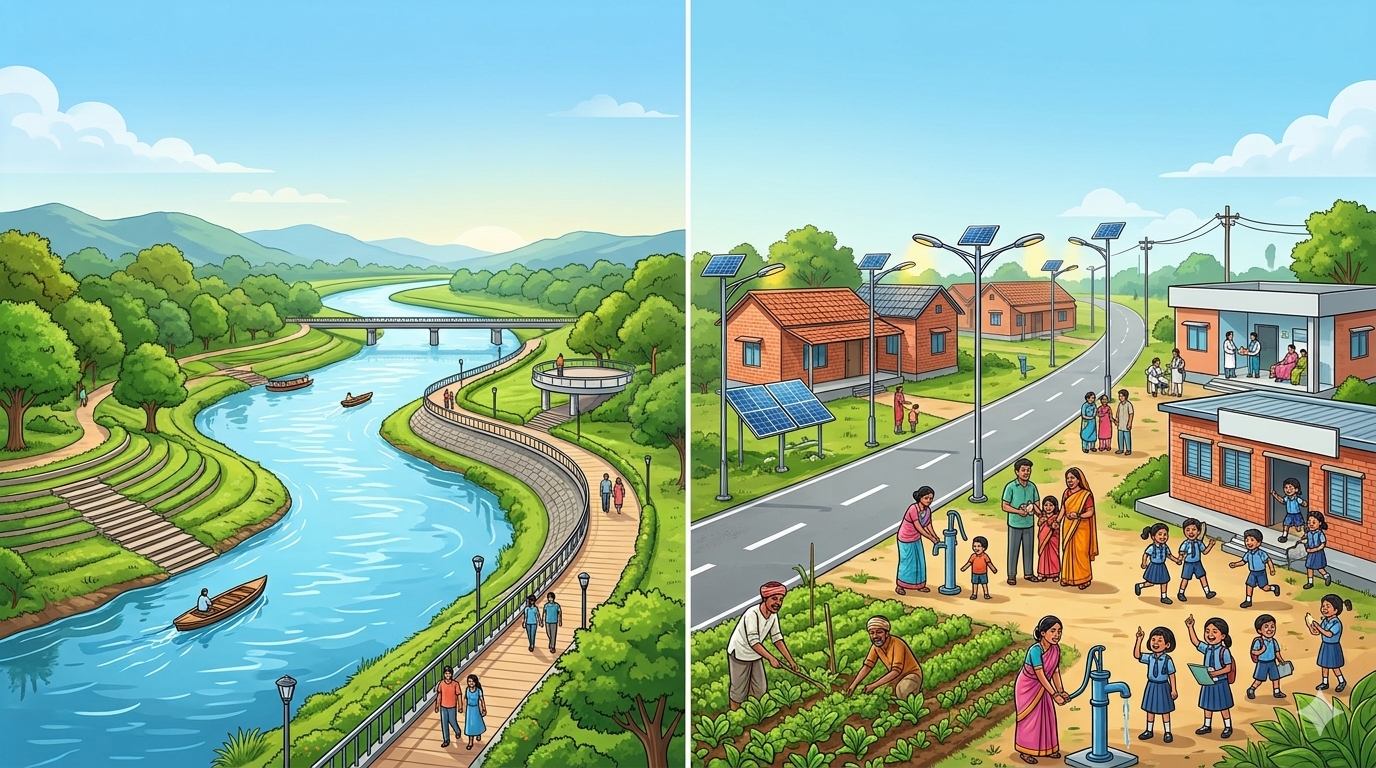
Balrampur: A comprehensive development initiative is being implemented in 25 gram panchayats located along the Saryu River in Balrampur district, Uttar Pradesh, with the aim of strengthening basic infrastructure, improving public services and raising the standard of living in rural areas that have long faced developmental challenges.
In line with the state government’s priorities, the district administration has drawn up an integrated development plan for these riverine villages, which have historically faced floods, riverbank erosion and seasonal waterlogging. Development priorities have been identified according to the geographical and social needs of each panchayat to ensure that benefits reach families at the grassroots level.
A multi-tier financial framework has been established to accelerate implementation. Around ₹35 lakh has been earmarked at the gram panchayat level, ₹30 lakh at the district level, ₹20 lakh at the tehsil level, ₹15 lakh at the block level and up to ₹10 lakh through other departmental resources. Funds from Central and State Finance Commission allocations are being combined with various government schemes to ensure adequate resources and timely completion of projects.
Road connectivity is a major component of the initiative. Rural roads are being strengthened to connect settlements along the river basin with main roads, while internal village roads are being developed through interlocking tiles and concrete construction. Drainage channels are also being built to address waterlogging and disruption of connectivity during the monsoon.
Under the Jal Jeevan Mission, efforts are underway to provide tap water to every household. Overhead water tanks and pipeline networks are being developed to ensure access to safe drinking water and protect residents from groundwater contamination and waterborne diseases.
The Swachh Bharat Mission (Gramin) is being implemented across all 25 panchayats, with emphasis on solid and liquid waste management. Community sanitation complexes, individual toilets, soak pits and waste segregation centres are being developed to improve public health and environmental cleanliness.
Government primary schools are also undergoing comprehensive improvements under Operation Kayakalp. The works include boundary walls, separate toilets for boys and girls, drinking water facilities, electrification, tiled floors and modern furniture. Smart classrooms and libraries are being promoted to expand access to digital education.
To improve healthcare access, primary health sub-centres and Health and Wellness Centres are being equipped with modern facilities. Arrangements for routine immunisation, maternal and child healthcare and emergency first aid are being strengthened. Special mobile medical teams have also been deployed to prevent infectious diseases during periods of rising river water levels.

Measures to reduce the impact of floods and soil erosion include repairs to embankments, cleaning of drainage channels and large-scale plantation along vulnerable riverbank areas. These interventions are intended to protect agricultural land and reduce the risks faced by farmers during natural disasters.
The National Rural Livelihood Mission is being used to strengthen the rural economy by supporting women’s self-help groups. Women are being connected with traditional handicrafts, food processing, dairy activities and cottage industries through technical training and financial assistance, creating additional livelihood opportunities and improving household incomes.
For farmers, the administration is promoting improved agricultural practices, crop diversification and natural farming. Better distribution of water through subsidiary channels of the Saryu Canal Project, access to quality seeds, plant protection chemicals and micro-irrigation facilities are among the measures being pursued. The formation of Farmer Producer Organisations (FPOs) is also being encouraged to help farmers secure better prices for their produce.
The Gram Sachivalaya system has been strengthened to make panchayat administration and public services more accessible and transparent. Equipped with computers and internet facilities, panchayat buildings are providing services through panchayat assistants, including land records, income, caste and residence certificates, as well as pension-related assistance. The arrangement is intended to reduce the need for villagers to travel repeatedly to tehsil and block offices.
The district administration has introduced a monitoring mechanism to ensure the timely execution and quality of development works. Geo-tagging and digital portals are being used for real-time monitoring, while surprise inspections, technical assessments and social audits during public meetings are intended to ensure transparency and accountability in the use of funds.
Through coordination between Central and State government schemes, the initiative aims to bring improvements in infrastructure, public services, social inclusion and economic self-reliance across the 25 gram panchayats. The administration is positioning the programme as a model of integrated rural development along the Saryu River, with public participation forming an important part of its implementation.








 https://www.youtube.com/watch?si=RtToJsBhYBatUrym&v=mOuYNSdhjHA&feature=youtu.be