134 Poor Families Get Permanent Homes, While 134 Fish Farmers Adopt Scientific Practices Under UP-AGREES Project
Balrampur: Government housing initiatives and modern fish farming practices are transforming the rural economy of Uttar Pradesh’s border and aspirational district of Balrampur. Through the implementation of welfare schemes and administrative initiatives, the district is witnessing progress in both basic housing security and income generation through technology-driven fisheries.
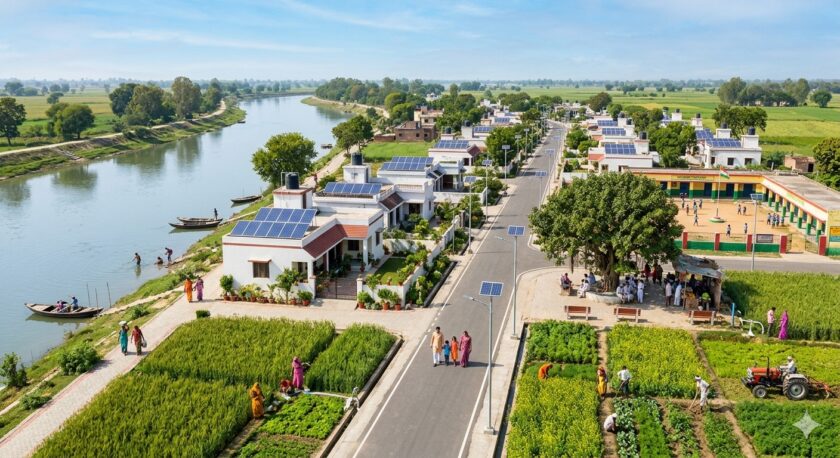
Under rural housing schemes, 134 economically weaker families have been provided permanent houses, offering them greater security against the region’s challenging geographical conditions and seasonal disasters. For families previously living in kutcha and dilapidated houses, the initiative has provided a more secure and dignified living environment.
The district administration has ensured transparency in construction through geo-tagging and Direct Benefit Transfer (DBT), with financial assistance transferred directly to beneficiaries’ bank accounts without intermediaries. The housing initiative has also been integrated with other government welfare programmes. Beneficiaries have been provided individual toilets under the Swachh Bharat Mission, clean drinking water through the Har Ghar Jal initiative, electricity connections under the Saubhagya scheme and LPG connections under the Pradhan Mantri Ujjwala Yojana.
Alongside strengthening basic social security, the district is promoting modern fisheries to expand livelihood opportunities. The UP-AGREES project, supported financially and technically by the Uttar Pradesh government and the World Bank, is introducing scientific methods and organised market systems to transform traditional subsistence-level fish farming into a commercially viable enterprise.
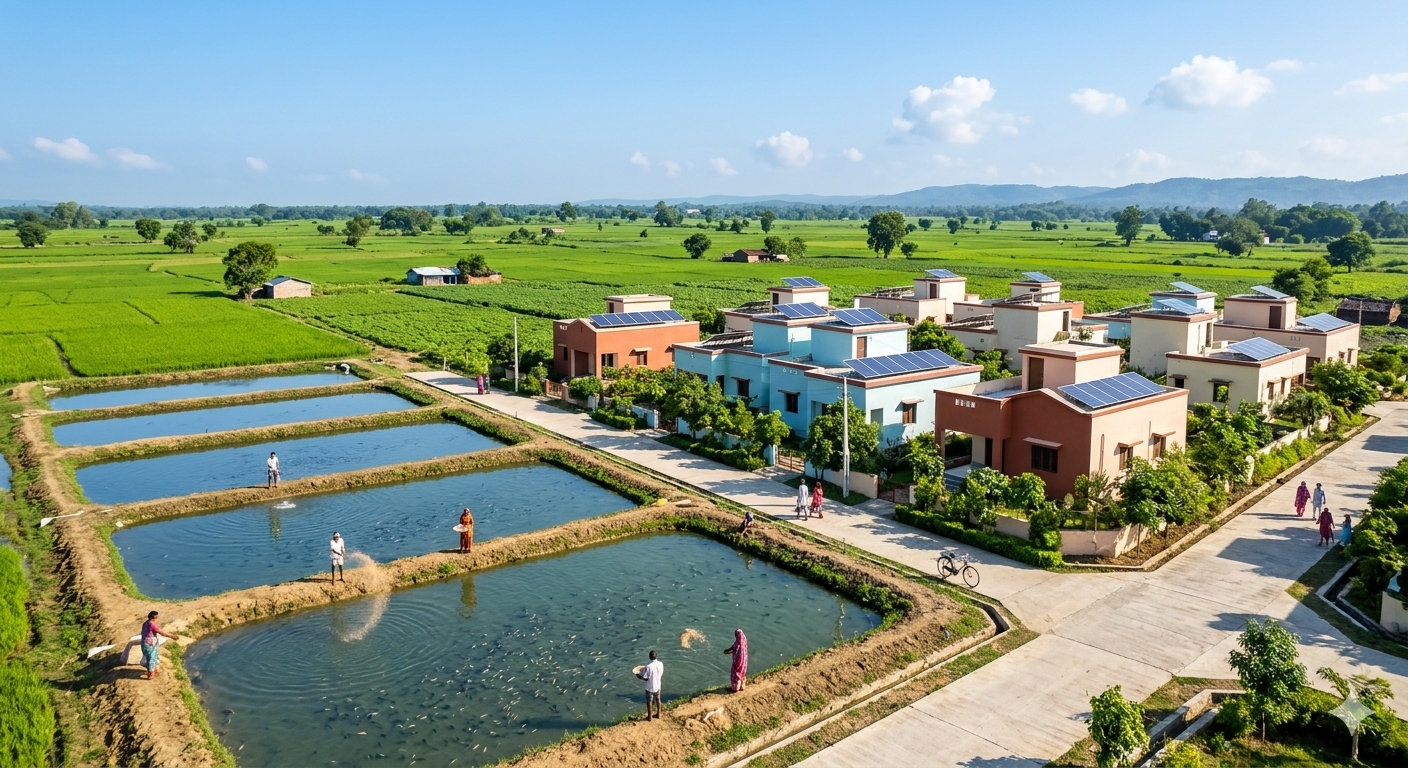
Under the initiative, 134 selected fish farmers have been organised into a cluster-based system. Ten specialised clusters have been established, each covering ponds spread across approximately 10 to 12 hectares. The model is intended to help small and marginal fish farmers overcome individual financial and infrastructure constraints by pooling resources and increasing collective production capacity.
To improve fish production and quality, farmers are being provided access to certified, high-quality fish seed. Fingerlings of indigenous species such as Rohu, Catla and Naini, suited to local climatic conditions, are being promoted. Farmers are also being encouraged to replace traditional feed with balanced, protein-rich floating feed to improve fish growth and ensure better utilisation of feed while maintaining water quality.


A key feature of the project is the use of artificial intelligence and digital monitoring systems in pond management. Sensors are being used to monitor dissolved oxygen, pH levels, ammonia and water temperature in real time, round the clock. Fish farmers receive alerts on their mobile phones whenever water conditions become abnormal, enabling timely intervention to prevent disease outbreaks and reduce fish mortality.
Scientific management and data-based monitoring are also helping reduce production costs and improve net returns per hectare.
The initiative extends beyond production to strengthening the supply chain and market access. Earlier, the absence of cold-chain facilities and the involvement of middlemen often forced farmers to sell their produce at low prices. To address this, the district administration and partner institutions are facilitating cold storage facilities, ice plants, insulated vehicles and scientific packaging at the cluster level. These arrangements are expected to connect local produce directly with regional markets as well as larger national and international markets.
The organised fisheries system is also creating direct and indirect employment opportunities for local residents. Activities such as pond management, fish seed development, feed production, grading, packaging, transportation and retail marketing are generating livelihood opportunities, particularly for rural youth. Greater access to local employment is also expected to help check migration to metropolitan cities and increase the flow of capital within the regional economy.
The combination of housing security and technology-driven livelihood initiatives is emerging as an important model of rural development in Balrampur. While 134 families have gained access to safer homes, 134 fish farmers are being equipped with scientific practices and organised market support to improve their earnings.
These initiatives, implemented under Central and state government programmes with the support of the district administration, aim to strengthen economic stability, self-reliance and inclusive growth in the district.








 https://www.youtube.com/watch?si=RtToJsBhYBatUrym&v=mOuYNSdhjHA&feature=youtu.be