New Delhi: India’s push for longer-endurance conventional submarines moved a step forward on Saturday, when the next stage of trials began for its home-grown Air Independent Propulsion (AIP) system. Phase-2 of the Setting to Work (STW-2) for the system’s energy module got under way at Larsen & Toubro’s AM Naik Heavy Engineering Complex in Hazira.
The AIP system has been developed by the Naval Materials Research Laboratory (NMRL), a DRDO lab. It is built around fuel-cell technology that reduces a submarine’s dependence on atmospheric oxygen, which could let diesel-electric boats stay submerged for as long as four weeks. The module produces hydrogen on demand, so there is no need to store the volatile gas on board, and its only byproduct is water.

Defence Secretary and DRDO Chairman Rajesh Kumar Singh launched the phase through a virtual address. Those present at Hazira included Vice Admiral B. Sivakumar, the Navy’s Chief of Materials, and Dr. R. Balamuralikrishnan, DRDO’s Director General for Naval Systems and Materials.
Singh credited the partnership between scientists and industry for the progress, saying results like these come from focused effort and close cooperation. He also thanked the Indian Navy for supporting trials at every stage of development. Stressing the need to stay on schedule for future inductions, he added that safety standards around hydrogen and fuel-cell systems must never be compromised.


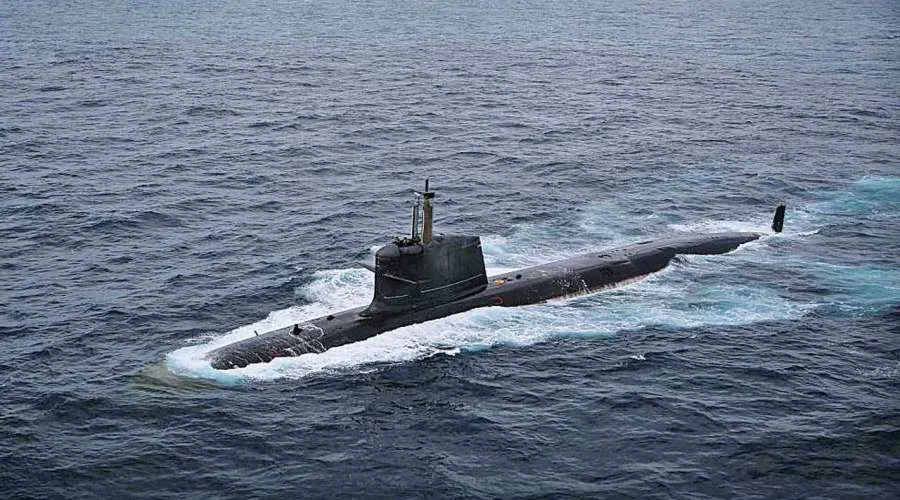
Next, the energy module will be powered up and put through rigorous trials under naval guidelines. After it clears them, it will be sent to Mazagon Dock Shipbuilders Limited (MDL) in Mumbai, where it is due to be fitted onto a serving Kalvari-class submarine by early 2027.
The Navy operates six Scorpene-design submarines of this class, all built by MDL under Project-75, and proposals for three more are in the pipeline.
The milestone reflects India’s wider drive to develop critical defence technologies indigenously, bringing together research, industrial capacity and operational needs. The upcoming power trials are expected to be the last major hurdle before the system joins the operational fleet.











 https://www.youtube.com/watch?si=RtToJsBhYBatUrym&v=mOuYNSdhjHA&feature=youtu.be