- CM launches the ‘Mukhyamantri Shikshak Cashless Chikitsa Yojana’ for Higher Education Department teachers and their dependents in Agra; around 1 million people to benefit
- Free cashless medical treatment of up to ₹5 lakh per year to be provided under the scheme
- MoU signed between the Higher Education Department and Punjab National Bank to provide teachers with a comprehensive social security cover
- Under the MoU, teachers will receive personal accident insurance coverage of up to ₹1.5 crore and ₹3 crore in case of an air accident
- Educational institutions must stand against foreign and domestic conspiracies targeting India: CM
- Social media and AI should be used responsibly in the interest of society and the nation: CM
- Youth must be made aware of anonymous platforms, fake accounts and misleading information: CM
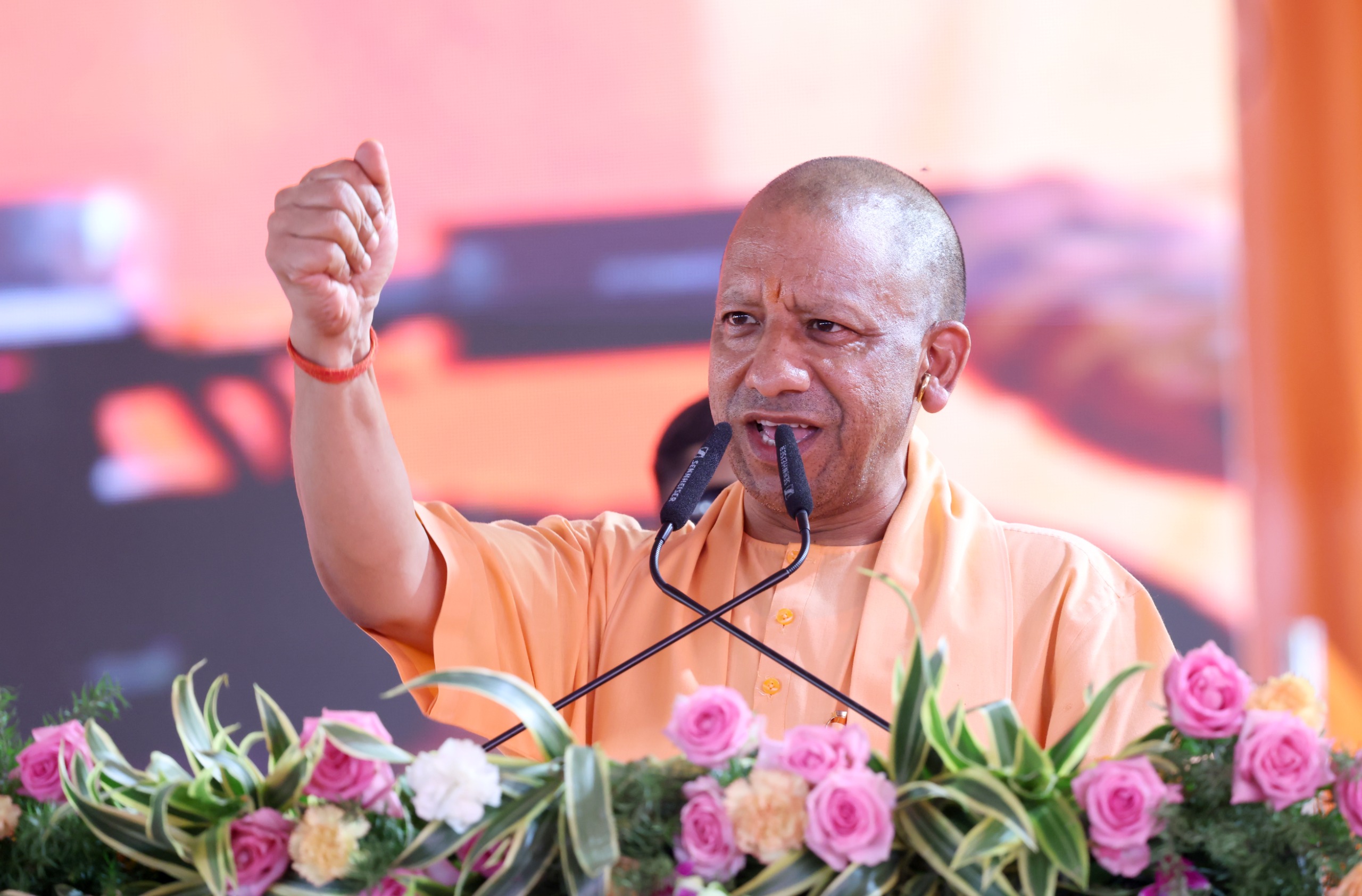
Lucknow: Uttar Pradesh Chief Minister Yogi Adityanath said, “The role of teachers has become more significant in today’s rapidly changing world. Beyond academics, teachers must help students distinguish between truth and falsehood, teach them how to protect themselves from misinformation on social media, and guide them in the responsible use of emerging technologies such as Artificial Intelligence (AI). While social media and AI have become essential tools of the modern era, they should be used in the interest of society and the nation.”
He cautioned that anti-India forces are misusing these platforms to spread confusion, hatred and disorder, making it imperative for educational institutions to educate and sensitise young people.
The Chief Minister was addressing the launch ceremony of the ‘Mukhyamantri Shikshak Cashless Chikitsa Yojana’ for teachers of the Higher Education Department and their dependents at Dr. Bhimrao Ambedkar University, Agra, on Sunday. On the occasion, an MoU was also signed between the Higher Education Department and Punjab National Bank to provide teachers with an enhanced social security cover.
The Chief Minister was welcomed with a sapling under the ‘Ek Ped Maa Ke Naam’ campaign. Extending greetings ahead of Guru Purnima, he congratulated faculty members of higher educational institutions on receiving this important benefit.
The Chief Minister said, “The cashless medical facility would cover teachers from state universities and colleges, government institutions, government-aided private colleges, as well as self-financed universities and colleges. Non-teaching staff will also be included under the scheme. Offering annual cashless medical treatment of up to ₹5 lakh, the scheme is expected to benefit nearly 1 million people.”
He further stated that, in addition to the cashless healthcare facility, the MoU with Punjab National Bank would provide teachers with an additional layer of social security. In the unfortunate event of an accident or permanent disability involving a teacher, financial assistance ranging from ₹1.5 crore to ₹3 crore will be provided to the family under the scheme. It also includes a hospital cash benefit of up to ₹60,000 and term life insurance coverage of up to ₹12 lakh. The objective, he said, is to ensure that the government, administrative system and banking institutions stand firmly with individuals and their families during times of crisis.
The Chief Minister also said, “I would request Punjab National Bank to extend the scheme to teachers working in self-financed and private universities. While non-teaching staff had previously been excluded, the government is now moving towards bringing nearly 50,000 non-teaching employees of higher educational institutions and universities under the scheme.”
The Chief Minister observed that teachers have always occupied the highest position in India’s civilisational tradition. At a time when much of the world remained in darkness, India was home to globally renowned universities such as Takshashila and Nalanda. He emphasised that a teacher’s responsibility extends far beyond classroom instruction, they guide students, identify their hidden talents and help them realise their potential.
He added, “Real transformation begins when meaningful dialogue is established between teachers and students from the very first day. This is why Indian tradition accords the Guru the highest respect, ensuring that students do not lose their way.”
He noted with concern that the academic atmosphere in some institutions today no longer reflects the same spirit.
Reflecting on earlier times, he said, “When I was a student, families encouraged children to read at least one or two newspapers regularly and consult reference books alongside textbooks. Students were also taught not to accept information blindly, as even a grammatical error could distort meaning. Today, however, the situation has changed. Libraries witness fewer teachers and students. In the past, teachers travelled from village to village and door to door collecting data. Though it may not have seemed meaningful then, it gave them an opportunity to understand the social and economic realities of the communities they served.”
The Chief Minister urged teachers to make the first class of every new academic session interactive and engaging rather than beginning directly with the syllabus. Such an approach, he said, would encourage students to attend classes with enthusiasm. Incorporating motivational stories, inspiring quotations and real-life examples would make lessons more interesting, accessible and enjoyable. He added that whenever India has honoured its teachers, it has set new benchmarks of excellence.

The Chief Minister remarked that the media landscape has changed dramatically. A section of society, especially senior citizens and retired individuals, continues to rely on newspapers for information about national and international events. Another section, with limited time, follows news through television channels. However, nearly 60 percent of young people now rely primarily on smartphones and YouTube to understand current affairs. Students often accept online content as truth without verification, even though its authenticity cannot always be guaranteed.
The Chief Minister said, “People once regarded mainstream media as the closest source to truth. Newspapers played a crucial role in raising public awareness and strengthening the freedom movement while maintaining accountability. If an incorrect report appeared, the identities of the reporter, editor and publication were clearly known. In contrast, anonymous platforms and fake accounts on social media enable individuals to spread misinformation and hatred without accountability.”
He added, “In the absence of verified information and self-discipline, society can descend into disorder and chaos, affecting both the present and the future.”
The Chief Minister stressed that if India wishes to shape both its present and future positively, students must be taught not only discipline but also self-discipline. Social media and AI are necessities of the modern era. The country cannot afford to lag behind or ignore these technologies. Instead, the focus should be on using them constructively for individual growth, social welfare and national development.
He urged teachers to create quality educational content, inspire students through positive ideas and motivational messages, and teach them to differentiate between truth and falsehood. They should also make students aware of the dangers posed by anonymous platforms, fake accounts and misleading information.
He observed that while people increasingly turn to Google for information, not everything available online is necessarily authentic.
The Chief Minister said that, in collaboration with Tata Technologies, the Uttar Pradesh Government has equipped engineering colleges, polytechnics and ITIs with modern technologies such as AI, drone technology, robotics and 3D printing. Educational institutions should take full advantage of these facilities. Universities and colleges should organise AI training programmes for students and teachers. Even modest efforts by teachers can ensure that these technologies are effectively used for education, society and national development. Otherwise, anti-India forces may exploit these very technologies and social media to spread confusion, hatred and disorder.
The Chief Minister concluded by saying that educational institutions must stand firmly against any foreign or domestic conspiracy aimed at destabilising India or creating disorder in society.
He stressed that the younger generation must be made aware of such threats and equipped to resist misinformation and divisive agendas.
Union Minister of State Prof. S.P. Singh Baghel, Uttar Pradesh Ministers Yogendra Upadhyay and Bhupendra Chaudhary, MP Rajkumar Chahar, Vice Chancellor Ashu Rani, Mayor Hemlata Diwakar Kushwaha, MLA Dr. Dharampal Singh, Zila Panchayat Chairperson Dr. Manju Bhadauria, Dr. G.S. Dharmesh, Purushottam Khandelwal, Chaudhary Babulal, Bhagwan Singh Kushwaha, Chhote Lal Verma, Rani Pakshalika Singh, Registrar Ajay Mishra and several other distinguished guests were present on the occasion.