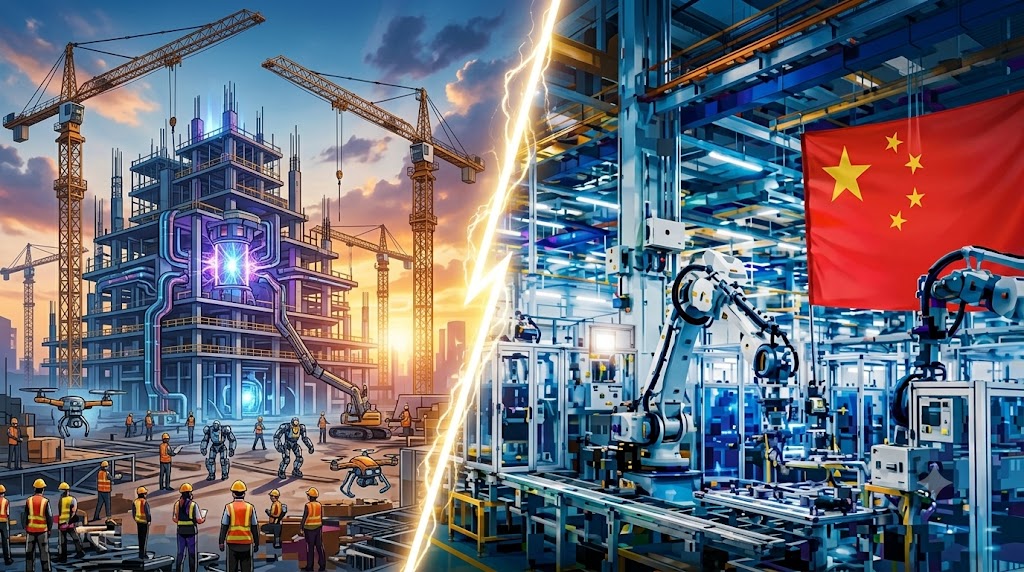
New Delhi: India’s reported decision to allow four Chinese-linked power equipment companies with manufacturing operations in the country to participate in select government power sector projects for the next two years has reignited debate over how the country should balance economic priorities with national security concerns.
The move comes at a time when India is pursuing ambitious infrastructure goals, including renewable energy expansion, power transmission, smart cities, high-speed rail, and manufacturing growth. These projects require advanced technology, competitive pricing, and timely execution—areas in which several global companies, including Chinese manufacturers, have established capabilities.

However, the decision has also drawn attention because it follows years of strained India-China relations after the 2020 Galwan Valley clashes. Although diplomatic and military dialogue between the two countries has continued, border-related issues remain unresolved, leaving strategic trust fragile.
Policy analysts say the development illustrates the complex challenge of maintaining economic pragmatism without compromising long-term security interests. While infrastructure development demands global partnerships, governments worldwide have become increasingly cautious about foreign participation in sectors considered strategically sensitive.
Concerns surrounding critical infrastructure extend beyond conventional security issues. Experts have pointed to risks involving cyber security, supply chain resilience, data protection, and technological dependence, particularly in sectors such as power grids, telecommunications, transport networks, ports, and digital infrastructure. Several countries have strengthened investment screening mechanisms in recent years to address these emerging challenges.
The discussion also comes as global manufacturers seek to diversify supply chains through the “China Plus One” strategy, creating opportunities for countries such as India to attract investment and expand domestic manufacturing. Observers note that India must carefully position itself to benefit from global economic shifts while ensuring that foreign investment supports, rather than undermines, its long-term industrial and strategic objectives.


Industry experts argue that economic engagement and national security need not be mutually exclusive if supported by a robust regulatory framework. They suggest that participation by foreign firms in non-sensitive sectors can be accompanied by strict safeguards, including comprehensive security clearances, cyber security audits, data localisation requirements, technology transfer provisions, greater domestic value addition, and partnerships with Indian companies.
Strengthening indigenous manufacturing remains another important element of the broader strategy. Continued investment in research and development, advanced manufacturing capabilities, and technological innovation is seen as essential for reducing dependence on overseas suppliers in critical sectors over the long term.
Diplomatically, the development reflects India’s evolving approach to managing a complex relationship with China. While strategic competition and border issues continue to shape bilateral ties, both countries also remain significant economic partners. Many foreign policy experts believe that sustained engagement, backed by clear national interests and strong regulatory oversight, is often a more practical approach than complete economic disengagement.
Ultimately, the debate is less about the participation of individual companies and more about the policy framework governing such decisions. As India continues its journey toward becoming a global manufacturing and economic powerhouse, the challenge will be to ensure that economic openness, strategic autonomy, and national security reinforce one another rather than come into conflict.
The decision underscores the broader reality facing many major economies today: balancing the demands of global commerce with the imperative of safeguarding critical national interests in an increasingly interconnected world.












 https://www.youtube.com/watch?si=RtToJsBhYBatUrym&v=mOuYNSdhjHA&feature=youtu.be