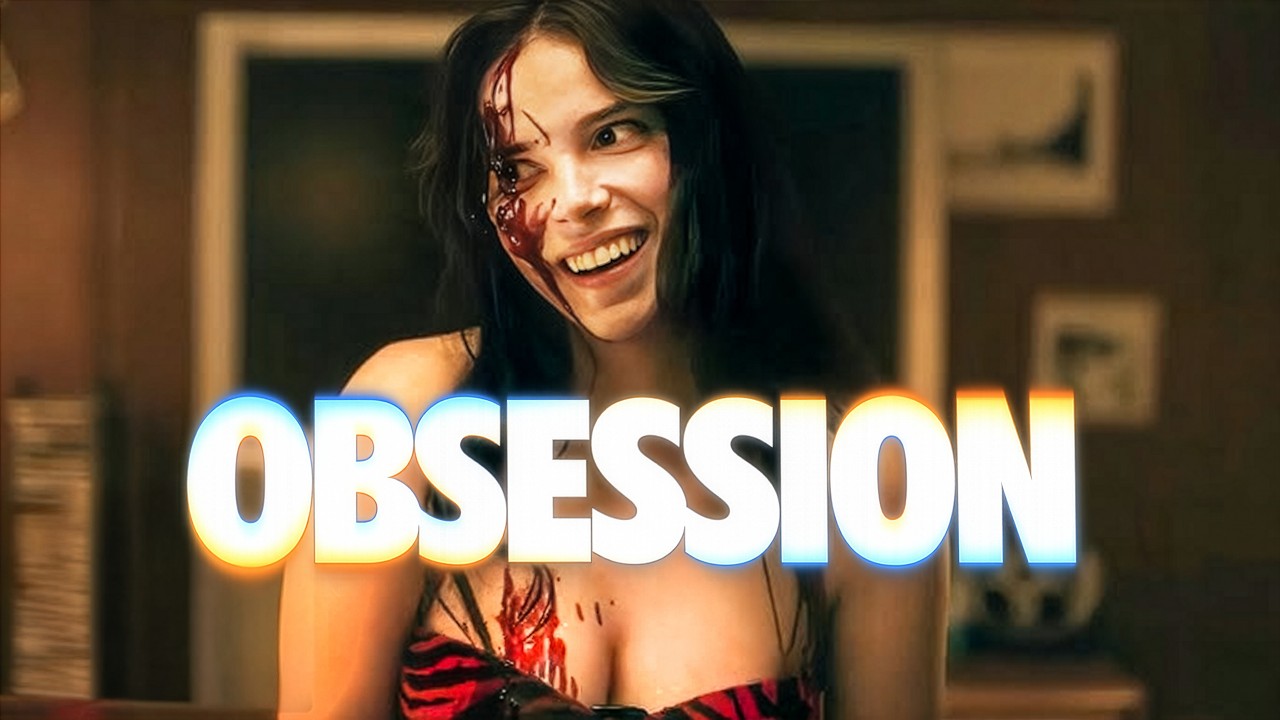
Rating: ★★★★½ (4.5/5)
Director: Curry Barker
Cast: Michael Johnston, Inde Navarrette, Cooper Tomlinson, Megan Lawless, Andy Richter
Genre: Supernatural Psychological Horror / Dark Comedy
Runtime: 109 Minutes

There are horror films that scare you. There are horror films that disgust you. And then there are horror films that crawl under your skin, force you to confront uncomfortable truths, and leave you questioning your own assumptions long after the credits roll.
Obsession belongs firmly in that final category.
Director Curry Barker’s feature debut is a startling achievement—a micro-budget horror sensation that transforms a familiar “be careful what you wish for” premise into one of the most unsettling and thought-provoking genre films of the year. Equal parts psychological thriller, supernatural horror, dark comedy, and social satire, Obsession is a nerve-shredding ride that proves imagination and storytelling still matter more than blockbuster budgets.
At a time when many horror films rely on jump scares and familiar formulas, Barker delivers something far more disturbing: a nightmare rooted in desire, loneliness, entitlement, and the dangerous illusion of control.
A Wish That Becomes a Curse
At first glance, the premise feels deceptively simple.
Bear Bailey (Michael Johnston) is a shy, socially awkward music-store employee hopelessly in love with his longtime friend and coworker, Nikki Freeman (Inde Navarrette). Like many modern romantic antiheroes, Bear convinces himself that persistence and devotion should eventually be rewarded.
But reality refuses to cooperate.
Unable to express his feelings honestly and terrified of rejection, Bear turns to the supernatural when he discovers an object capable of granting wishes. In a moment of desperation, he wishes for Nikki to love him with the same intensity that he loves her.
As horror fans might predict, the universe grants the wish—but not in the way he expects.
What follows is a steadily escalating descent into psychological chaos and body horror that grows more disturbing with every scene. The brilliance of Obsession lies in how it transforms a seemingly romantic fantasy into a terrifying examination of autonomy, consent, and possession.
The result is both horrifying and painfully relatable.
Inde Navarrette Delivers a Breakout Performance
If Obsession has a secret weapon, it’s Inde Navarrette.
Her performance is nothing short of extraordinary.
As Nikki undergoes increasingly disturbing transformations, Navarrette manages to balance vulnerability, terror, tragedy, and dark humor with remarkable precision. She doesn’t simply become the victim of the story; she becomes its emotional center.
The horror works because the audience genuinely cares about her.
Every stage of Nikki’s journey feels believable, even when the film ventures into its most surreal territory. Navarrette creates a character who is vibrant and independent at the beginning, making the gradual erosion of her agency all the more heartbreaking.
It is the kind of performance that announces a major talent.
Expect her name to appear in plenty of year-end discussions.
Michael Johnston Walks a Difficult Tightrope
Equally impressive is Michael Johnston’s portrayal of Bear.
The role requires extraordinary balance.
Bear isn’t presented as a traditional villain. Nor is he entirely sympathetic. He’s lonely, insecure, and emotionally immature, but his flaws stem from recognizably human desires.
Johnston expertly captures that ambiguity.
The actor makes Bear believable enough that audiences understand his motivations while simultaneously recognizing the danger behind them. As the consequences of his wish spiral out of control, Johnston reveals layers of guilt, fear, denial, and desperation.
The performance avoids easy caricature and instead creates a deeply uncomfortable portrait of someone whose inability to respect boundaries leads to catastrophe.
That complexity gives the film much of its power.
Horror With Something to Say
Many modern horror films attempt social commentary.
Few integrate it as effectively as Obsession.
Without becoming preachy, Barker explores themes that feel remarkably relevant to contemporary culture. The film examines entitlement disguised as affection, the fantasy of controlling another person’s emotions, and the toxic belief that love can be earned through persistence alone.
The screenplay also critiques modern loneliness and the ways social media, internet culture, and unrealistic romantic expectations can distort relationships.
Yet the film never feels like a lecture.
Instead, these ideas emerge naturally through character choices and increasingly horrifying consequences.

The horror works because it grows directly from the story’s emotional core.
Every scare reinforces the film’s themes.
Every shocking moment serves a purpose.
Disturbing, Funny, and Unpredictable
One of Obsession’s greatest strengths is its tonal confidence.
The film constantly shifts between cringe comedy, emotional drama, psychological tension, and outright horror.
Remarkably, most of these transitions work.
There are scenes that will make audiences laugh nervously before immediately recoiling in horror. Barker understands that discomfort is often more effective than straightforward terror.
Several sequences become almost unbearably tense because viewers aren’t sure whether to laugh, scream, or look away.
That unpredictability keeps the film engaging throughout.
The practical effects deserve particular praise. Rather than relying heavily on computer-generated imagery, Barker embraces tactile, physical horror that feels grounded and visceral.
The body horror sequences are genuinely shocking without becoming gratuitous.
Each grotesque image contributes to the story rather than existing purely for shock value.
Small Budget, Massive Creativity
One of the most impressive aspects of Obsession is how much it accomplishes with limited resources.
Despite its modest budget, the film never feels cheap.
Taylor Clemons’ cinematography creates a constantly unsettling atmosphere, transforming ordinary suburban locations into spaces filled with dread. Clever lighting, intimate framing, and subtle visual cues generate tension without requiring expensive set pieces.
Barker demonstrates an impressive understanding of how to maximize every dollar on screen.
The film’s limitations become strengths.
By focusing on character and atmosphere rather than spectacle, Obsession achieves a level of intimacy many larger productions struggle to match.
Not for Everyone
For all its brilliance, Obsession won’t appeal to every viewer.
The film tackles uncomfortable subject matter and refuses to soften its darker implications. Themes involving obsession, emotional manipulation, consent, stalking, and bodily transformation may prove difficult for some audiences.
The tonal shifts occasionally feel abrupt, particularly in the third act. A few supporting storylines are resolved somewhat quickly, and certain emotional beats could have benefited from additional development.
However, these are relatively minor flaws in an otherwise remarkably assured debut.
Final Verdict
Obsession is one of those rare horror films that functions on multiple levels simultaneously.
It’s scary.
It’s funny.
It’s disturbing.
It’s intelligent.
And most importantly, it’s memorable.
Curry Barker announces himself as an exciting new voice in genre filmmaking with a film that understands horror’s greatest strength: its ability to explore real human fears through extraordinary circumstances.
Powered by standout performances from Inde Navarrette and Michael Johnston, Obsession transforms a classic cautionary tale into a modern nightmare about love, control, and unintended consequences.
It may be one of the year’s smallest productions, but it delivers some of its biggest emotional and psychological shocks.
Watch It For:
- Inde Navarrette’s career-making performance
- Smart social commentary
- Inventive body horror
- Unpredictable storytelling
- Darkly hilarious humor
Skip It If:
- Intense body horror isn’t your thing
- Themes involving obsession and consent make you uncomfortable
- You prefer straightforward horror over psychological complexity
Final Rating: ★★★★½/5
A wickedly intelligent horror film that proves the most terrifying monsters often emerge from our deepest desires. Just remember: some wishes are better left unspoken.







 ---------------------------------------------------------------------------------------------------