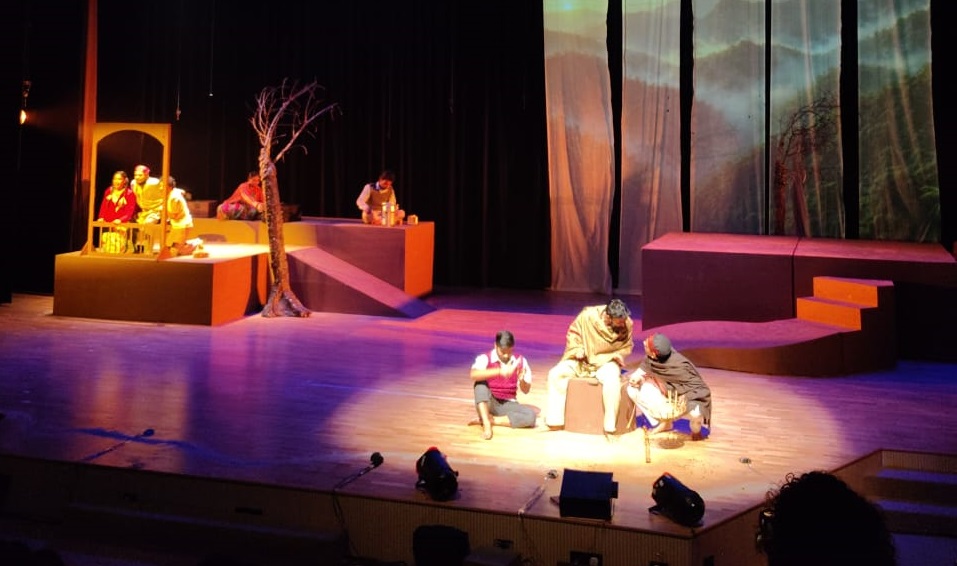
Lucknow: The first-year students of Bharteendu Natya Academy have presented an experimental theatrical production titled The Silent Exodus, a powerful exploration of displacement and migration across different phases of Indian history. The production is being described as the outcome of an intensive academic and practical theatre process carried out under the framework of devised theatre.
Unlike conventional stage productions based on pre-written scripts, the students chose the devised theatre method, where actors actively participate in the research, visual construction and creative development of the play. According to the academy, the decision was taken keeping in mind the practical training requirements of first-year theatre students.

Initially, several established plays, including Adhantar, Virasat, Mukhyamantri and Kharashen, were discussed as possible productions. However, the students and mentors ultimately decided to create an original theatrical experiment instead of adapting an existing text.
The central theme selected for the production was “displacement”, tracing human migration and forced movement from the Partition of India in 1947 to more contemporary historical events. The narrative was divided into three major segments: the migration during Partition, the displacement of villagers following dam construction on the Sutlej river, and the exodus of Kashmiri Pandits.
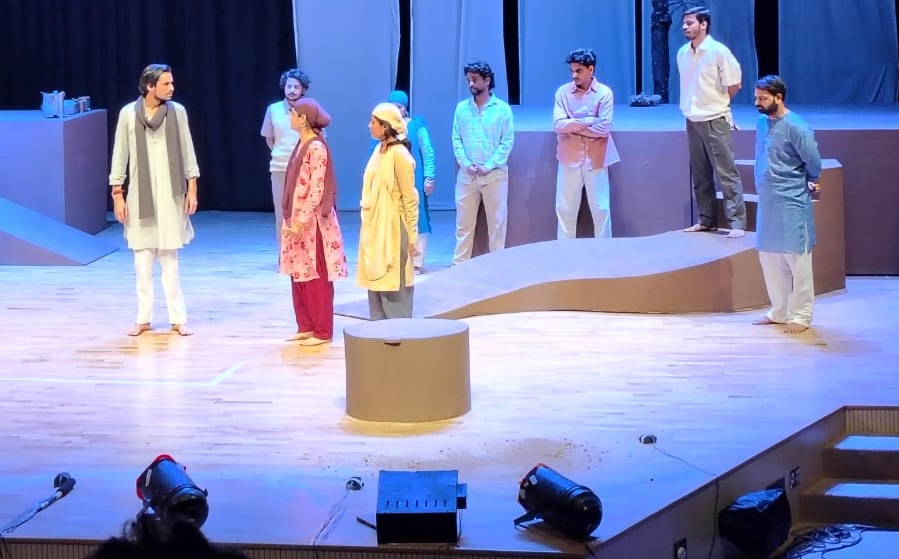
The objective behind selecting these events was to examine the social, administrative and human dimensions of displacement through theatrical storytelling.

The entire production process was completed within an intensive 30-day schedule. During this period, students conducted detailed research using historical documents, reports, testimonies and case studies connected to the selected events.
Under the guidance of acting experts, the students participated in improvisational and physical theatre exercises to develop scenes organically. Rather than relying on fixed scripts, actors imagined situations, created stage blockings and built visual compositions inside the rehearsal space.
The writing process also evolved alongside the rehearsals. Dialogues were developed later on the basis of situations, movements and emotional structures created by the actors during workshops and improvisations. The language of the play was intentionally kept direct and practical to preserve the natural rhythm and visual flow of the performance.
Faculty members associated with the production stated that the process helped students not only understand the practical aspects of acting, but also gain insight into direction, dramaturgy and collaborative scene construction.
The Silent Exodus is being viewed as a significant documentation of collective creativity, theatrical research and technical learning by young theatre trainees at the academy.