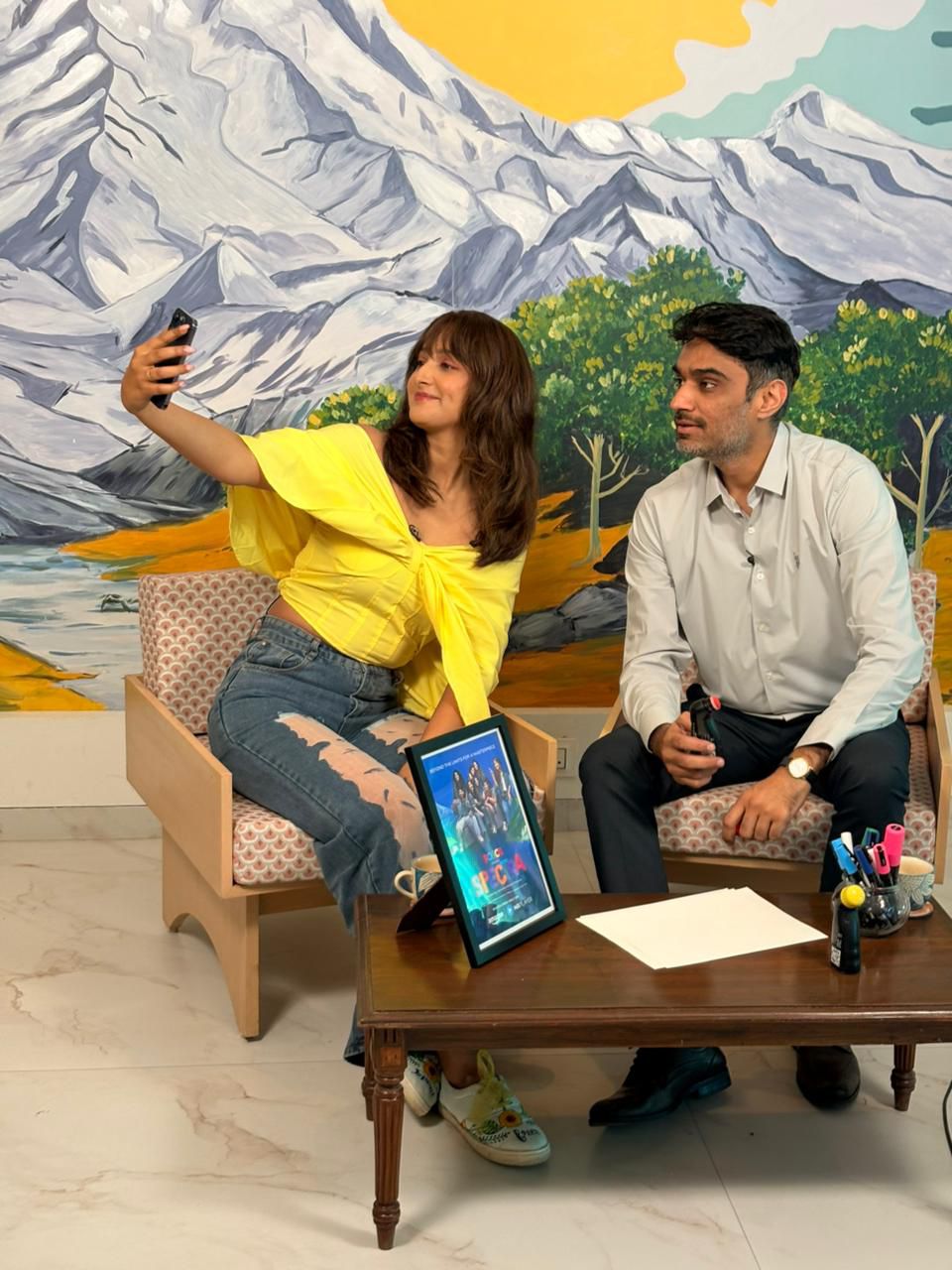
“With Spectra, we didn’t want to remove drama for the sake of it; we wanted to replace it with depth. The idea was simple: real human journeys are already powerful; they don’t need to be amplified artificially,” he added.

The decision to set the show in the Himalayas was more than about aesthetics. He said, “The setting wasn’t just visual; it was foundational. The mountains have a way of stripping away performance. When you’re there, disconnected from everything else, you’re forced to confront yourself. That honesty shaped the narrative more than anything we could have written.”
Harsh mentioned that designing personal challenges for the artists on the show was never to push people but to create a safe space where they could open up if they chose to. He added, “The challenges were designed as reflections, not tests. It was important that participants felt respected, not exposed. He continued, “Talent was just the starting point. We were looking for people who had a story to tell, even if they didn’t know how to articulate it yet. Diversity in art forms was important, but emotional depth mattered more.”
Asked how audiences would receive something so deliberately unfamiliar, he opened up, “Of course there were concerns, because it’s not a familiar format. But at some point, you have to trust that audiences are ready for something real. We weren’t trying to fit into the existing space; we were trying to expand it.”
“Letting go of control was the biggest challenge. When your show depends on vulnerability, you can’t script it. You have to trust moments, silences, and people. That unpredictability is both the challenge and the beauty,” he added.

He explained that Spectra sits slightly outside the usual space, and that’s intentional, adding, “In a world of fast content, Spectra slows you down. It’s not something you just watch; it’s something you sit with. A sense of pause. If someone watches Spectra and feels a little more connected to themselves, to art, or even to nature, then we’ve done what we set out to do.”
“If there’s no nature, there’s no future, and we wanted people to feel that, not just hear it,” Harsh ended.




 ---------------------------------------------------------------------------------------------------