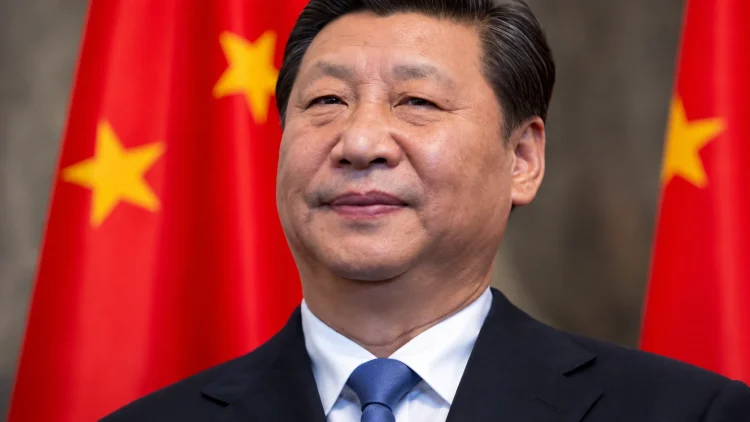
Beijing: Chinese President Xi Jinping has invoked the legacy of the historic Long March, urging the Communist Party and the public to prepare for difficult times amid economic uncertainty, geopolitical tensions and strained relations with Western nations. His remarks came during an event in Beijing commemorating the 90th anniversary of the Long March, one of the defining episodes in the history of the Chinese Communist Party (CPC).
According to China’s state news agency Xinhua, Xi highlighted the campaign’s historical significance and its enduring influence on the party’s development. His address emphasised political unity, strong leadership and perseverance as China navigates an increasingly complex domestic and international environment.

Long March: A Defining Chapter in Communist Party History
The Long March, undertaken between 1934 and 1936, involved the strategic retreat of Communist forces under intense military pressure. Despite severe hardships, the campaign helped preserve the Red Army and the party’s organisational structure during a critical period.
The episode also played a significant role in Mao Zedong’s rise within the party. In subsequent years, the Communists expanded their influence and established the People’s Republic of China in 1949.
For the Chinese leadership, the Long March symbolises endurance, sacrifice and commitment to the party. By invoking this historical episode, Xi linked the revolutionary struggle of the past with the challenges facing China today.
He described the march as a major revolutionary achievement with lasting importance for the party, the nation and the military. Xi also connected its legacy with the broader objective of national rejuvenation, a central theme of his leadership.
Xi Stresses Leadership, Discipline and Unity
Xi underscored the role of party leadership in the Red Army’s survival during the Long March. According to Xinhua, he highlighted the importance of the Communist Party’s leadership and Mao’s position in guiding the movement through a period of severe uncertainty.
The message also reflected the party’s continued emphasis on discipline, unity and centralised leadership. Under Xi, national security and the pursuit of long-term strategic objectives have remained prominent features of China’s political direction.
Xi cautioned that the road ahead would not be easy, urging party members, military personnel and the public to remain prepared for challenges. While the reported remarks did not outline a detailed response to each difficulty, they came at a time when China faces economic concerns at home and intensifying competition abroad.


Economic Concerns and Geopolitical Pressures
China continues to grapple with structural economic challenges, including difficulties in the property sector, concerns about domestic demand and pressures affecting businesses and households. Policymakers are seeking to maintain economic growth while addressing these issues and adapting to shifts in global trade.
Relations with Western powers have also remained tense over trade, technology and security. Strategic competition between Beijing and Washington is a major factor shaping international diplomacy, while wider geopolitical uncertainty continues to influence the global economic outlook.
Against this backdrop, Xi’s appeal for resilience signals the leadership’s emphasis on preparing for sustained pressure. His remarks framed the current period as one requiring continued determination rather than an expectation of an immediate resolution to the country’s challenges.
Key Communist Party Meeting in Focus
Xi’s address came ahead of a plenary session of the Communist Party’s Central Committee scheduled to take place in Beijing from October 26 to 29, according to the report. The meeting is expected to discuss major political and economic priorities as China considers its future policy direction.
Such sessions bring senior party officials together to deliberate on governance, economic management and national strategy. The decisions emerging from the meeting are likely to attract attention for what they indicate about Beijing’s response to domestic economic pressures and international developments.
However, Xi’s anniversary speech does not by itself establish which specific policies will be adopted. A clearer picture of the government’s next steps will depend on the formal decisions and announcements made during the session.
Historical Legacy Shapes Present-Day Message
Xi Jinping’s reference to the Long March places China’s current challenges within a central narrative of Communist Party history. By emphasising leadership, unity and perseverance, he sought to draw lessons from the revolutionary past as the country confronts economic uncertainty and geopolitical competition.
With a key party meeting approaching, attention will focus on whether the leadership announces new policy measures or reinforces its existing priorities. The outcome may offer further insight into how Beijing intends to balance economic concerns, national strategy and its position in an increasingly competitive global environment.












 https://www.youtube.com/watch?si=RtToJsBhYBatUrym&v=mOuYNSdhjHA&feature=youtu.be