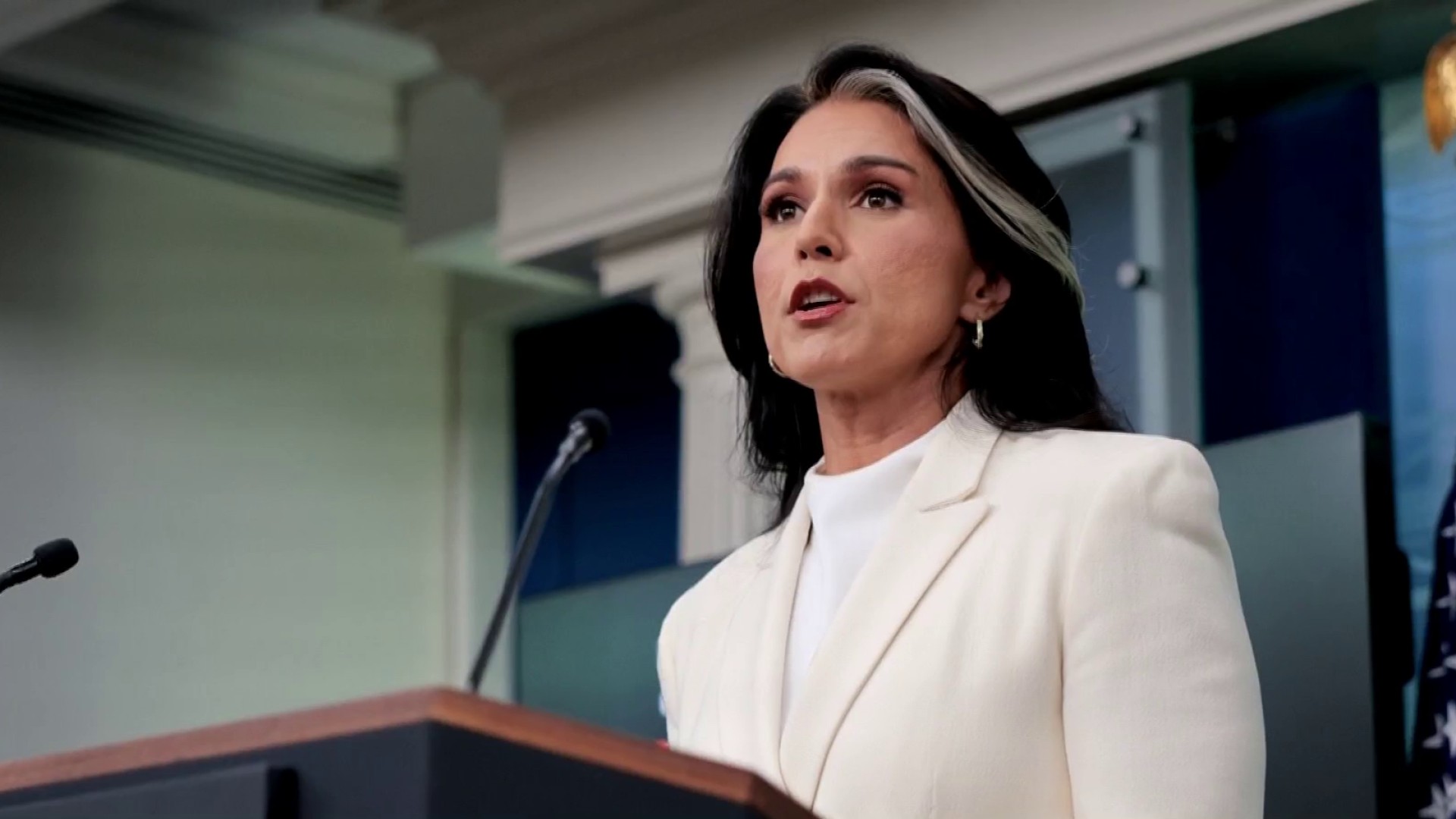
Washington: A major political shake-up has hit the administration of Donald Trump as Tulsi Gabbard has stepped down from her role as the United States’ Director of National Intelligence (DNI).
While the official explanation cited family reasons, political circles in Washington, D.C. are buzzing with reports that growing policy disagreements and internal tensions had effectively isolated Gabbard within the White House.

Anti-War Position Clashed With Administration Policy
Gabbard, long known for her anti-war stance and criticism of American military intervention abroad, reportedly found herself increasingly at odds with the Trump administration’s evolving foreign policy approach.
Although Trump campaigned on promises to avoid new wars, his administration later became deeply involved — directly and indirectly — in geopolitical flashpoints involving Iran, Venezuela, and the Russia-Ukraine War.
The divide reportedly widened last year when Gabbard released a video criticizing U.S. foreign policy and warning that “political elites are deliberately escalating tensions between nuclear powers.” Her remarks drew intense scrutiny after subsequent American strikes on Iranian nuclear facilities.
Official Reason vs Political Pressure
The administration officially stated that Gabbard stepped down to focus on family matters following reports that her husband, Abraham Williams, had been diagnosed with bone cancer.
However, insiders claim pressure had been mounting on Gabbard for months, with senior officials unhappy over her public statements on national security and foreign affairs that often diverged from the administration’s line.
Tensions Inside the Intelligence Community
Gabbard also reportedly struggled to build strong institutional backing within the U.S. intelligence establishment, partly because she did not come from a traditional intelligence background.
Her relationship with John Ratcliffe was said to be particularly strained. Reports suggest Gabbard believed Ratcliffe was bypassing her and communicating directly with President Trump on sensitive intelligence matters.
Former CIA officer Marc Polymeropoulos commented that the most important requirement for a DNI is maintaining the president’s trust and direct access.


‘America First’ vs ‘Israel First’ Debate
Political observers say Gabbard’s departure also highlights broader ideological divisions within Trump’s political camp.
A faction of conservative figures, including Tucker Carlson and Steve Bannon, reportedly expressed discomfort over escalating tensions with Iran and what some critics described as a shift from “America First” toward a more “Israel First” foreign policy orientation.
Gabbard was widely seen as part of this anti-interventionist bloc within the administration.
Reports also noted that while Trump’s national security team reviewed a Venezuela-related military operation at Mar-a-Lago, Gabbard was absent from the discussions and remained in Hawaii.
Fourth Senior Female Exit From Cabinet
Analysts in Washington are linking Gabbard’s exit to a broader pattern inside the Trump administration. She becomes the fourth prominent female official to leave the cabinet-level leadership structure following controversies or reported disagreements.
Among those previously sidelined were Kristi Noem, Pam Bondi, and Lori Chavez-DeRemer.
Critics argue that while women in Trump’s circle are often elevated to high-profile positions, they receive less political flexibility once disagreements emerge.
Iran Reacts Sharply
The controversy also triggered reactions from Iran. The official account of the Iranian Embassy in Armenia posted a message wishing Gabbard’s husband a speedy recovery while simultaneously criticizing the Trump administration.
The post claimed Gabbard was being pushed aside because she had “spoken the truth” about Iran from within the government, accusing Washington of acting as a proxy for Israel.












 https://www.youtube.com/watch?si=RtToJsBhYBatUrym&v=mOuYNSdhjHA&feature=youtu.be