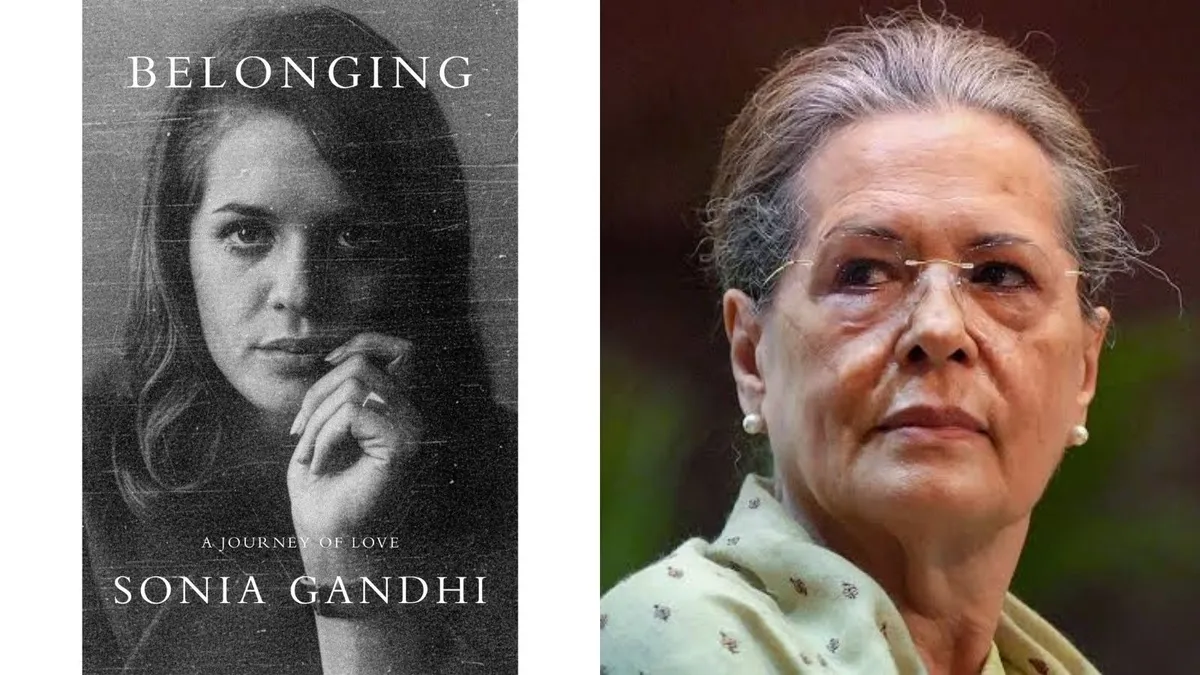
New Delhi: Sonia Gandhi’s upcoming memoir, Belonging: A Journey of Love, represents more than a personal recollection—it has crystallized fundamental tensions in contemporary India over publishing freedom, institutional autonomy, and the boundaries of political discourse. The controversy surrounding its Indian publication, which erupted in late August 2026, encapsulates broader anxieties about the space available for critical voices in the country’s media and publishing landscape.
The Book and Its Significance
The 544-page memoir, scheduled for global release through Alfred A. Knopf on November 10, 2026, traces six decades of Indian history through the lens of one of the nation’s most influential opposition figures. Sonia Gandhi’s narrative spans her childhood in post-war Italy, her marriage to Rajiv Gandhi, her tenure as Congress president, and the personal tragedies that reshaped her family and political trajectory. The international publisher has marketed it as an “epic yet intimate” account offering unique perspectives on India’s tumultuous post-Independence history and contemporary political struggles.

What transforms this personal memoir into a politically explosive document, however, is its treatment of current political figures and sensitive national issues. According to reports citing sources close to Congress circles and the author, the manuscript includes detailed accounts of Sonia Gandhi’s interactions with Prime Minister Narendra Modi, comparisons between Modi and his predecessors, personal remarks attributed to him—notably a reported 2004 reference to her as a “Jersey cow” during a Gujarat rally—and substantive commentary on the Rashtriya Swayamsevak Sangh’s role in Indian public life and India-China relations. These elements elevate the work from autobiography into a potential political intervention capable of influencing public discourse in India’s deeply polarized environment.
The Penguin Controversy
The controversy erupted when Penguin Random House India (PRHI) reportedly sought “editorial changes and deletions” to parts of the manuscript. Sonia Gandhi refused, asserting that altering her life story would constitute self-censorship incompatible with an authentic narrative. Congress leaders immediately alleged that PRHI faced external pressure—implicitly from the government—to tone down or remove critical content concerning Modi, the RSS, and China relations.
PRHI’s response, delivered through a carefully calibrated statement, denied that editorial requests motivated its decision to step back from Indian publication. Instead, the publisher emphasized that fact-checking and editorial recommendations represent standard publishing practice and a publisher’s legitimate responsibility. Notably, PRHI stressed it remained “willing and keen to publish” throughout discussions with the author. The publisher’s refusal to elaborate on “confidential talks” left the precise contours of disagreement obscured, fueling speculation about the nature and extent of requested changes.
The discrepancy between the international and Indian editions triggered particularly pointed criticism. As former Rajasthan Chief Minister Ashok Gehlot noted, Alfred A. Knopf was publishing the unaltered text globally, yet PRHI sought modifications for the Indian market. This geographical distinction raised uncomfortable questions about whether domestic publishing operates under different constraints than international counterparts—whether India’s publishing environment has become distinctly more circumscribed.
The Institutional and Legal Context
Understanding this controversy requires recognizing the broader landscape of Indian publishing. Over the past decade, publishers have faced heightened legal scrutiny of manuscripts addressing living politicians, national security, or communal organizations. Legal reviews have become standard practice, protecting publishers from potential defamation suits, injunctions, or other legal challenges. Requests for factual verification or sensitive content modifications are therefore not exceptional; they reflect calculated risk management in a complex legal environment.
Yet context does not resolve the underlying tension. While publishers routinely navigate legal concerns for politically sensitive works, the high profile of Sonia Gandhi as a leading opposition figure amplifies the stakes. The specificity of alleged requests—concerning Modi, the RSS, and China relations—suggests not generic legal caution but content-specific concerns that plausibly reflect external pressure rather than purely editorial judgment. The question becomes whether PRHI’s reservations emerged from genuine legal risk assessment or from institutional anxiety influenced by political considerations.


Broader Implications for Free Expression
The episode raises profound questions about India’s publishing climate. Critics argue that a pattern of cautious responses to politically sensitive manuscripts reflects deeper pressures—formal government coercion or informal institutional anxiety about offending those in power. Some observers identify parallels with other books that experienced delays or modifications involving maps, historical claims, or political commentary. These precedents suggest a gradual narrowing of space for critical political expression in domestic publishing.
Congress leaders framed the controversy as symptomatic of systematic constraints on critical voices. They characterized publisher hesitation not as neutral legal prudence but as capitulation to pressure, effectively silencing dissenting perspectives. From this vantage point, the distinction between global and Indian editions signals that India’s domestic discourse operates under different, more restrictive conditions than international discourse—a troubling implication for a democracy’s health.
The BJP and its supporters offered a different reading, questioning what aspects genuinely required fact-checking and implying that controversy arose from the content itself rather than external coercion. This framing sidesteps institutional autonomy questions, focusing instead on whether the memoir’s claims withstand scrutiny. However, this response does not address the underlying structural concern: whether publishers genuinely operate with independence or whether political context shapes editorial decisions in ways incompatible with free expression.
Resolution and Looking Forward
The practical outcome has become definitive: HarperCollins will serve as the Indian publisher of Belonging, effectively ending Penguin Random House India’s involvement with the memoir. This development allows Sonia Gandhi’s unaltered account to reach domestic readers through an alternative publisher, circumventing the editorial concerns that PRHI had raised. The international edition proceeds through Knopf as scheduled for its November 10 release. The transition to HarperCollins represents a decisive outcome—not a compromise between author and publisher, but a complete shift of the Indian publishing rights to a publisher apparently willing to release the manuscript without requested modifications. This resolution has already generated substantial pre-publication publicity, likely amplifying interest and sales. More substantially, the controversy has exposed tensions within India’s publishing ecosystem and raised uncomfortable questions about institutional constraints on political speech.
As the November release approaches, several developments appear probable. The global edition will make the full text available to Indian readers through imports and digital channels, creating a fait accompli that publishers cannot control. An Indian edition under HarperCollins imprint will provide domestic distribution of the unaltered work. Political reactions will intensify, with Congress highlighting the book as authentic testimony and evidence of suppressed truths, while the ruling establishment challenges specific claims. Media coverage will concentrate on contested passages, amplifying the book’s political resonance.
Beyond immediate political theater, the Penguin controversy illuminates enduring questions about democratic discourse in contemporary India: Can publishers balance commercial and legal prudence with authors’ rights to tell their stories? Does the withdrawal of Penguin from the Indian edition itself constitute a form of institutional constraint on domestic discourse? How do institutional anxieties—whether influenced by formal pressure or informal political context—shape the political narratives available to Indian readers?
Sonia Gandhi’s memoir will be read not merely as autobiography but as a political intervention in an ongoing contest over narrative control. The publishing controversy has ensured that the book’s reception will remain inseparable from larger debates about institutional autonomy, free expression, and democratic participation. The episode has exposed how personal memory and national politics remain tightly intertwined in contemporary India, with profound implications for the space available for critical political voices in Indian society. With HarperCollins as the Indian publisher, the unaltered text will reach domestic audiences—a meaningful assertion of authorial autonomy that simultaneously underscores the challenges Sonia Gandhi faced navigating India’s publishing landscape.












 https://www.youtube.com/watch?si=RtToJsBhYBatUrym&v=mOuYNSdhjHA&feature=youtu.be