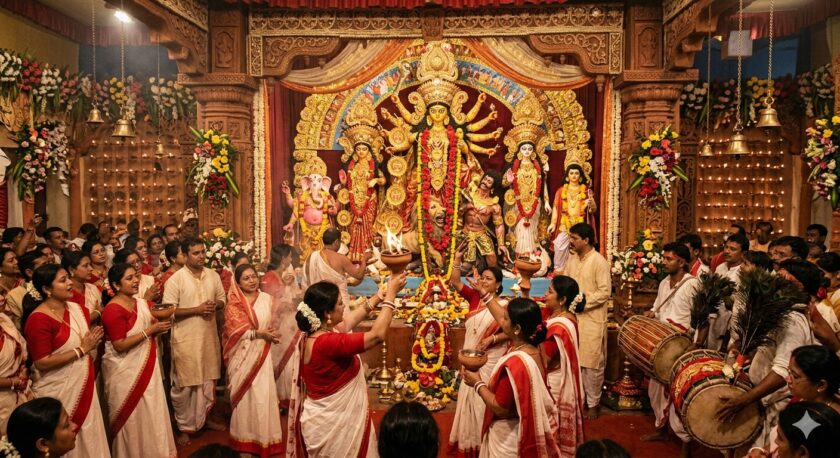
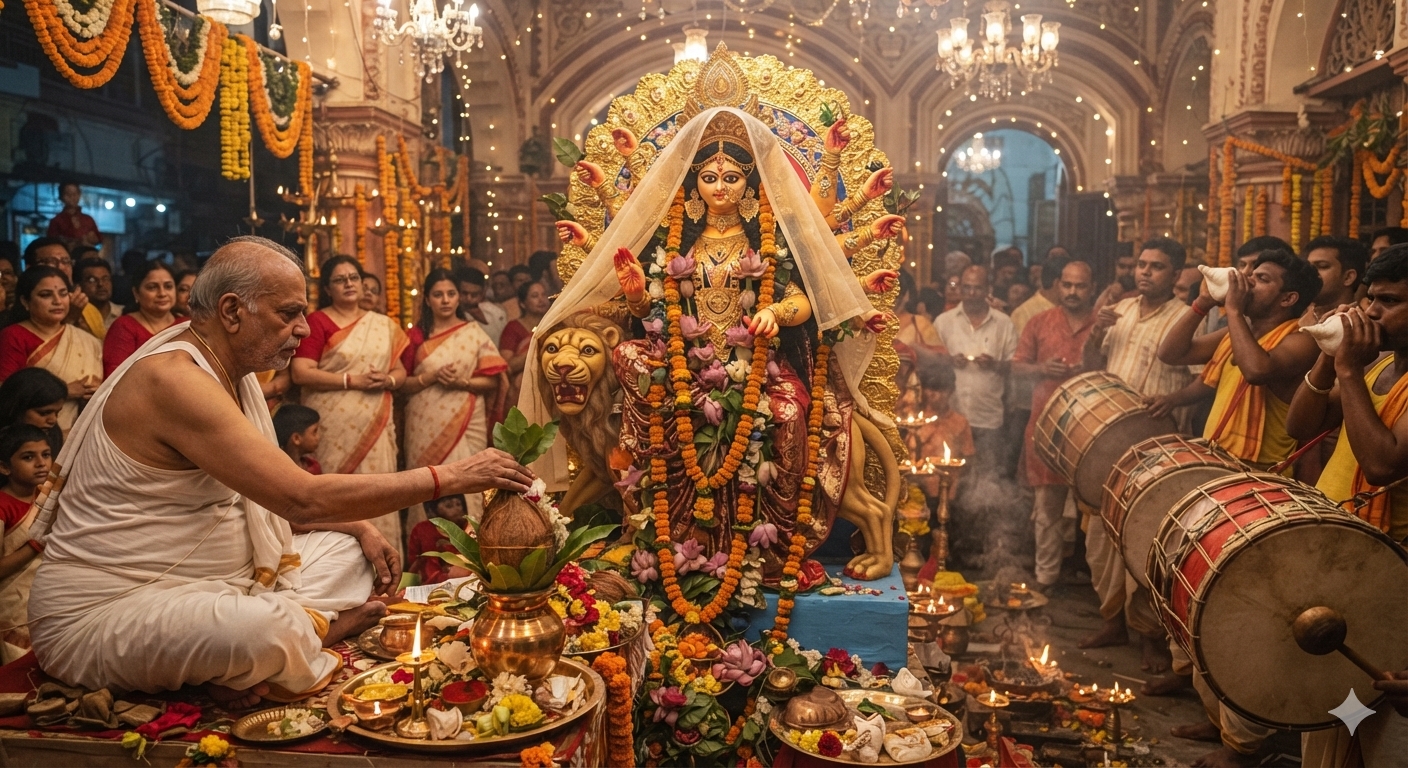
Kolkata: Navratri, the sacred festival dedicated to Goddess Durga, is a celebration of divine feminine power, spiritual awakening and inner purification. Although Navratri is observed four times a year, Chaitra Navratri and Sharadiya Navratri hold particular significance in Hindu tradition. Sharadiya Navratri, which began on October 11 this year, will conclude on October 20, coinciding with Dussehra.
The nine days of Navratri are devoted to the worship of Goddess Durga and her nine forms—Shailputri, Brahmacharini, Chandraghanta, Kushmanda, Skandamata, Katyayani, Kalaratri, Mahagauri and Siddhidatri. Each form represents distinct virtues, including courage, devotion, wisdom, purity, compassion and the power to overcome evil.

According to Hindu mythology, Goddess Durga fought the demon Mahishasura for nine days before defeating him, earning the title Mahishasuramardini. Another traditional account describes Lord Rama worshipping Goddess Durga before his battle against Ravana, seeking her blessings for victory. These narratives underline the festival’s enduring message of the triumph of good over evil.
Beyond its religious significance, Navratri celebrates feminine strength and the contribution of women to society. Goddess Durga symbolises the creative, protective and transformative power associated with the feminine principle. The festival offers an opportunity to reflect on women’s dignity, empowerment and equality, extending the reverence shown to the goddess into everyday life.
The nine manifestations of Durga carry different spiritual meanings. Shailputri represents the creative force, Brahmacharini signifies meditation and spiritual discipline, and Chandraghanta embodies the destruction of unrighteousness. Kushmanda symbolises creation, while Skandamata represents knowledge and energy. Katyayani personifies courage, Kalaratri destroys evil, Mahagauri signifies purity, and Siddhidatri represents wisdom and spiritual fulfilment.

The central message of Navratri is self-discipline and inner transformation. Devotees observe fasts, perform prayers, chant mantras, practise yoga and meditation, and follow spiritual disciplines during the nine days. These practices are traditionally believed to strengthen concentration, cultivate self-control and deepen one’s connection with the divine.
Navratri also coincides with the seasonal transition from the monsoon towards winter. Many devotees adopt simple, balanced and sattvic diets during the festival, consuming fruits and other permitted foods while avoiding heavy meals. Such dietary choices may encourage mindful eating, although health benefits depend on individual dietary needs and the manner in which fasting is practised. People with medical conditions should seek professional advice before undertaking prolonged or restrictive fasts.
Ultimately, Navratri is more than a ritual of worship. It is an invitation to examine one’s thoughts and actions, overcome negative tendencies and cultivate discipline, compassion and positive energy. By combining devotion with introspection, the festival encourages individuals to seek strength within themselves and carry its values into their daily lives.
The true spirit of Navratri lies in this journey towards inner purification—where faith becomes self-awareness, spiritual discipline inspires personal growth, and the worship of divine feminine power translates into respect for women and a more compassionate society.