Kolkata: Durga Puja is more than a religious festival in Bengal; it is a vibrant expression of the region’s cultural identity, bringing together art, literature, music, craftsmanship, food and community life. Deeply rooted in Bengali society, the festival blends devotion with collective celebration, reflecting the unique spirit of a culture where tradition and modernity coexist.
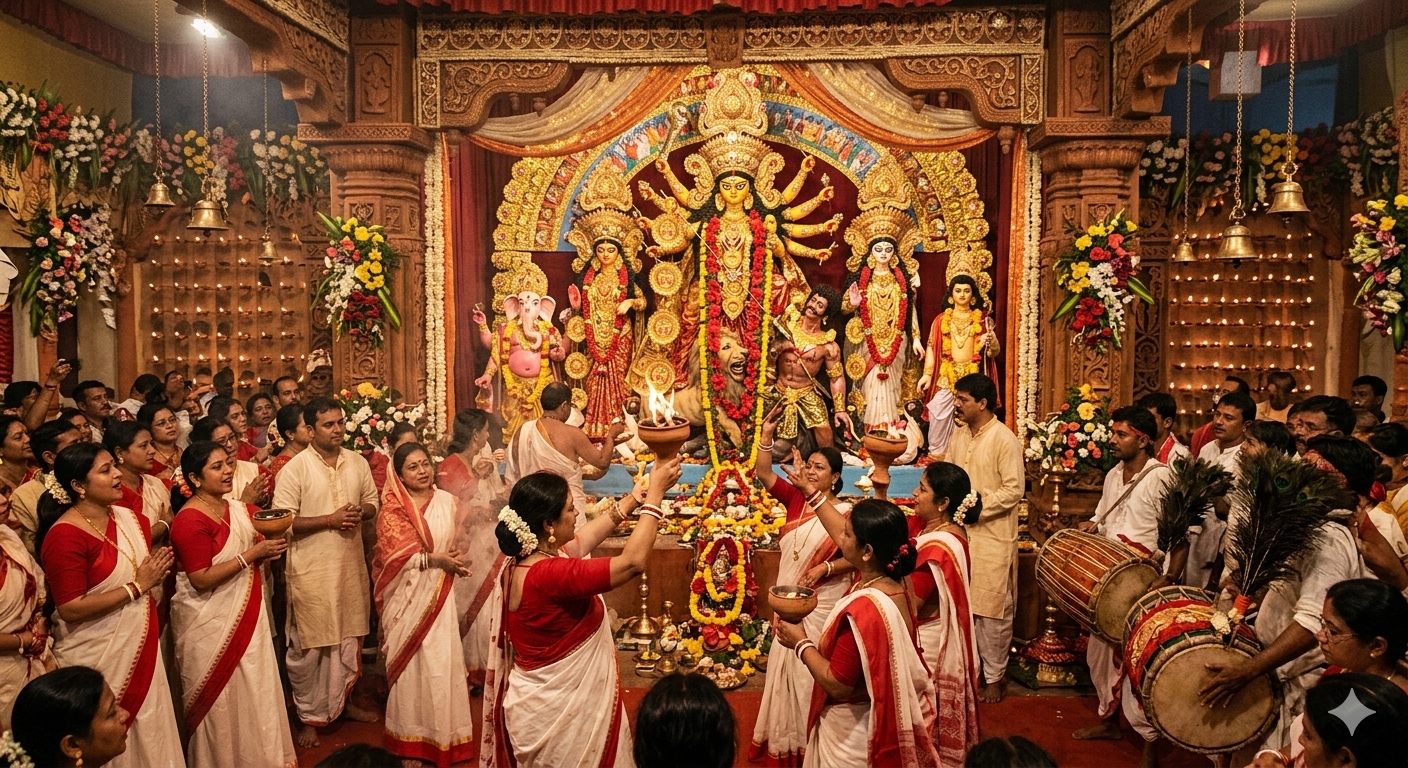
One of the most distinctive aspects of Bengal’s Durga Puja is the humanisation of the goddess. Durga is worshipped not only as Mahishasuramardini, the slayer of Mahishasura, but also as Uma, the beloved daughter returning to her parental home with her children. The emotional farewell during immersion, accompanied by the call “Abar esho Ma” (Come again, Mother), captures the deep affection associated with this tradition.

Historically, Durga Puja began largely as an elaborate celebration organised by royal and zamindar families. With the emergence of community-led and public celebrations, it gradually became a festival embraced by people across social and economic backgrounds. Today, puja pandals serve as important gathering spaces, bringing neighbourhoods together through shared participation and cultural activities.
Art occupies a central place in the celebrations. In Kolkata’s Kumartuli, artisans begin crafting Durga idols months in advance, using clay, bamboo, straw and colours. Traditional sculptures coexist with contemporary artistic interpretations, while elaborately designed pandals showcase architecture, folk crafts and innovative themes inspired by history, rural life and current social issues.
Music and ritual add to the festival’s distinctive atmosphere. The rhythmic beats of the dhak, the sound of conch shells, the ululation of women and the energetic dhunuchi dance create an unmistakable festive experience. The devotional compositions of Shakta poets such as Ramprasad Sen and Kamalakanta Bhattacharya have also enriched Bengal’s spiritual and literary traditions.
Bengali literature has further shaped the cultural understanding of the goddess. Bankim Chandra Chattopadhyay’s “Vande Mataram” connected the idea of the mother with the motherland, while Rabindranath Tagore’s humanistic outlook encouraged a broader understanding of the relationship between religion, culture and human values.
Food is another integral part of the celebration. Traditional offerings and festive meals include khichuri, labra, payesh, luchi, alur dom and an assortment of sweets. In Kolkata, the food stalls around pandals reflect the city’s culinary diversity, combining Bengali favourites with dishes from other parts of India.

Known popularly as Pujo, the festival is also a time for family reunions, new clothes, social visits and late-night pandal-hopping. During the celebrations, Kolkata transforms into a vast cultural landscape illuminated by elaborate decorations, artistic installations and public festivities. People from different communities often participate in organising events, creating an atmosphere that reflects Bengal’s tradition of cultural coexistence.
Durga Puja also carries a powerful message of women’s empowerment. The goddess represents strength, courage and the triumph of good over evil. However, the festival also invites society to reflect on whether women receive the same dignity, freedom and security in everyday life that are symbolically offered to the goddess.
As the celebrations evolve, environmental responsibility has become increasingly important. Eco-friendly materials, natural colours and scientifically managed idol immersion can help reduce the festival’s environmental impact. Digital platforms, innovative lighting and themed installations have expanded its reach while introducing new dimensions to its traditional character.
In 2021, UNESCO inscribed Kolkata’s Durga Puja on its Representative List of the Intangible Cultural Heritage of Humanity, recognising its distinctive combination of religious observance, artistic expression, craftsmanship and community participation.
Ultimately, Durga Puja brings together the many dimensions of Bengal—its devotion, creativity, literature, music, cuisine and social life. Here, the goddess is both a symbol of divine power and a beloved daughter; the pandal is both an artistic showcase and a meeting place for communities.
Perhaps this is why Durga Puja is not merely celebrated in Bengal; it is experienced and lived. When people bid farewell to the goddess with the words “Abar esho Ma”, they express not only the hope of her return the following year but also a commitment to preserving the region’s cultural memories, shared traditions and collective spirit.