Lucknow: Lucknow is one of India’s fastest-growing cities, but its traffic management has struggled to keep pace with rapid urban expansion. Congested intersections, frequent violations, illegal parking, and reckless driving have become part of daily life, increasing travel time and compromising road safety.
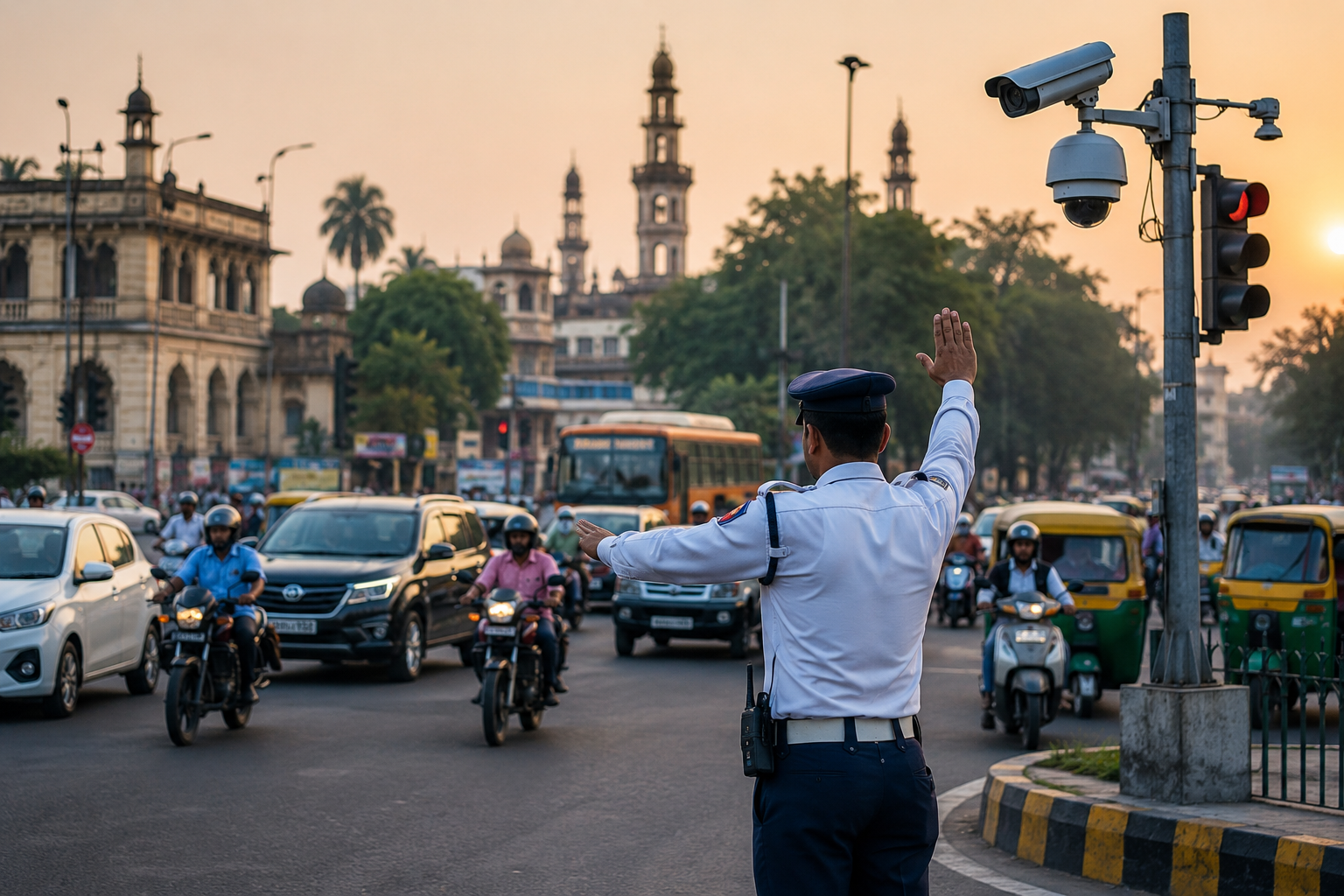
Effective traffic policing is no longer just about issuing challans. It requires a visible police presence at major junctions, intelligent traffic management systems, strict enforcement against wrong-side driving, speeding, and signal jumping, and swift action against encroachments that obstruct roads. Pedestrian safety must also be a priority, with better enforcement around schools, hospitals, and markets.
Technology can significantly improve traffic regulation. AI-enabled surveillance cameras, automated number plate recognition systems, real-time traffic monitoring, and integrated command centres can help identify violations and ease congestion. However, technology must be complemented by trained personnel who can respond quickly during peak hours, emergencies, and public events.


Public participation is equally important. Citizens should follow lane discipline, respect traffic signals, avoid unnecessary honking, and report violations through official channels. Awareness campaigns in schools, colleges, and workplaces can foster a culture of responsible driving.
As Lucknow continues to expand with new residential townships, commercial hubs, and expressway connectivity, efficient traffic policing must become a civic priority. A coordinated approach involving the traffic police, municipal authorities, urban planners, and the public can make roads safer, reduce congestion, and improve the quality of life for everyone. Better traffic policing is not merely about enforcing rules—it is about creating a safer, more orderly, and more livable Lucknow.













 https://www.youtube.com/watch?si=RtToJsBhYBatUrym&v=mOuYNSdhjHA&feature=youtu.be