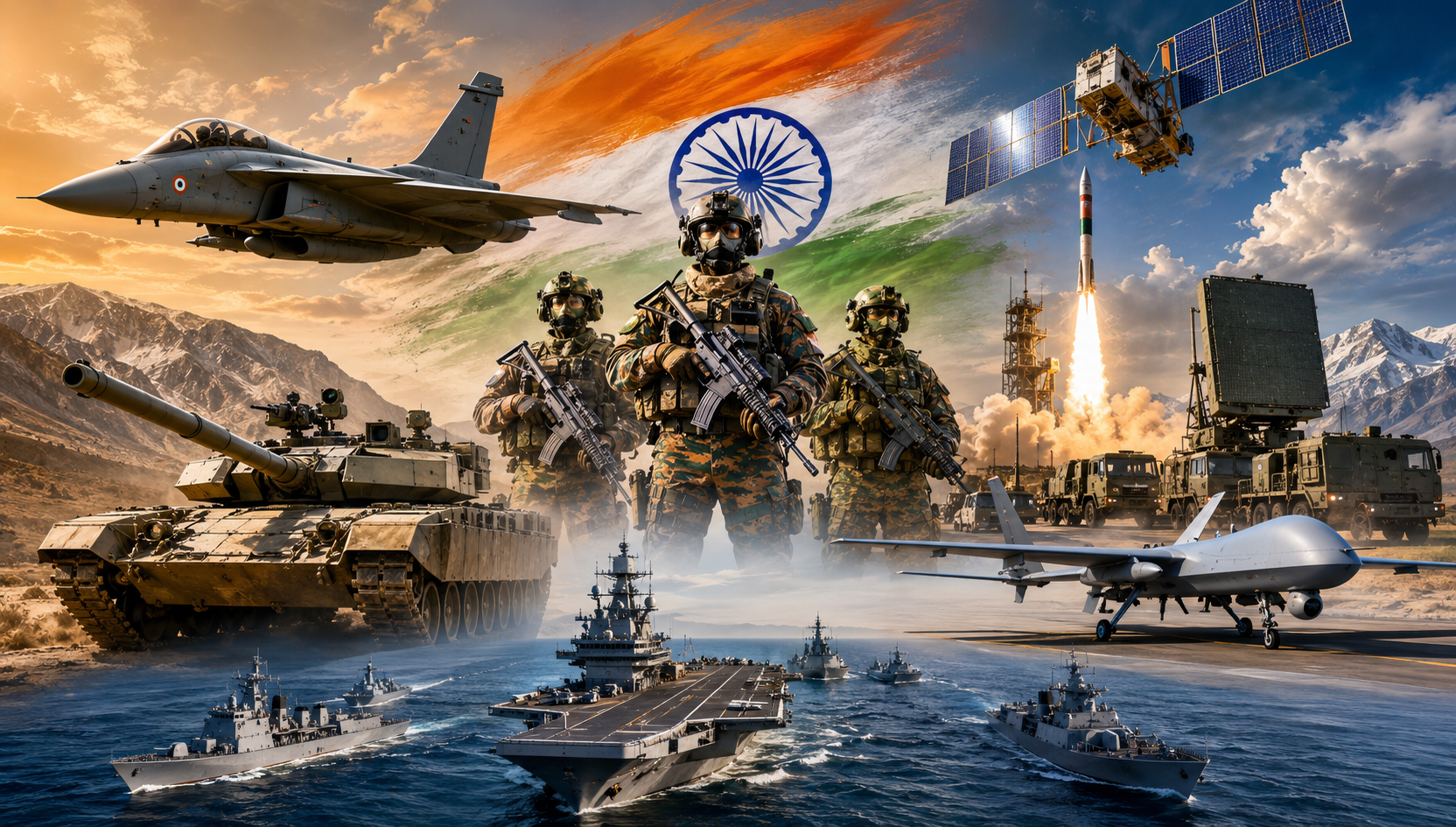
Lucknow: Over the past decade, India has undertaken a significant transformation of its defence sector, focusing on self-reliance, modernization, indigenous manufacturing, and increased private sector participation. While challenges remain, the period has been marked by major policy reforms, higher domestic production, and expanded defence exports.
Push for Self-Reliance
A key pillar of the transformation has been the Atmanirbhar Bharat initiative, aimed at reducing dependence on imported military equipment. The government has introduced multiple “Positive Indigenisation Lists,” restricting the import of hundreds of defence items and encouraging their procurement from domestic manufacturers. The emphasis has shifted toward designing, developing, and producing advanced defence systems within India.
Rising Defence Production
India’s defence manufacturing ecosystem has expanded steadily, with public sector enterprises, the Defence Research and Development Organisation (DRDO), and private companies contributing to indigenous production. Domestic manufacturing now includes artillery systems, missile platforms, armoured vehicles, naval vessels, helicopters, drones, radar systems, and electronic warfare equipment.
The corporatisation of the former Ordnance Factory Board into seven Defence Public Sector Undertakings (DPSUs) was another major structural reform aimed at improving efficiency, accountability, and competitiveness.
Defence Exports Reach New Highs
One of the most notable changes has been the rapid growth in defence exports. Indian-made military equipment—including patrol vessels, missile systems, radar, protective gear, and aerospace components—is now being supplied to an expanding number of countries across Asia, Africa, Europe, and the Americas.
The government has simplified export licensing procedures and encouraged both public and private manufacturers to explore international markets.
Modernisation of the Armed Forces
The Indian Armed Forces have inducted a range of new indigenous and imported platforms, including:
- LCA Tejas fighter aircraft
- Advanced artillery systems
- BrahMos supersonic cruise missiles
- Indigenous aircraft carriers and warships
- Light Combat Helicopters (LCH)
- Advanced drones and surveillance systems
- Modern assault rifles and battlefield communication systems
Modernisation has also focused on improving network-centric warfare capabilities, cybersecurity, artificial intelligence, and space-based defence assets.
Increased Private Sector Participation
The defence sector has seen greater participation from private industry through policy reforms that encourage collaboration with global defence companies, technology transfers, and investment in research and development.
Foreign Direct Investment (FDI) norms have been liberalised, allowing up to 74% FDI through the automatic route and up to 100% through government approval in cases involving access to modern technology.


Defence Industrial Corridors
To strengthen manufacturing capabilities, the government established two dedicated Defence Industrial Corridors:
- Uttar Pradesh Defence Industrial Corridor
- Tamil Nadu Defence Industrial Corridor
These corridors aim to attract investment, create supply chains, generate employment, and support defence exports.
Procurement Reforms
The introduction of the Defence Acquisition Procedure (DAP) 2020 prioritised indigenous procurement by introducing categories such as Buy (Indian–IDDM) (Indigenously Designed, Developed and Manufactured). The reforms seek to simplify procurement while promoting domestic innovation.
Focus on Emerging Technologies
India has increased investments in next-generation military technologies, including:
- Artificial Intelligence
- Autonomous systems
- Robotics
- Quantum technologies
- Directed-energy weapons
- Hypersonic systems
- Counter-drone technologies
- Space and cyber defence
Initiatives such as Innovations for Defence Excellence (iDEX) have supported startups and MSMEs working on cutting-edge defence technologies.
Border Infrastructure
The past decade has also witnessed accelerated development of border infrastructure, including:
- Strategic roads and tunnels
- Bridges in frontier regions
- Advanced airfields
- Forward logistics infrastructure
- Enhanced surveillance networks
These projects are intended to improve military mobility and operational readiness along sensitive borders.
Continuing Challenges
Despite substantial progress, several challenges remain:
- Dependence on imported engines and advanced propulsion technologies
- Long procurement timelines
- Need for higher investment in defence R&D
- Greater integration of private industry into large defence programmes
- Building globally competitive manufacturing capabilities
- Sustaining export growth in a competitive international market
Outlook
India’s defence sector has evolved from being predominantly import-dependent to increasingly focused on indigenous design, production, and exports. Continued investment in research, manufacturing, technological innovation, and public-private collaboration will be critical to achieving the country’s long-term objective of becoming a major global defence manufacturing and export hub while strengthening national security













 https://www.youtube.com/watch?si=RtToJsBhYBatUrym&v=mOuYNSdhjHA&feature=youtu.be