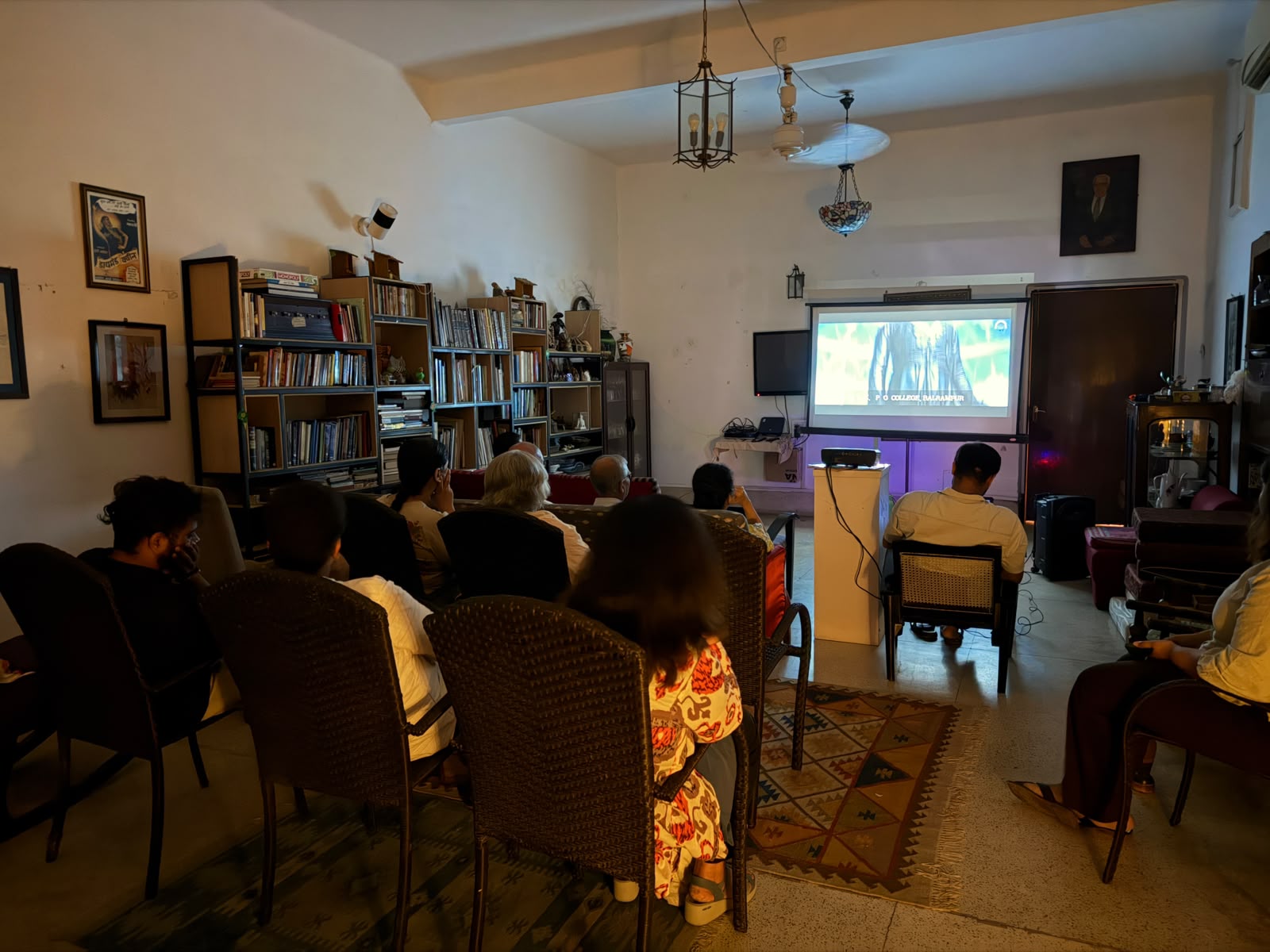
Lucknow: Lucknow Bioscope hosted Filmistaan, a special screening of Awadh Ke Qasbati Rang, a collection of films documenting the people, histories, traditions and cultural expressions of Awadh’s historic qasbas.
Held on Sunday at Lucknow Bioscope, 130, J.C. Bose Marg, Qaiserbagh, the programme featured eight films directed by Aisha Khatoon. The films travelled across several qasbas of Awadh, including Balrampur, Dariyabad, Rudauli, Chandapur and Kakori, offering an intimate portrayal of everyday life and the cultural traditions that continue to shape these settlements.

Through stories centred on people, architecture, music, food and traditional practices, the films captured the distinctive character of qasbati society. Particular attention was given to Awadh’s rich folk and musical traditions, including bhajans, sohar and banna-banni. The collection also explored lesser-known traditions, including those of Jogi singers, who composed and performed their own songs.
Several films focused on important places and personalities associated with Awadh’s cultural history, including Balrampur’s Neelbagh Palace and the home of poet and writer Sardar Ali Jafri.
The screening also highlighted the cultural plurality of Awadh’s qasbas, tracing traditions influenced by Bhakti and Sufi movements. Dewa Sharif, Jain traditions and diverse literary and artistic practices featured prominently, reflecting the region’s distinctive Ganga-Jamuni tehzeeb.

The films placed the qasbas within the broader historical narrative of Awadh as well. The story of Kakori and its association with India’s freedom struggle was explored through Riyaz Alvi’s account of the Kakori Train Action and its enduring place in the town’s collective memory.
Traditional crafts and practices also formed an important part of the collection. The making of sahane offered viewers a glimpse into living traditions that continue to contribute to the cultural identity of Awadh’s qasbas.
Through its eight films, Awadh Ke Qasbati Rang presented Awadh not merely as a geographical region, but as a living cultural landscape shaped by memory, music, faith, craftsmanship, food, architecture and generations of shared traditions.