By Dr Atul Malikram, Political Strategist
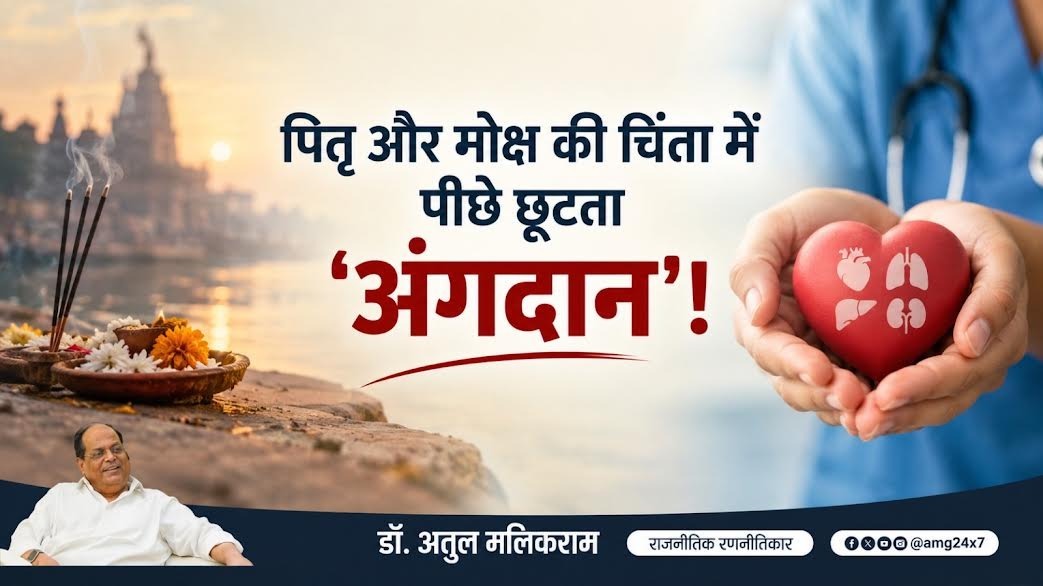
Thousands of people across India wait every year for organ transplants, while many organs that could save lives are lost after death because they are not donated. Despite the potential to give critically ill patients a second chance at life, organ donation continues to be surrounded by misconceptions and superstitions. Madhya Pradesh presents a particularly concerning picture.

With a population of more than 80 million, Madhya Pradesh has relatively low participation in organ donation. In 2023, India recorded 16,542 organ transplants, with Madhya Pradesh accounting for around 1.6 per cent. The situation is even more concerning when it comes to cadaveric organ donation. Between January 2018 and June 2023, only 25 cadaveric organ donations were recorded in Madhya Pradesh, compared with 883 in Telangana and 713 in Tamil Nadu. These figures indicate that the challenge is not limited to medical infrastructure but is also deeply linked to social attitudes.
One of the major barriers is fear surrounding ancestral rituals, salvation and rebirth. Some families believe that donating organs after death could prevent the deceased from attaining peace, lead to ancestral-related religious consequences or result in an incomplete body in the next life. Others believe the body must remain physically complete for the final rites. Such beliefs have no scientific basis, yet their persistence continues to influence family decisions.
Organ donation should be understood not as disrespecting the body but as an opportunity to give another person the gift of life. Hindu philosophy regards the soul as distinct from and immortal compared with the mortal body. In the second chapter of the Bhagavad Gita, Krishna speaks of the temporary nature of the body and the immortality of the soul. From this perspective, the belief that donating an organ after death could harm the soul does not align with the fundamental philosophical idea of the soul’s immortality.
Indian traditions also contain powerful examples of sacrifice and selflessness. The story of sage Dadhichi, who donated his bones, and the legend of King Shibi reflect the ideals of sacrifice and compassion for the welfare of others. Their underlying message is that giving for the protection and well-being of others is a noble act. Across religions, compassion, service and protection of human life are similarly valued. Organ donation, therefore, should not be portrayed as being against any faith.
Lack of information is another major obstacle. Many people still do not understand the difference between brain death and coma. Some fear that the body of a deceased donor will not be treated with dignity. In reality, organ donation is carried out through established medical and legal procedures. Providing families with accurate information and compassionate counselling is therefore crucial.

Religious leaders can play a particularly important role. Temples, mosques, gurdwaras and churches are not only places of religious instruction but also powerful platforms for social awareness. If religious leaders openly communicate that saving the life of a person in need is an act of compassion and service, it could significantly change public attitudes.
The government should conduct district-level organ donation awareness campaigns and ensure that major hospitals have trained transplant coordinators capable of communicating with families sensitively, particularly in cases involving brain death. Schools, colleges, panchayats and social organisations should also be used to explain the actual organ donation process. Families that donate organs should be publicly recognised to create positive examples and encourage others.
A single donor can potentially help several patients receive life-saving transplants. Death, therefore, need not be viewed only as the end of life; it can also become an opportunity to extend life to others.
For Madhya Pradesh to make meaningful progress in organ donation, government directives alone will not be sufficient. Society, the medical community, religious leaders, media and elected representatives must work together to create sustained awareness. Most importantly, decisions should be guided by facts and humanity rather than fear and superstition.
Concerns about ancestral rites and salvation may remain deeply personal, but saving a living person’s life is also an act of compassion and humanity. The time has come to treat organ donation not merely as a medical issue but as a social movement. Giving someone the gift of life even after death may be one of the most meaningful acts of human compassion.




 ---------------------------------------------------------------------------------------------------