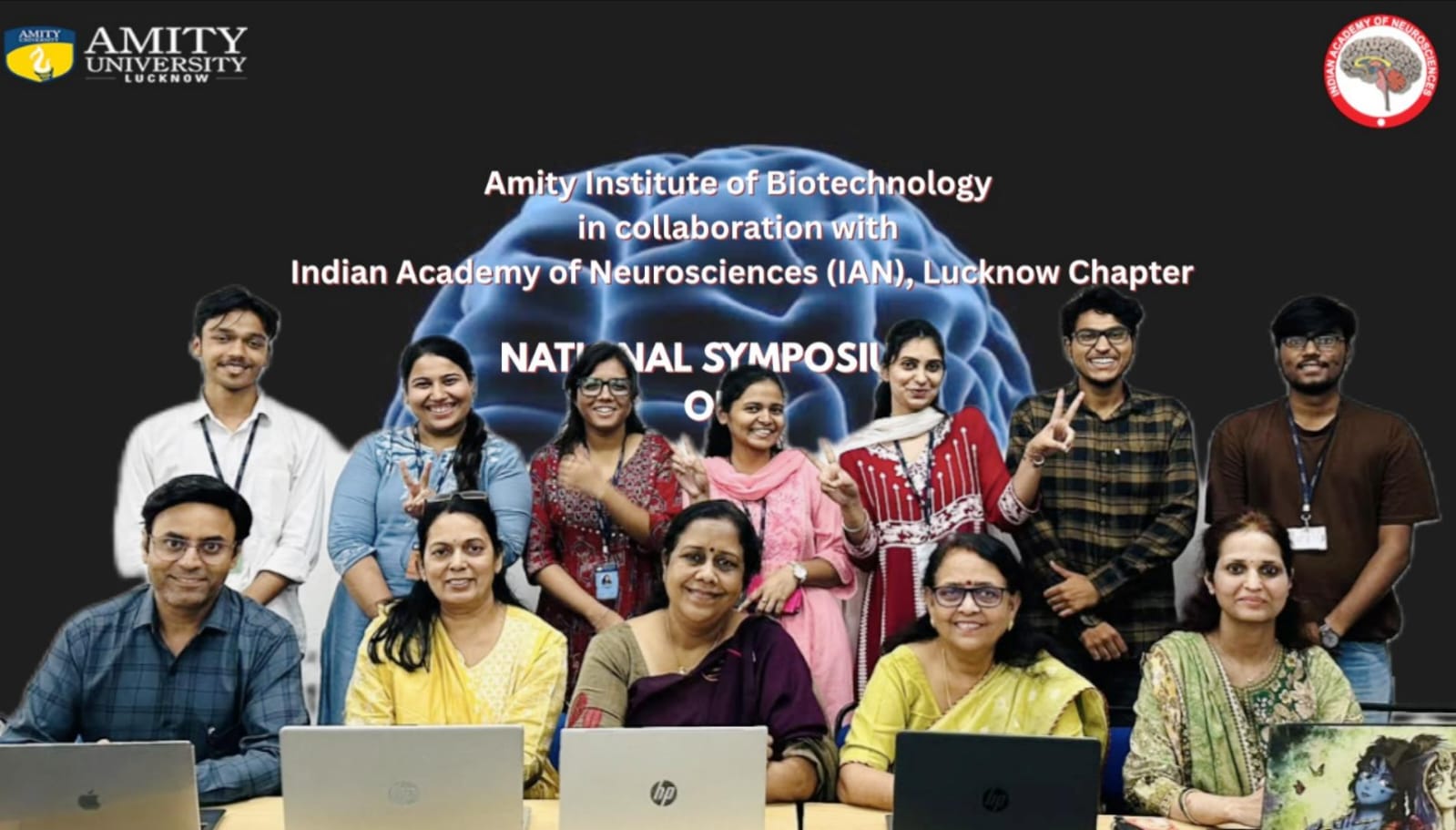
Lucknow: Amity Institute of Biotechnology, Amity University Uttar Pradesh, Lucknow Campus, in collaboration with the Indian Academy of Neurosciences (IAN), Lucknow Chapter, organised a two-day National Symposium on “Neurological Disorders: From Medication to Intervention” on September 8 and 9, 2026.
The symposium provided a multidisciplinary platform for researchers, clinicians, academicians, healthcare professionals and students to deliberate on recent advances in the understanding, diagnosis, treatment and rehabilitation of neurological disorders. Discussions focused on strengthening collaboration between neurologists, neurosurgeons, neuroscientists, rehabilitation specialists, psychologists and allied healthcare professionals to improve comprehensive neurological care.

The inaugural session was attended by Prof. (Dr.) Ishan Patro, ICMR Emeritus Scientist, Jiwaji University, Gwalior, former Vice-Chancellor of Ravenshaw University, Cuttack, and Immediate Past President of the Indian Academy of Neurosciences. He was joined by Prof. (Dr.) Anil Vashisht, Pro Vice-Chancellor, Amity University Uttar Pradesh, Lucknow Campus; Wg. Cdr. (Dr.) Anil Kumar (Retd.), Deputy Pro Vice-Chancellor and Director, ASET; Prof. (Dr.) Rajesh K. Tiwari, Dean Academics and Director, Amity Institute of Biotechnology; Prof. (Dr.) J.K. Srivastava, Dy-Dean Research (S&T), besides heads of institutions and departments.
Dr. Vinay K. Khanna, President of the Indian Academy of Neurosciences and former Chief Scientist at CSIR-Indian Institute of Toxicology Research, Lucknow, was the chief guest at the inaugural session. He was accompanied by Dr. P.K. Dalal, President, IAN Lucknow Branch and former Professor and Head, Department of Psychiatry, King George’s Medical University, Lucknow, and Prof. (Dr.) Shadab Raza, Secretary, IAN Lucknow Chapter, Department of Stem Cell Biology and Regenerative Medicine, Era’s Lucknow Medical College and Hospital, Era University.
The inaugural addresses highlighted the need for interdisciplinary approaches to neurological healthcare, particularly in areas such as early diagnosis, rehabilitation and long-term management. Speakers stressed that closer interaction between medical specialists, researchers and technology-driven innovators could help develop evidence-based strategies and improve patients’ quality of life.
Several eminent experts delivered scientific sessions covering contemporary developments in neurological disorders and innovative therapeutic approaches ranging from pharmacological management to advanced intervention techniques. The invited speakers included Prof. (Dr.) Syed Shadab Raza, Era’s Lucknow Medical College and Hospital; Prof. (Dr.) Anand Prakash, former Vice-Chancellor, MGCU, and Professor and Head, Bihar; Prof. (Dr.) Pankaj Seth, Scientist-VII and Senior Professor, National Brain Research Centre, Manesar, Gurugram; Prof. (Dr.) Suman Jain, AIIMS, Delhi; Dr. Phalguni Alladi, Scientist G, National Institute of Mental Health & Neuro Sciences, Bengaluru; Dr. Kaushik Pramod Sharma, HIMS, Swami Rama Himalayan University, Dehradun; Dr. Rashmi KS, Department of Physiology, Kasturba Medical College, Mangalore; Dr. Srishti Mohapatra, MBBS, MD (Internal Medicine), UK Head of Aesthetic and Regenerative Medicine, The Wellness Co. India; and Dr. M. Aleem Siddiqui, Professor and Head of Psychiatry, Era University, Lucknow.

The symposium also encouraged young researchers and students to present their research and interact with experts. The organisers emphasised that such academic platforms can help students understand emerging challenges in neuroscience while encouraging research-based solutions to neurological healthcare needs.
The guests appreciated the efforts of Dr. Prachi Srivastava, Convenor, and Dr. Shilpi Srivastava, Co-Convenor, for promoting collaboration, knowledge exchange and evidence-based approaches in neurological care.
The organising team included Dr. Jyoti Prakash, Dr. Rachna Chaturvedi, Dr. Manish Dwivedi and Dr. Ruchi Yadav, whose cooperation contributed to the successful conduct of the symposium. Student volunteers Shrijal, Sanjana, Anushka, Jahvnavi, Sankalp, Aman and Shashank also played an active role in managing the programme.
The valedictory session featured Prof. (Dr.) Rajat Sandhir, Director, Department of Biochemistry, Panjab University, Chandigarh, as chief guest. The two-day programme concluded with an emphasis on continued research, professional collaboration and the development of accessible, evidence-based strategies for better neurological health outcomes.


 ---------------------------------------------------------------------------------------------------