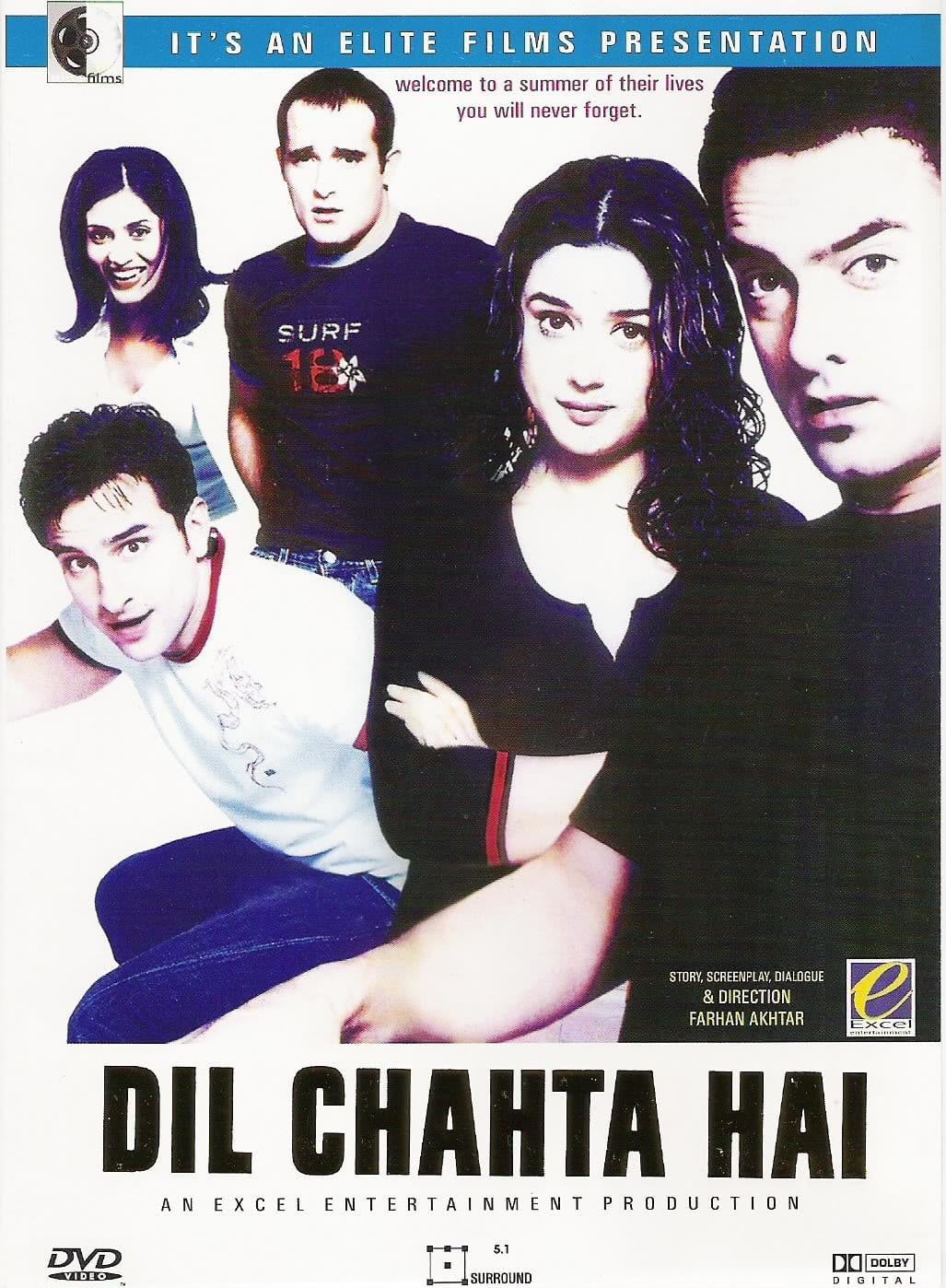
Mumbai: Twenty-five years after Dil Chahta Hai arrived in theatres and changed the way friendship, relationships and young urban India were portrayed on screen, Farhan Akhtar has acknowledged one of the film’s enduring criticisms: its female characters received considerably less screen time than its three male leads.
Looking back at his 2001 directorial debut, Akhtar agreed that the film was primarily centred on Akash, Sid and Sameer, played by Aamir Khan, Akshaye Khanna and Saif Ali Khan. However, he stressed that the women in the story were never intended to be weak or merely supporting figures.

“I agree. The film is about the three boys and they predominantly are on screen. But none of the female characters was written as weak woman,” Akhtar told The Indian Express.
He specifically pointed to Dimple Kapadia’s Tara, whose presence, despite being limited compared with the three friends, has a major emotional impact on their relationship. According to Akhtar, Tara plays a crucial role in the growing distance between Sid and Akash.
“Dimple’s Tara, to me, had probably the strongest in terms of her effect on the relationship of the three boys. She, in a way, drives Sid and Akash away from each other,” he said.
Akhtar also highlighted the independence of Sonali Kulkarni’s Pooja, who is in a relationship with Sameer. Rather than being portrayed simply as a romantic partner, Pooja is shown as someone who has a clear understanding of what she wants from life and relationships.
“Pooja, played by Sonali Kulkarni, is an independent woman, who instills the confidence in Sameer that one should marry the person one loves,” Akhtar said.
Deepannita Sharma’s Shalini, meanwhile, expresses her agency in a quieter but equally significant way. Her fiancé objects to some of her choices, but instead of simply accepting his expectations, she responds through what Akhtar describes as a form of silent resistance.

“Shalini has her own way of fighting back by doing the things that her fiancé is kind of upset about. It’s almost like a silent protest,” he said.
For Akhtar, however, the film’s central purpose was always the friendship between its three protagonists and the changes they experience as they grow older. The story follows them from a period of youthful immaturity to a deeper understanding of themselves, their relationships and each other.
“At the heart of it all, it is a celebration of friendship. It’s also about growing up together. What Dil Chahta Hai really does is it takes the friends from a place of immaturity to a place of maturity,” he said.
The filmmaker’s reflections offer an interesting perspective on a film that has remained culturally relevant for a quarter of a century. While Dil Chahta Hai is unmistakably built around the lives and friendship of three young men, its women characters influence some of the most important emotional turns in their journey.
Seen today, the film can certainly be critiqued for the amount of space it gives its female characters. At the same time, Akhtar’s comments suggest that screen time and character agency were not necessarily treated as the same thing during the writing of the film.
Twenty-five years on, Dil Chahta Hai continues to be remembered for its portrayal of friendship and growing up, while its treatment of relationships and gender offers another lens through which audiences can revisit the film and its legacy.


 ---------------------------------------------------------------------------------------------------