Charbagh records highest commercial pollution, while Amausi tops particulate pollution levels; noise exceeds permissible limits across zones
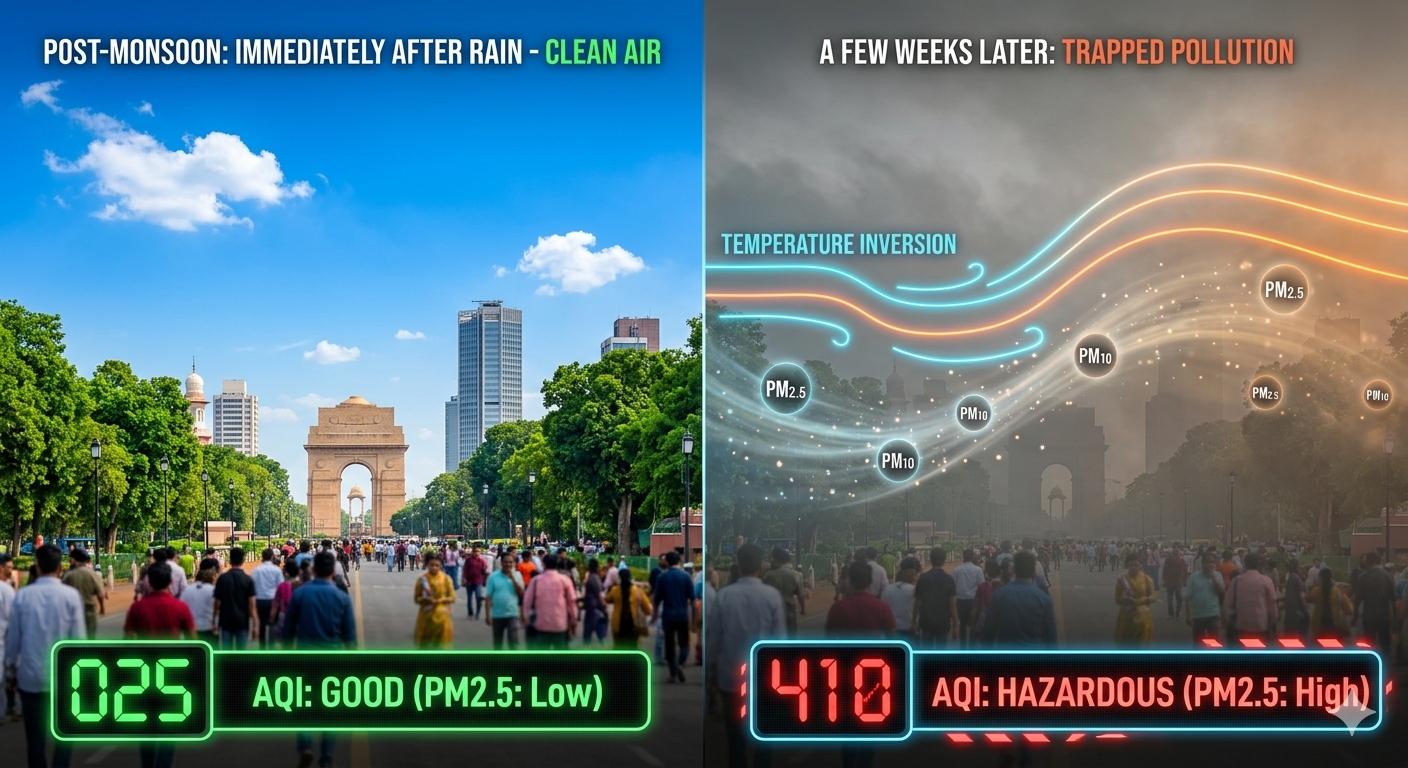
Lucknow: Air pollution in Lucknow worsened during the post-monsoon season of 2026, with PM10 levels rising 26.2% and PM2.5 concentrations increasing 8.2% compared to the corresponding period last year, according to a report released by the CSIR-Indian Institute of Toxicology Research (IITR), Lucknow.
The report, titled Assessment of Ambient Air Quality of Lucknow City Post Monsoon-2026, prepared by IITR’s Environmental Monitoring Laboratory, assessed air quality at nine locations across residential, commercial and industrial zones.
The city recorded an average PM10 concentration of 133.9 micrograms per cubic metre against the permissible limit of 100. Industrial area Amausi recorded the highest level at 188.5, followed by commercial hub Charbagh at 157.2. Indira Nagar recorded the highest residential concentration at 126.5.
The average PM2.5 concentration stood at 70 micrograms per cubic metre, exceeding the national standard of 60. Amausi again recorded the highest level at 93.5, while Charbagh registered 81.6 and Indira Nagar 68.6.
In contrast, sulphur dioxide and nitrogen dioxide concentrations remained within prescribed national standards. Lead and nickel levels were also found to be within their respective permissible limits.
The report also highlighted alarming noise pollution across the city. Residential areas recorded daytime noise levels of up to 73.7 decibels and nighttime levels of 76.7 decibels, significantly exceeding the permissible limits of 55 and 45 decibels respectively. Charbagh recorded the highest commercial noise levels, reaching 89.7 decibels during the day and 87.4 decibels at night.


According to the report, adverse meteorological conditions and extensive infrastructure activities, including underpass construction, road digging and projects under the CM Grid Yojana, contributed to the increase in particulate pollution.
However, the five-year trend from 2022 to 2026 indicates an overall decline and stabilisation in particulate pollution following government interventions.
The report noted that Lucknow had 31.99 lakh registered vehicles as of March 31, 2026, an increase of 4.9% over the previous year. Electric vehicle registrations rose by 59.7% to 89,371.
IITR recommended stricter dust-control measures at construction sites, including barricading and HDPE nets, scheduling major roadworks during non-peak hours, phasing out older polluting vehicles and expanding electric vehicle charging and CNG infrastructure. It also called for preventing open waste burning, enforcing engine switch-off rules at traffic signals and taking strict action against pressure horns.
The report highlighted ongoing measures such as the Uttar Pradesh Clean Air Plan, expansion of public transport, Metro services, outer ring roads and mechanised road sweeping by the Lucknow Municipal Corporation as important steps towards improving the city’s environment.





 https://www.youtube.com/watch?si=RtToJsBhYBatUrym&v=mOuYNSdhjHA&feature=youtu.be