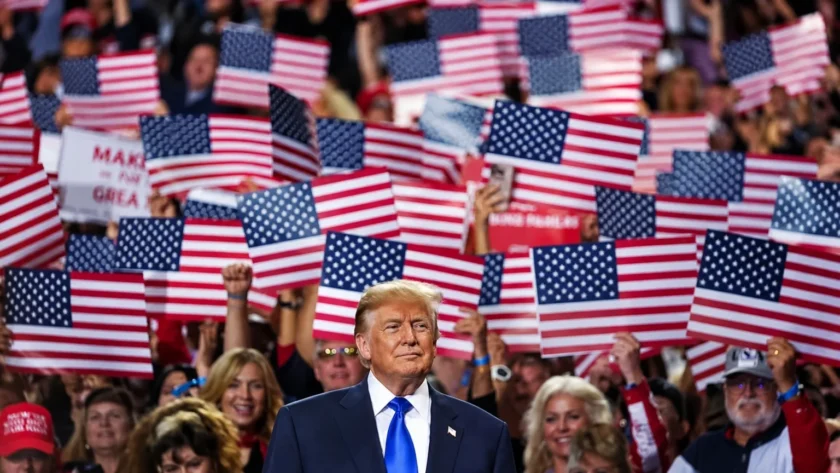
New Delhi/ Washington | The ongoing conflict between the United States and Iran is raising serious geopolitical and economic concerns, with reports suggesting that several advisers to U.S. President Donald Trump are urging the administration to prepare an exit strategy from the Iran war.
According to recent reports, advisers fear that a prolonged conflict could trigger a sharp rise in oil prices and create political repercussions in the United States ahead of the 2026 elections. While the White House has publicly dismissed the need for an immediate end to the military campaign, discussions within policy circles have intensified over the long-term economic risks of the war.

Trump Downplays Exit Strategy Speculation
Speaking about the ongoing military operation against Iran, Donald Trump said the campaign had already achieved much of its initial objectives and had progressed beyond early expectations.
The White House also stated that there is currently no urgent need for a formal war termination plan. However, internal discussions reportedly reflect growing concerns about the economic and strategic consequences if the conflict drags on.
Oil Prices Volatile Amid War Tensions
Global energy markets initially reacted sharply after hostilities escalated between the United States and Iran. The price of Brent crude oil surged to nearly $119 per barrel in the early days of the conflict.
However, prices recently dropped to below $94 per barrel, offering temporary relief to global markets. Analysts attribute the decline to several factors, including discussions among Group of Seven countries about releasing strategic oil reserves and signals suggesting the conflict may not last indefinitely.
Another factor affecting market sentiment was a hint from Iran’s powerful paramilitary force, the Islamic Revolutionary Guard Corps, that the crucial shipping lane known as the Strait of Hormuz could reopen if certain conditions are met.
The Real Crisis: Marine Insurance
Despite fluctuations in oil prices, experts warn that the real threat to global energy supply may not be oil itself—but marine insurance.
Shipping companies transporting oil through the Strait of Hormuz rely heavily on war-risk insurance to operate in conflict zones. Without insurance coverage, vessels are legally and financially unable to transit through the region.
Earlier this month, seven major global Protection and Indemnity (P&I) insurance clubs, which collectively cover about 90 percent of the world’s maritime trade, suspended war-risk insurance coverage for vessels passing through the Strait of Hormuz.
These include leading insurers such as Gard, Skuld, NorthStandard, London P&I Club, Steamship Mutual, American Club and Swedish Club.
Insurers cited extreme wartime risks as the primary reason for withdrawing coverage.
EU Regulation Behind Insurance Withdrawal
Another factor behind the insurers’ decision is the European Union’s stringent financial regulation known as Solvency II. The regulation requires insurance companies to maintain sufficient capital reserves to cover potential losses.
In high-risk war zones such as the Strait of Hormuz, the required capital reserves increase dramatically. With rising incidents of drone attacks, missile strikes, and maritime threats in the region, insurers found it increasingly difficult to maintain coverage without violating regulatory capital requirements.
Trade May Not Resume Quickly Even if War Ends
Experts warn that even if hostilities between the United States and Iran end soon, maritime trade through the Strait of Hormuz may not resume immediately. Insurance companies will need time to reassess risk models and ensure the region is stable before restoring coverage.

Analysts estimate this process could take 12 to 24 months, meaning the economic impact of the conflict could persist long after a political settlement is reached.
Strategic Importance of the Strait of Hormuz
The Strait of Hormuz is one of the world’s most critical energy chokepoints. Nearly 20 percent of global seaborne oil trade passes through this narrow waterway, with approximately 20 million barrels of oil shipped daily to markets across Asia, Europe, and beyond.
Any prolonged disruption in the region could therefore have significant repercussions for the global economy.
Rising Military Costs for the United States
The financial burden of the war is also mounting. According to estimates from the United States Department of Defense, the U.S. military used weapons worth roughly $5.6 billion within the first two days of operations, including Tomahawk cruise missiles and advanced air defence interceptors.
Reports suggest the U.S. military is now considering increased use of relatively cheaper laser-guided bombs instead of expensive precision munitions to reduce operational costs.
Concerns Over Weapons Stockpiles
Some members of the United States Congress have also expressed concern that a prolonged conflict could deplete America’s stockpile of advanced weapons. The U.S. has already supplied large quantities of military equipment to Ukraine and must maintain readiness for potential tensions in the Indo-Pacific region involving China.
As a result, additional air defence systems such as THAAD and Patriot missile system are reportedly being repositioned to the Middle East.
Global Economic Impact
The conflict has already triggered volatility in global markets. Several Asian and European stock markets have recorded sharp declines, and analysts estimate that hundreds of billions of dollars in market value have been wiped out amid rising uncertainty.
Europe has also seen a spike in natural gas prices, highlighting the broader ripple effects of the crisis beyond oil.
Implications for Oil Importers Like India
Countries heavily dependent on imported energy, including India, could also face serious consequences. India imports around 80 percent of its crude oil, much of it from the Middle East, with a large share transported through the Strait of Hormuz.
If the shipping route remains unstable for an extended period, India may face rising import costs despite maintaining strategic petroleum reserves.
Economic Timeline May Outlast Political War
Experts believe that while governments may eventually reach a political settlement to end the war, the economic and financial consequences could last far longer.
Until marine insurance coverage returns and shipping routes are fully secure, a significant portion of the world’s oil supply chain will remain at risk—making the insurance market, rather than the battlefield, the key factor shaping the timeline of this crisis.