Government Approves Additional ₹3.92 Crore; Beneficiaries to Receive 90% Subsidy on Goat Rearing Units
Lucknow: The Uttar Pradesh government is strengthening livelihood opportunities for Scheduled Caste families through its goat rearing scheme, aimed at promoting self-employment, increasing household incomes and improving economic conditions in rural areas.
For the current financial year, the government has approved supplementary financial assistance of ₹3.92 crore (₹3,92,94,000) under Grant No. 83 for implementing the scheme. The sanctioned amount has been allocated to various districts according to their requirements and demands under the Special Component Plan for Scheduled Castes.
The scheme seeks to provide accessible livestock-based livelihood opportunities to economically weaker families. Goat rearing, which requires relatively low initial investment, is being promoted as a viable source of rural income.
In Aligarh district, the administration has prioritised transparent implementation and beneficiary selection in accordance with government guidelines. Officials have also been directed to include eligible applicants from the previously prepared waiting list to ensure that deserving families are not excluded.
The selection process has been completed according to the prescribed targets, while a waiting list of 44 additional eligible beneficiaries has also been prepared.
Under the scheme, unemployed men and women belonging to the Scheduled Caste community and aged 18 years or above are eligible to apply. Priority is being given to landless families, economically weaker sections, widows, destitute women and persons with disabilities. Applicants must also have adequate space and basic facilities for safely maintaining livestock.
90% Government Subsidy on Goat Rearing Units
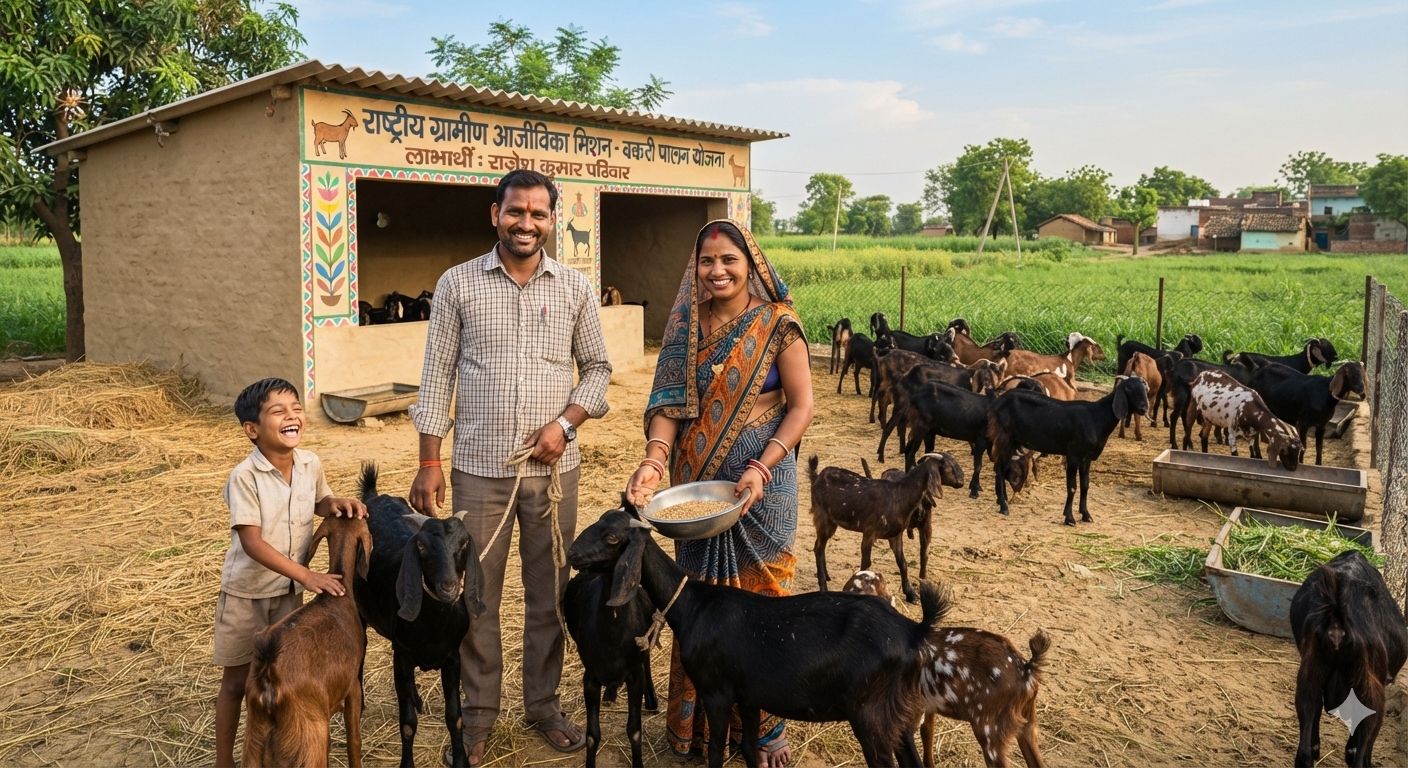
According to the prescribed model of the Animal Husbandry Department, each beneficiary receives a unit comprising five female goats and one male goat (5+1 model). The total project cost has been fixed at ₹60,000, of which the state government provides a subsidy of up to 90%, amounting to ₹54,000. The beneficiary contributes the remaining 10%, or ₹6,000.
To ensure transparency in procurement, beneficiaries are given the freedom to select healthy, disease-free and improved-breed goats. All animals purchased under the scheme undergo mandatory ear-tagging to facilitate physical verification and digital record-keeping.

Training, Healthcare and Insurance Support
The administration is also focusing on technical training to help beneficiaries develop sustainable livestock enterprises. Selected participants receive practical training through the Central Institute for Research on Goats or government training centres. The sessions cover scientific animal care, balanced feeding, breeding management and improved goat-rearing practices.
The Animal Husbandry Department provides healthcare support, including timely vaccination against diseases such as PPR, Foot-and-Mouth Disease (FMD) and Enterotoxaemia (ET), along with regular deworming.
Beneficiaries can also access emergency veterinary assistance through the toll-free helpline 1962 and mobile veterinary services, which provide treatment at their doorsteps.
Livestock insurance has been made a mandatory component of the scheme. The goats and bucks distributed to beneficiaries are insured for the prescribed period, with the insurance premium covered from the sanctioned subsidy. This arrangement is intended to protect economically vulnerable livestock owners against financial losses caused by unexpected illness or accidents.
Goat rearing is considered a promising rural enterprise because of the animals’ breeding capacity and sustained local demand for milk, meat and organic manure. With proper care and management, small livestock units can gradually develop into independent income-generating enterprises.
To maintain financial and administrative accountability, the list of beneficiaries selected in Aligarh is being sent directly to the department’s directorate through the official email system. The district administration is also ensuring that the allocated funds are utilised within the stipulated timeframe and in accordance with financial regulations.
Through this initiative, the state government aims to expand livestock-based self-employment among Scheduled Caste families, strengthen rural livelihoods and promote inclusive economic development.








 https://www.youtube.com/watch?si=RtToJsBhYBatUrym&v=mOuYNSdhjHA&feature=youtu.be