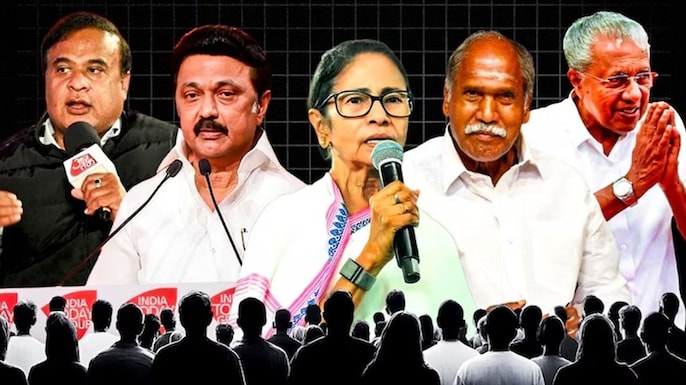
New Delhi: India’s April 2026 Assembly elections unfolded as one of the most expansive and politically consequential democratic exercises in recent years, spanning four major states—Assam, Kerala, Tamil Nadu, and West Bengal—along with the Union Territory of Puducherry. Covering 824 constituencies and involving nearly 17.4 crore eligible voters, the polls were announced on March 15, 2026, by the Election Commission of India. Widely seen as a mid-term political barometer ahead of the 2029 Lok Sabha elections, the contests brought governance, development, welfare, infiltration, and regional identity into sharp focus.
Polling was conducted in three key phases. On April 9, voters in Assam (126 seats), Kerala (140 seats), and Puducherry (30 seats) turned out in large numbers. Assam recorded a robust turnout of around 75–76% by mid-day, reflecting high political engagement, while Kerala saw approximately 78% participation. The second phase on April 23 witnessed polling in Tamil Nadu’s 234 constituencies and the first phase in West Bengal, covering 152 seats. Tamil Nadu stood out with a record turnout of 84.69%, among the highest in its electoral history. The final phase on April 29 completed voting in West Bengal’s remaining constituencies, with the state registering an extraordinary overall turnout of nearly 92.9%, despite sporadic reports of violence in select pockets.

The political landscape across states presented a diverse and complex picture. In Assam, the BJP-led government under Chief Minister HimantaBiswa Sarma sought re-election on a platform of development, border security, and anti-infiltration measures, with most exit polls indicating a comfortable edge for the NDA. Kerala remained a classic bipolar contest between the ruling Left Democratic Front led by Pinarayi Vijayan and the United Democratic Front, with welfare, governance, and economic concerns dominating voter discourse; exit polls suggested a possible advantage for the UDF.
Tamil Nadu offered one of the most intriguing battles. The ruling DMK under M.K. Stalin faced anti-incumbency pressures, while actor Vijay’s TamilagaVettriKazhagam (TVK) made a significant electoral debut, emerging as a potential third force. Exit polls reflected a tight contest, with projections ranging widely—some giving DMK+ an edge while others suggested a strong showing by TVK. The AIADMK-NDA alliance appeared to trail in most assessments.
West Bengal remained the most closely watched battleground, with a fierce contest between the Trinamool Congress led by Mamata Banerjee and a resurgent BJP. While the TMC emphasized welfare schemes and federal autonomy, the BJP focused on national security and infiltration issues. Exit polls remained sharply divided, with some projecting a BJP lead and others indicating a narrow TMC victory or a hung assembly.

In Puducherry, the NDA alliance, including AINRC, aimed to retain its foothold in a relatively smaller but strategically significant contest.
Campaigning across regions blended local concerns with national narratives. The Election Commission’s Special Intensive Revision of electoral rolls became a flashpoint, drawing criticism from opposition parties, though the ECI defended it as a necessary step to eliminate duplication and enhance accuracy. Prominent leaders, including Prime Minister Narendra Modi, actively campaigned, framing the elections as a referendum on development versus dynasty politics and appeasement.
The counting of votes is scheduled for May 4, with final results expected by May 6. Beyond determining state governments, these elections are set to shape national political momentum, influence coalition strategies, and provide crucial insights into voter priorities. The high turnout and largely smooth conduct underscore the resilience and maturity of India’s electoral system, reinforcing its status as the world’s largest democracy.




 ---------------------------------------------------------------------------------------------------