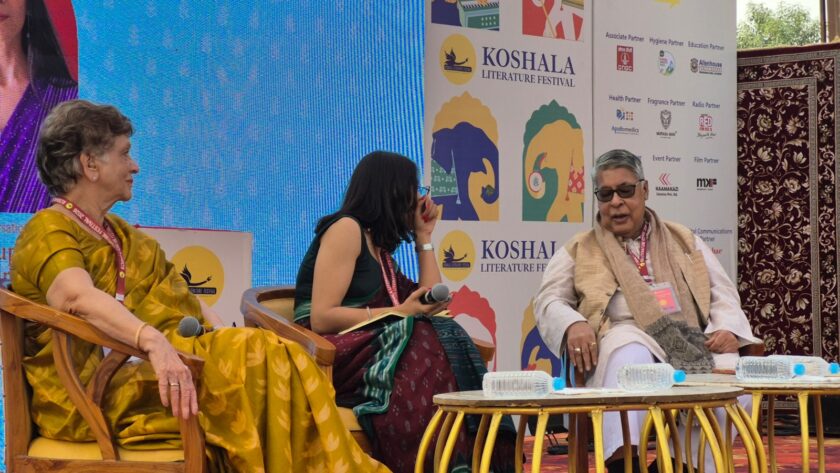
Lucknow: Anirudh Kanisetti and Neha Sinha, in conversation with Aakriti Mandhwani, tackled a question that sounds simple: what do we do with the past? Nostalgia can teach us things, but it can also let us remember only the convenient parts, and those parts usually leave out ordinary people, marginalised communities and the natural world.
Kanisetti pointed out that most of the history we absorb is about kings, conquerors and big personalities. Traders, farmers and pastoral communities barely get a mention. He was also wary of romanticising old practices like traditional water management. Inscriptions from parts of South India show that who got water was often decided by caste and hierarchy, so the systems we admire weren’t necessarily fair. Looking at history through common people’s lives, he said, tells us far more about the inequalities we live with today.
Sinha brought it down to the ground, literally, with the Delhi Ridge, which is part of the ancient Aravalli range. Colonial-era forestry left it with invasive trees like vilayati kikar that crowd out native plants. Her answer is to remove them and bring back native biodiversity, not to plant things because they look green or ceremonial. That’s why she’s excited about biodiversity parks, which give birds, insects and mammals a place to live.
She was blunt about planting for show. Tulips in Delhi are the perfect example: pretty, but the climate can’t sustain them. Plantation drives need to start from the local soil, climate and species, or they fail and waste effort.
Nature and power also came up. Forests have long been controlled by restricting who can enter them, and that thinking still shapes how we manage them. Sinha said city parks shouldn’t be quietly turned into parking lots, and urged people to look after their own trees and local green spaces instead of treating nature as something you only visit on holiday.
One of the loveliest parts was about nature as a calendar. Birds change plumage and trees flower and fruit at set times, and farmers, tribal communities and fisherfolk have long read these signs. As we lose touch with nature, that knowledge fades, and with it some of our sense of place.
That connected to shifting baseline syndrome, where each generation accepts a more degraded environment as normal because it never saw the earlier one. Sinha remembered Delhi having far more fireflies and vultures. We’ve stopped noticing they’re gone, and that forgetting weakens the push to bring things back.
Kanisetti widened the lens to how India imagines its future. He argued we lean too much on glorified rulers and old power structures, while big infrastructure and data-centre projects brush aside environmental concerns and silence local communities and protesters. A real vision of the future, he said, has to include farmers, workers and marginalised people, not just technological ambition or nostalgia.
They ended on cautious hope. Sinha said that if there’s political will and sustained effort, restoring rivers, wetlands and forests can bring wildlife back, and even small efforts in places we care about count.
The takeaway: remembering the past doesn’t mean going back to it. It means learning from it, noticing who got forgotten, and building something fairer and greener.











 https://www.youtube.com/watch?si=RtToJsBhYBatUrym&v=mOuYNSdhjHA&feature=youtu.be