
Former Supreme Court judge, Union Government, AIIMS, WHO India and global trauma experts chart the path to implement the Supreme Court’s landmark May 2026 order
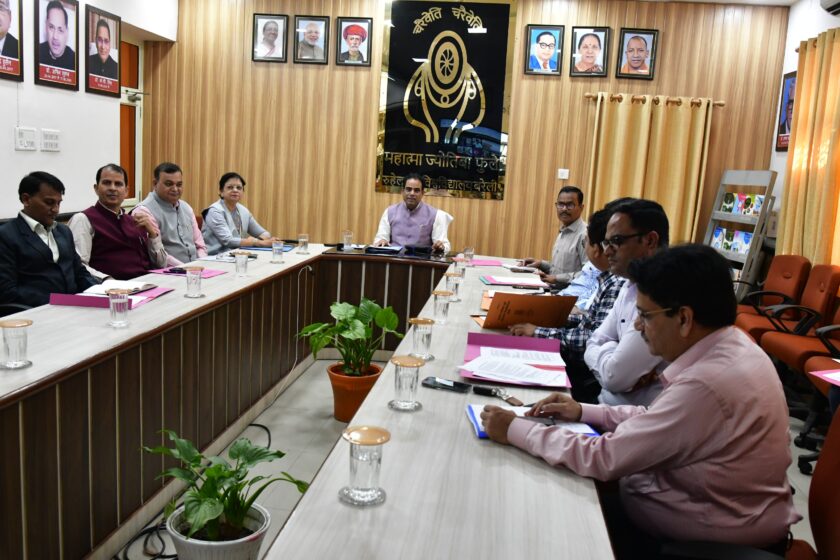
New Delhi: SaveLIFE Foundation convened the First National Dialogue on the Right to Trauma Care at Dr. Ambedkar International Centre, New Delhi on 21st October 2026. The dialogue, themed “From Recognition to Implementation”, brought together distinguished members from the judiciary, government, medical experts, trauma care specialists and civil society.

The event follows the Supreme Court of India’s order of 26 May 2026 in SaveLIFE Foundation v. Union of India, W.P.(C) No. 726 of 2024, which recognised that trauma care is integral to the Right to Life under Article 21 of the Constitution. The Court issued nine interim directions concerning the implementation of trauma care measures by the Union, States and Union Territories. The dialogue focused on turning those directions into working systems on the ground.
Justice J.K. Maheshwari (Retd.), Former Judge, Supreme Court of India, delivered the keynote address. He traced the journey of the petition before the Supreme Court, the recognition of the Right to Trauma Care under Article 21, and its implications for implementation and accountability.
Justice J.K. Maheshwari said, “The right to life under Article 21 cannot remain confined to recognition in law; it must translate into timely medical assistance for every person injured in a road crash. The nine interim directions issued by the Court follow the journey of an injured person from the moment of the crash to the hospital bed, from integrating emergency helplines through 112 and protecting Good Samaritans to equipped ambulances, trained emergency medical technicians, trauma registries and cashless treatment under PM-RAHAT. The challenge now is implementation. The true measure of this interim order will be whether timely care becomes a reality for people across the country, irrespective of where a crash occurs. Ultimately while the petition remains pending adjudication before the Supreme Court of India, one can hope that these interim directions pave the way for a robust and systematic trauma care framework, with the final outcome further strengthening the right to timely medical assistance for all.”
Delivering the opening address at the session, Piyush Tewari, Founder & CEO, SaveLIFE Foundation, said, “The right to life must include a meaningful opportunity to survive a traumatic injury, and the responsibility to make this possible cannot be left to chance. The Supreme Court’s recognition of the right to trauma care provides a constitutional foundation and a clear framework for addressing critical gaps in India’s emergency response system. The challenge now lies in translating this recognition into effective implementation on the ground, through coordinated action by central and state governments, district administrations, emergency responders and hospitals. Saving lives requires more than individual interventions; it requires an interconnected chain of survival that ensures every injured person receives timely assistance, appropriate medical care and the best possible chance of survival, regardless of where or how the injury occurs.”
Dr. Mayur Narayan, Professor of Surgery & Chief, Division of Acute Care Surgery, and Trauma Medical Director, Rutgers Robert Wood Johnson Medical School, USA, delivered the special address at the session. “India has a unique opportunity to strengthen its trauma care system by building on the foundations already in place and addressing the gaps that prevent timely, effective care. Establishing trauma centres is only the first step; these facilities must be properly designated, independently verified and continuously assessed to ensure they deliver quality care. Equally important are standardised emergency medical services, trained first responders, robust trauma registries and accountable rehabilitation systems. The right to trauma care must extend beyond survival to recovery and reintegration into society. Building an effective system requires every link in the chain of survival to work together, from the point of injury to hospital care and rehabilitation,” said Dr. Narayan.
A panel discussion, “From Judgment to Implementation: Building a System that Delivers the Right to Trauma Care”, was chaired by Mr. Mahmood Ahmed, Additional Secretary, Ministry of Road Transport and Highways, Government of India. The panel examined emergency response, pre-hospital and hospital trauma care, workforce, financing, data, rehabilitation, inter-agency coordination and accountability. The panellists were:


- Dr. Amit Gupta, Professor, Trauma Surgery & Critical Care, JPN Apex Trauma Centre, AIIMS, New Delhi
- Adv. Malvika Kapila, Advocate-on-Record, Supreme Court of India
- Dr. B. Mohammed Asheel, Project Lead, WHO India
- Piyush Tewari, Founder & CEO, SaveLIFE Foundation
The session was moderated by Dr. Mahesh Srinivas, Senior Director, Programs, SaveLIFE Foundation, and was followed by an audience Q&A.
Chairing the panel, Mr. Mahmood Ahmed said, “The challenge is to bridge the gap between the provisions we have incorporated into law and their actual implementation, ensuring that the benefits reach people. As India continues to expand its road network and mobility infrastructure, road safety and the protection of precious human lives must advance alongside development. Through the PM-RAHAT scheme, we are working to ensure that accident victims receive cashless treatment without hospitals demanding an upfront payment. With more than 35,000 victims having received treatment since the scheme’s launch, the focus now is on strengthening implementation through the coordinated efforts of the police, hospitals, insurance companies, state governments and other stakeholders. Saving lives requires all of us to work together beyond our individual institutional responsibilities.”
Dr. Amit Gupta of AIIMS, New Delhi, said, “The Right to Trauma Care provides us with an opportunity to strengthen emergency response systems across the country. However, establishing trauma centres is not enough; we must ensure they have trained personnel, essential equipment and the capacity to deliver timely, specialised care. The judgment can help establish minimum standards, mandate appropriate training, and ensure that hospitals are graded and their capabilities verified. A National Trauma Quality Improvement Database is equally important to track patient outcomes, assess the quality of care and identify gaps that need to be addressed. Given the differences in healthcare infrastructure across states, the focus must be on ensuring that these standards are implemented not just in letter, but in spirit and in reality.”
Adv. Malvika Kapila, Advocate-on-Record, Supreme Court of India, said, “By expressly recognising the Right to Trauma Care as a constituent of the Right to Life under Article 21, the Supreme Court has taken a significant step towards ensuring access to emergency medical care. What makes this judgment particularly important is that it goes beyond recognising the right and lays down substantive directions for its implementation. These directions now set a benchmark against which state legislation, administrative action and compliance must be assessed. The focus must now be on ensuring that states translate these directions into action on the ground. As implementation progresses, effective monitoring will be crucial to ensure that the directions are followed in practice and that the right to trauma care becomes a reality for those who need it.”
The event came to a close with a vote of thanks by SLF’s Chief of Programs, Dr. Eilia Jafar.
THE NINE INTERIM DIRECTIONS AT A GLANCE
The table below sets out the nine interim directions issued by the Supreme Court and the original deadlines set for compliance. The directions are arranged along the chain of survival, following an injured person from the first call for help and bystander response, through ambulance care and treatment at a graded hospital, to the trauma registry that tracks outcomes. A copy of the Order was sent to the Chief Secretaries of all States and Union Territories, each of which is to report the action taken to the Registry of the Court.
| Step in the chain of survival | What the Order directs | Original timeline for compliance |
| Access to care | 112 to serve as the Universal Access Number, as issued by the Ministry of Health and Family Welfare | 26 August 2026 |
| Bystander response | Good Samaritan grievance redressal systems | 26 August 2026 |
| Bystander response | Mass-media campaigns on 112, Good Samaritan protections, the grievance system and PM-RAHAT | 26 June 2026 |
| Critical pre-hospital care | Ambulances meeting AIS-125, with GPS/VLTD and audits | 26 August 2026 |
| Critical pre-hospital care | EMT curriculum adopted and aligned | 26 August 2026 |
| Critical pre-hospital care | Medical rescue protocol for trauma cases | Union: 26 August 2026. States/UTs: three months from the actual issue date |
| Delivery of early advanced care | Grading and designation of facilities | 26 August 2026 |
| Delivery of early advanced care | PM-RAHAT cashless treatment | States/UTs: 21 July 2026 to take steps to fully operationalise PM-RAHAT; 26 August 2026 for the listed operational measures |
| Cross-cutting systems: trauma data, monitoring and quality improvement | Trauma Registry | Union: 21 July 2026. States/UTs: 26 November 2026 |











 https://www.youtube.com/watch?si=RtToJsBhYBatUrym&v=mOuYNSdhjHA&feature=youtu.be