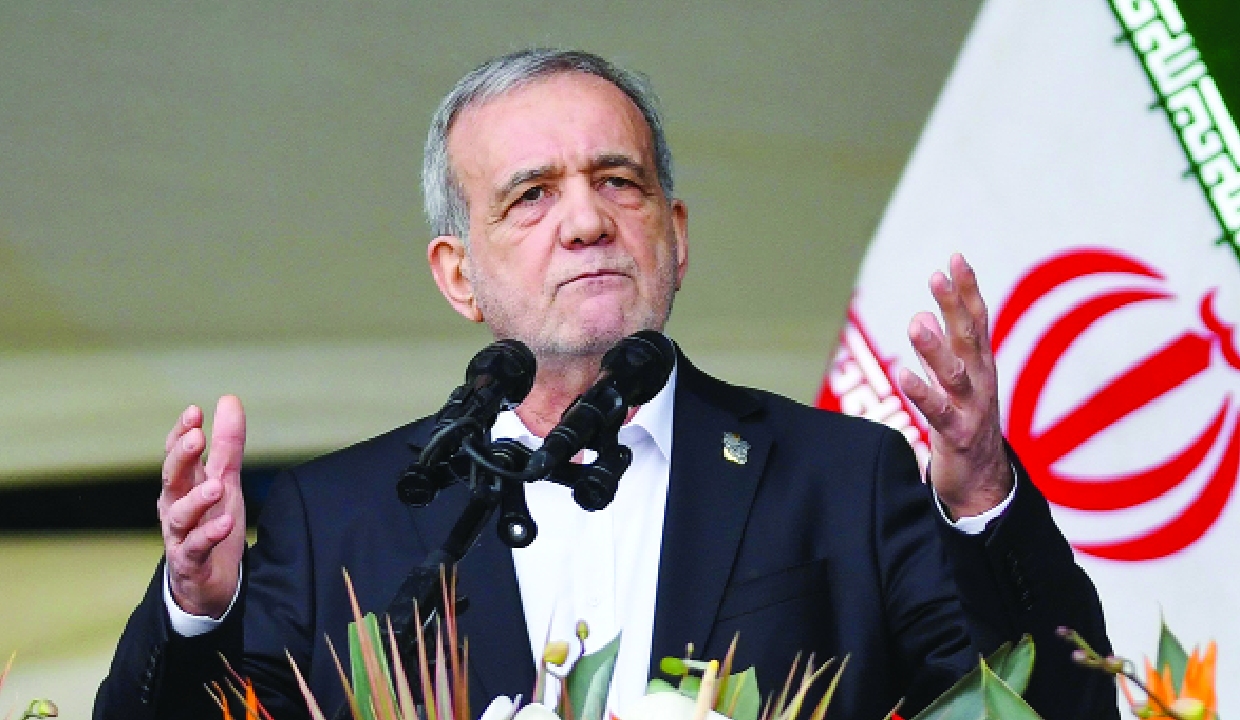
Tehran — Iranian President Masoud Pezeshkian has pushed back against criticism of the recently signed peace memorandum of understanding between Iran and the United States, insisting the deal was struck from a position of strength and national self-respect rather than as a concession to outside pressure.
Pezeshkian Defends the Deal
During a Sunday meeting with Education Minister Alireza Kazemi, Pezeshkian explained that Iran’s approach to the memorandum was shaped by careful attention to the guiding principles associated with former Supreme Leader Ali Khamenei. The remarks were made public through the Iranian president’s office.

The president firmly rejected any characterization of the agreement as capitulation to Tehran’s adversaries. Instead, he framed the negotiations as having taken place from a position of leverage, noting that the final document emerged only after thorough deliberation involving input from specialists and advisors.
Pezeshkian indicated that the government’s decision came after a thorough assessment of the broader conflict and the surrounding diplomatic landscape. His remarks arrive at a moment when the path forward for US-Iran talks remains far from settled.
Parliament Speaker Frames MoU as a Win
A day before Pezeshkian’s comments, Parliament Speaker Mohammad Baqer Qalibaf offered his own praise for the agreement. Speaking to Iran’s state news agency IRNA, he characterized the memorandum as evidence of Iranian success and a meaningful step forward in the country’s diplomatic engagement.
Together, the remarks from Iran’s president and its top legislator suggest a coordinated effort by Tehran to present the memorandum publicly as a diplomatic win, while signaling how much weight Iranian leadership places on appearing undiminished at the negotiating table.
Clock Running on a Final Agreement
Under the terms of the memorandum, Iran and the United States were expected to hold negotiations across a 60-day window, with a final agreement targeted for completion by Monday. That timeline has grown shakier, however, as tensions between the two nations have flared again in recent weeks.

The renewed friction has cast doubt on whether the negotiating structure set out in the MoU can hold together. So far, neither government has clarified whether talks will proceed on the original schedule or whether a new diplomatic framework will need to be worked out.
Senator Gallego Faults White House Strategy
In Washington, Democratic Senator Ruben Gallego of Arizona has taken aim at the Trump administration’s approach to the standoff with Iran. Gallego, a Marine Corps veteran who served in Iraq, argued that the administration moved into the conflict without adequate groundwork.
In an appearance on ABC News Sunday, Gallego said he saw no clearly articulated objective, no real exit plan, and no thorough contingency planning from the administration for how events might unfold.
The senator pointed to the situation as evidence of what he views as serious planning and leadership failures at the Pentagon. His remarks followed separate reports describing exhaustion, sagging morale, and mental health strain among crew members stationed on the USS Abraham Lincoln.
A Widening Gap in Narratives
The differing tones coming out of Tehran and Washington reflect just how fraught the US-Iran relationship remains. Iranian officials continue to hold up the memorandum as proof of diplomatic progress, even as scrutiny in the United States increasingly centers on the military strategy behind the standoff and its broader fallout.