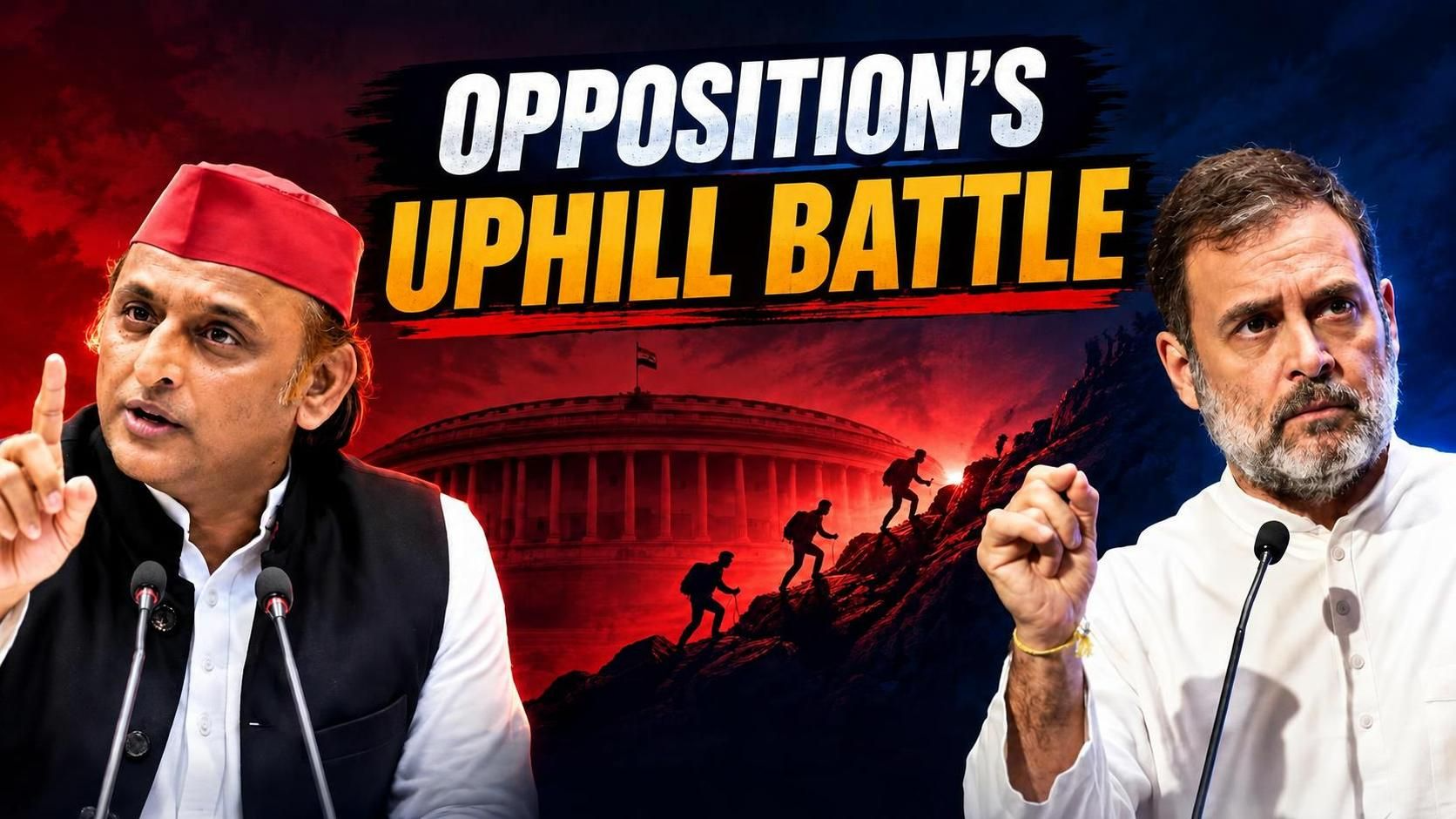
Lucknow: As the 2027 Uttar Pradesh Assembly elections approach, opposition parties are increasingly caught up in negotiations over seat-sharing, raising questions about their ability to present a united challenge to the Bharatiya Janata Party (BJP).
The Samajwadi Party (SP) and Congress have both expressed their determination to defeat the BJP. However, their ongoing discussions appear to be dominated by competing demands for constituencies and disagreements over each party’s political strength, rather than a common agenda focused on unemployment, inflation and public welfare.
The Samajwadi Party has reportedly proposed allocating 26 seats to Congress. Congress, meanwhile, has been linked to demands for as many as 181 seats, with subsequent reports suggesting claims of around 130 or 120 constituencies. The significant gap between the two positions has exposed growing tensions within the proposed alliance.
SP president Akhilesh Yadav has argued that seats should be allocated according to candidates’ electoral prospects. However, questions remain over who will determine a candidate’s winnability and whether the same criteria will be applied equally to both parties.
Congress faces its own challenge in justifying its demands. In the 2022 Uttar Pradesh Assembly elections, the party contested 399 seats but won only two, securing 2.33 per cent of the vote. As many as 387 candidates lost their security deposits.
However, Congress improved its performance in the 2024 Lok Sabha elections, winning six of the state’s 17 parliamentary constituencies and securing 9.46 per cent of the vote. The Samajwadi Party won 37 of the 62 seats it contested, with a vote share of 33.60 per cent.
Although parliamentary election results do not necessarily translate into Assembly victories, the figures suggest that Congress still has an electoral presence that cannot be ignored.
Disagreement over constituencies deepens tensions
The SP’s proposed list of 26 constituencies reportedly includes several seats where Congress has either won previously or finished as the runner-up.
These include Rampur Khas and Pharenda, where Congress secured victories, as well as Mathura, Kheragarh, Jagdishpur and Kidwai Nagar, where its candidates finished second.
Other constituencies reportedly included in the proposal are Baghpat, Modinagar, Hapur, Jewar, Siyana, Khurja, Khair, Iglas, Mant, Agra North, Fatehpur Sikri, Bilgram-Mallawan, Govind Nagar, Nanpara, Gorakhpur City, Khajani, Padrauna, Fazilnagar, Pindra and Varanasi Cantt.
The SP appears to be relying on constituency-level electoral data to support its claims. However, previous vote shares alone cannot determine future results. Candidate selection, organisational strength, local alliances and the transfer of votes between coalition partners will all play a role.
Tensions increased further after the SP announced five candidates while seat-sharing discussions were still underway. The names included Umar Ali Khan from Behat, Ashu Malik from Saharanpur, Nahid Hasan from Kairana, Mehboob Ali from Amroha and Jyoti Lodhi from Lalitpur.
The announcements may reflect the party’s organisational preparations, but making such decisions without taking its potential ally into confidence risks creating an impression that the SP is trying to impose its terms.
Congress leader Imran Masood criticised the approach, saying his party was not seeking seats as charity. He argued that constituencies should be distributed through mutual cooperation and respect, questioning the SP’s authority to limit Congress to 26 seats when the party had not formally made such a demand.
Om Prakash Rajbhar responded by questioning why Congress had approached the SP with a committee for seat-sharing discussions if it was not seeking seats.
SP MP S.P. Singh Patel also questioned Congress’s political strength, suggesting that allocating even 50 seats to the party would be a significant concession. He raised concerns about its organisational structure and the ability of its candidates to win elections.
These exchanges indicate that the two parties are spending considerable political energy questioning each other’s strength instead of building confidence within the proposed alliance.
Social representation and the PDA strategy
The five candidates announced by the SP also carry a political message. Four Muslim candidates and one OBC woman candidate suggest that the party is seeking to strengthen its appeal among minorities and backward communities.
The party’s PDA strategy, representing Pichhda, Dalit and Alpsankhyak (backward classes, Dalits and minorities), will depend on meaningful representation for non-Yadav OBC communities and Dalits in party organisations, candidate selection and government positions.
Muslim voters, meanwhile, are likely to assess political parties on issues such as security, education, employment and social dignity. The All India Majlis-e-Ittehadul Muslimeen (AIMIM), led by Asaduddin Owaisi, could present an alternative for some minority voters, while the Bahujan Samaj Party (BSP) will seek to regain its influence among Dalit communities.
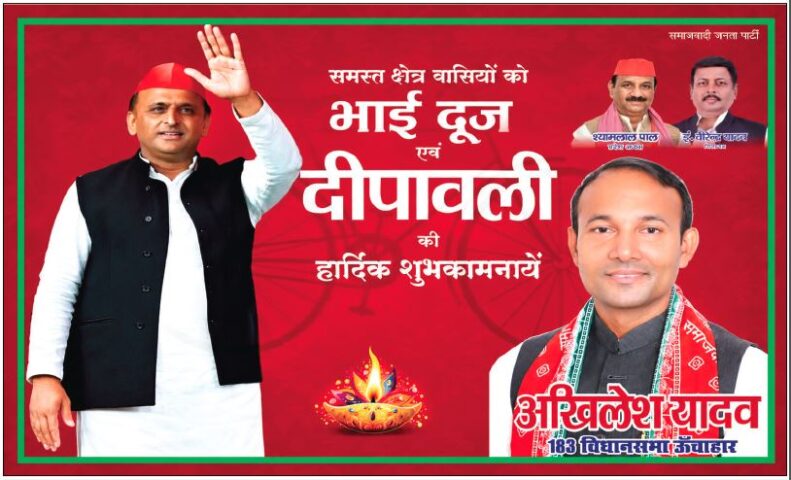

The SP will need to address these competing political challenges if it hopes to consolidate support across different social groups.
Welfare promises under discussion
The proposed PDA manifesto, expected to be presented on Constitution Day, November 26, is another important test for the Samajwadi Party.
The party is reportedly preparing separate documents for the state, its 75 districts and Lucknow, with the stated aim of addressing local concerns.
Proposals under discussion include an annual pension of Rs 40,000 for women, financial assistance of Rs 2 lakh for self-employment, 300 units of free electricity for domestic consumers and free medical treatment for economically weaker sections.
These are reported proposals rather than confirmed final commitments. The party will need to explain how many people would benefit, how much the schemes would cost annually and where the required funding would come from.
Free healthcare, for example, will require adequate doctors, medicines, hospital beds and medical infrastructure. Similarly, promises of free metro travel in Lucknow and measures to reduce traffic congestion will need clear implementation plans.
BJP could benefit from opposition divisions
The BJP is likely to benefit politically if the opposition remains divided over seat-sharing and leadership.
The ruling party may use the announcement of Muslim candidates to strengthen its polarisation strategy while attempting to consolidate support among non-Yadav OBC communities, Dalits and beneficiaries of government welfare schemes.
However, the BJP will also have to answer questions about unemployment, inflation, farmers’ concerns, education, healthcare and law and order.
The opposition’s internal disagreements do not remove these issues from public debate. They risk weakening the opposition’s ability to raise them effectively.
The experience of the 2017 Assembly elections remains a warning for both Congress and the SP. Despite contesting together, the BJP won 312 seats, while the SP was reduced to 47 and Congress to just seven.
That election demonstrated that votes do not automatically transfer between alliance partners simply because they have reached an agreement.
The 2024 Lok Sabha results offer the opposition some encouragement, but Assembly elections involve different political calculations and local dynamics.
A fair seat-sharing agreement, common candidates and effective coordination at the booth level could make the 2027 contest competitive. However, an agreement reached under pressure or perceived humiliation could leave party workers unwilling to cooperate. A complete breakdown of negotiations could further divide opposition votes and benefit the BJP.
Akhilesh Yadav must decide whether he wants a genuine partnership with Congress or merely its political association. Congress, for its part, must demonstrate its organisational strength on the ground rather than relying primarily on electoral statistics to negotiate a larger share of seats.
Congress’s contribution to the opposition’s performance in the 2024 Lok Sabha elections, including Rahul Gandhi’s campaign efforts, cannot be overlooked.
Recognising an alliance partner’s contribution is a matter of political pragmatism, not weakness.
If opposition parties genuinely intend to challenge the BJP in 2027, they will need to set aside their egos, negotiate respectfully and present a credible programme for voters.
Otherwise, they may find themselves blaming one another for an electoral defeat whose foundations were laid during today’s seat-sharing negotiations.







 https://www.youtube.com/watch?si=RtToJsBhYBatUrym&v=mOuYNSdhjHA&feature=youtu.be