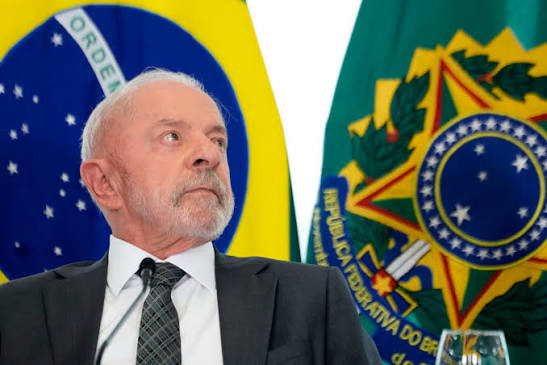
Brasilia: Luiz Inácio Lula da Silva remains a defining figure in Brazilian politics, with his political comeback reflecting the enduring appeal of social welfare policies, workers’ rights and his personal resilience. Lula secured a historic fourth non-consecutive presidential term in the October 2026 runoff, defeating Flávio Bolsonaro, son of former president Jair Bolsonaro, with approximately 51.8% of the vote against 48.2%. The reported victory would make Lula the first Brazilian president elected to four terms.
A former metalworker and trade union leader from a humble background in northeastern Brazil, Lula first governed the country from 2003 to 2010. His early administrations combined broadly market-oriented economic management with social welfare initiatives, including Bolsa Família, minimum-wage increases and poverty-reduction programmes that improved living conditions for millions.
However, corruption scandals, particularly the Lava Jato investigation, damaged Lula’s reputation and weakened his Workers’ Party (PT). After being imprisoned and subsequently released, he returned to the presidency in 2023 following his narrow victory over Jair Bolsonaro in the 2022 election.
Economic and Social Progress During the Third Term
Between 2023 and 2026, Lula’s administration pursued policies aimed at strengthening household incomes, reducing poverty and expanding social protection. Figures cited in the supplied material indicate that Brazil’s economy recorded cumulative real GDP growth of approximately 9% between 2022 and 2025, outperforming the regional average. Annual growth stood at 3.2% in 2023, 3.4% in 2024 and an estimated 2.3% in 2025.
The labour market also improved, with unemployment reportedly falling to around 5.4% by mid-2026 from levels exceeding 9% in earlier years. Real wages and labour incomes increased, supported partly by the restoration of a minimum-wage policy linking adjustments to inflation and economic growth.
Social indicators showed further progress. One measure cited in the material puts poverty at 23.1% in 2024, down from 31.6% in 2022. Expanded Bolsa Família payments and other measures sought to support vulnerable households, informal workers and disadvantaged communities.
Environmental protection became another important area of Lula’s agenda. His administration strengthened enforcement against illegal deforestation and revived initiatives to protect the Amazon rainforest. Reports cited in the supplied material indicate substantial reductions in deforestation compared with levels recorded during the Bolsonaro administration.
Fiscal Pressures and Economic Constraints
Despite these gains, Lula’s government faced significant economic challenges. The Central Bank maintained high interest rates to contain inflation, increasing borrowing costs for households and businesses and placing pressure on public finances.
Although the government improved its primary fiscal balance, substantial interest payments contributed to rising public debt. Estimates cited in the supplied material place gross general government debt at approximately 82–83% of GDP by mid-to-late 2026. Concerns over fiscal sustainability periodically affected market sentiment and contributed to volatility in financial assets and the currency.
Household finances also remained under pressure from expensive consumer credit, credit-card debt and other borrowing costs. Concerns about online betting losses and controversies involving public institutions added to the political difficulties confronting the administration.

These pressures highlight the challenge of maintaining social expenditure while ensuring fiscal credibility, controlling inflation and encouraging sustainable economic growth.
A Polarised Political Landscape
Lula’s political appeal has been closely associated with poverty reduction, labour rights and opposition to the Bolsonaro political camp. His reported 2026 victory reflects the continuing strength of this support base, even as Brazil remains deeply divided politically.
However, a more conservative-leaning Congress could restrict the government’s ability to implement major legislative initiatives. Negotiations with lawmakers will therefore be essential to advancing economic and social reforms.
The election outcome also carries implications for investor confidence. Concerns about government spending commitments and the direction of economic policy could complicate efforts to attract investment and maintain confidence in Brazil’s public finances.
Priorities for the Fourth Term
As Lula prepares to begin his new term in 2027, his administration will face the task of sustaining social welfare programmes while managing public debt, interest costs and inflation. Continued efforts to protect the Amazon, reduce inequality and strengthen Brazil’s international standing are also expected to remain important policy priorities.
Relations with the United States, engagement with BRICS and other Global South partners, and cooperation on climate issues will form part of the broader diplomatic agenda. At home, improving productivity, expanding formal employment and addressing structural inequalities will be central to achieving durable economic progress.
Lula’s political legacy combines social-democratic policies, pragmatic economic management and a remarkable capacity for political recovery. His governments have pursued measurable improvements in social welfare and environmental protection, while persistent fiscal and economic pressures have exposed the limits of that approach.
Brazil’s trajectory over the next four years will depend on whether Lula can preserve these gains, restore confidence in public finances and build sufficient political consensus to advance reforms in an increasingly polarised country.













 https://www.youtube.com/watch?si=RtToJsBhYBatUrym&v=mOuYNSdhjHA&feature=youtu.be