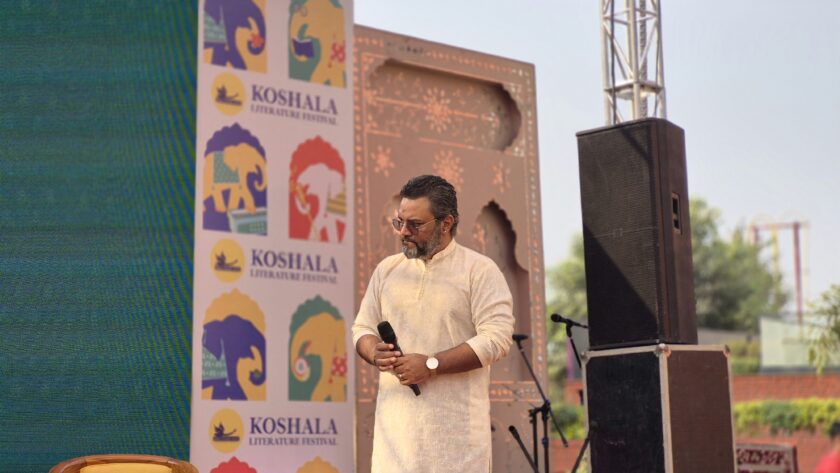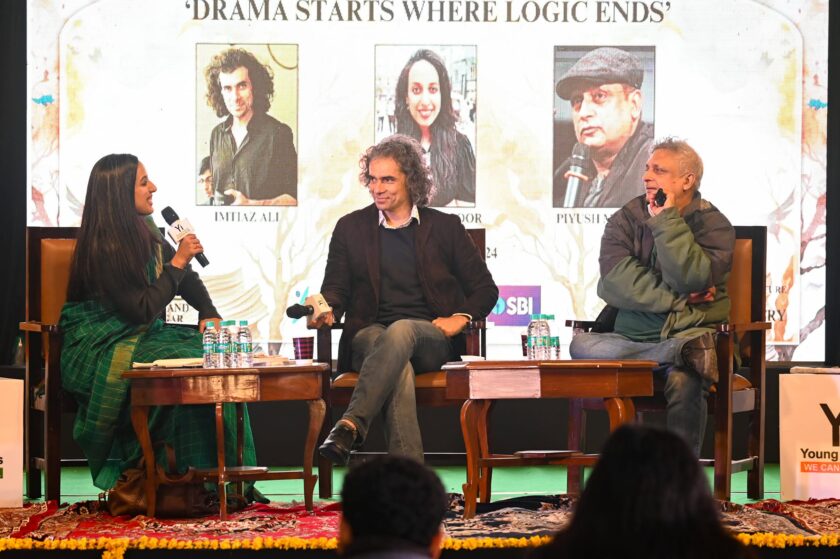
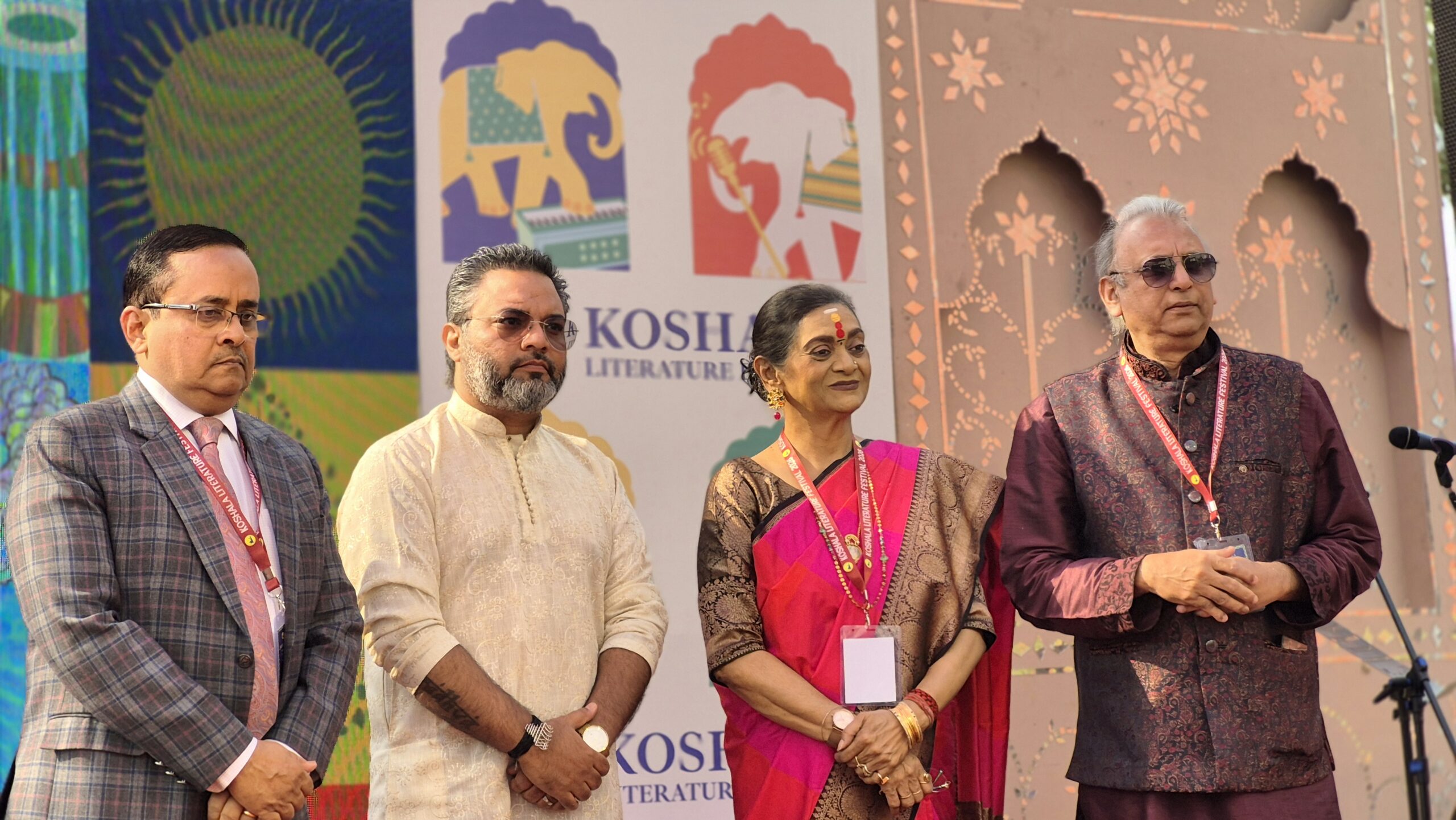
The fifth edition of KoLiF, themed “Rediscovering Humanity through Rediscovering Heritage,” runs from 27 to 30 November at the Lucknow Museum of Heritage and Art.
Lucknow: The Koshala Literature Festival opened its fifth edition at the Lucknow Museum of Heritage and Art on Clock Tower road in Hussainabad, and for the first time the festival has found its home among the city’s Nawabi-era monuments. For the next four days, literature, art, music, food, folklore and history will share a single precinct, so a visitor can walk from a conversation about a book to a gallery, a performance or a plate of Awadhi food without leaving the grounds.
The festival began with the lighting of the ceremonial lamp by Founder Prashant Kumar Singh and mentors Nishi Pandey and Ajay Jain, a small ritual that set the tone for four days of words, images, sound and heritage. Organised by Koshala Arts and Crafts Private Limited and the Perspective Cultural Foundation, KoLiF started in 2022 and has since grown into one of North India’s leading cultural gatherings. This year’s edition turns its attention to the host city itself, looking at Lucknow beyond the stereotypes and as a place of composite culture, coexistence and layered heritage.
The first day set that tone through three sessions. In “The Myth of Mythology,” Akshat Gupta, whose Hidden Hindu trilogy has made him one of India’s most widely read authors, spoke with Nishi Pandey about what myth means to a modern reader. The conversation moved through storytelling, the meaning of sacred symbols, and why younger readers need cultural literacy if they are to understand the stories they inherit.
Later, in “Badass Begums,” author Anoushka Jain talked with Nitin Sukhija about the women whom history pushed to the margins. She spoke about Begum Samru, Zeenat Mahal and Maham Anga, and about how power, ambition and reputation worked differently for women who ruled, and how those reputations were shaped as much by who wrote the record as by what the women did.
The day’s most reflective session, “The Cities We Lost: Lucknow, Rampur and the Making of Memory,” brought writers Omair Ahmad and Tarana Husain Khan together with moderator Prakruti Maniar to think about how cities hold on to memory. “We have to live in the present but also know our past,” said Omair Ahmad. Tarana Husain Khan added that buildings are both spaces and symbols of culture, and that no building can erase a culture.
The next three days widen the circle considerably, with voices from literature, history, cinema, governance, journalism, food and the arts. Among the sessions to look forward to are “Gandhi: The Man, The Mahatma” with Purushottam Agrawal, and “A Seat of One’s Own: Women, Representation and Power” with Ruhi Tewari, Tabeenah Anjum and Chhavi Rajawat. “The Becoming: Bureaucrats and the Steel Frame of India” looks at the civil services, while “The Future Has a Memory” brings historian Anirudh Kanisetti and Neha Sinha into conversation, and “The Past Lives in Present” continues the festival’s engagement with history. Cinema will be represented by Padma Shri Bhawana Somaaya and Kirti Kulhari.
Evenings are given over to poetry. Hindi and Urdu verse, ghazal and mushaira will share the programme with Sufi music, keeping alive the traditions of performance that Lucknow has long been known for. During the day, heritage walks will take visitors through the city’s Nawabi, British, French and Spanish-influenced architecture, a reminder of how many hands shaped the skyline of Hussainabad.
Food has a place of its own here. The culinary experiences and bespoke dinners explore the Awadhi table beyond biryani, and reflect Lucknow’s recognition as a UNESCO Creative City of Gastronomy. Meanwhile, Hunarshala and Koshala Haat offer a stage to emerging talent, alongside books, crafts, block printing and the work of artisans.
The organisers say KoLiF aims to become an annual fixture in Lucknow’s cultural calendar and a custodian of the Ganga-Jamuni tehzeeb, with the longer-term hope of growing into a year-round cultural programme.
The festival runs from 27 to 30 November 2026 at the Lucknow Museum of Heritage and Art (LMHA), Clock Tower, Hussainabad, Lucknow.





 https://www.youtube.com/watch?si=RtToJsBhYBatUrym&v=mOuYNSdhjHA&feature=youtu.be