New Delhi: India has picked up the pace on building out its air and missile defence capabilities in the aftermath of Operation Sindoor, running a series of trials this year that mark real progress on three key interceptor systems — the AD-1, AD-2, and Project Kusha.
Together, these programmes reflect New Delhi’s push to build a layered, largely indigenous shield capable of handling everything from enemy fighter jets to cruise missiles and long-range ballistic threats.

One of the year’s standout achievements was a successful flight test of the AD-1 interceptor. Built by the DRDO, this two-stage, solid-fuelled missile is designed to take down ballistic missiles in the 5,000 km class, striking targets either within the atmosphere or just at its edge, in the lower exo-atmospheric zone. With its advanced guidance and precision tracking, the AD-1 forms a core piece of Phase-II of India’s Ballistic Missile Defence architecture.
Building on that, India also tested the AD-2 — its most advanced anti-ballistic missile system to date. The AD-2 is built for tougher targets: intercontinental-class missiles moving at very high speeds and altitudes well beyond what the AD-1 can reach. Once operational, it’s expected to give India a much stronger high-altitude shield against fast-evolving missile threats in the region.

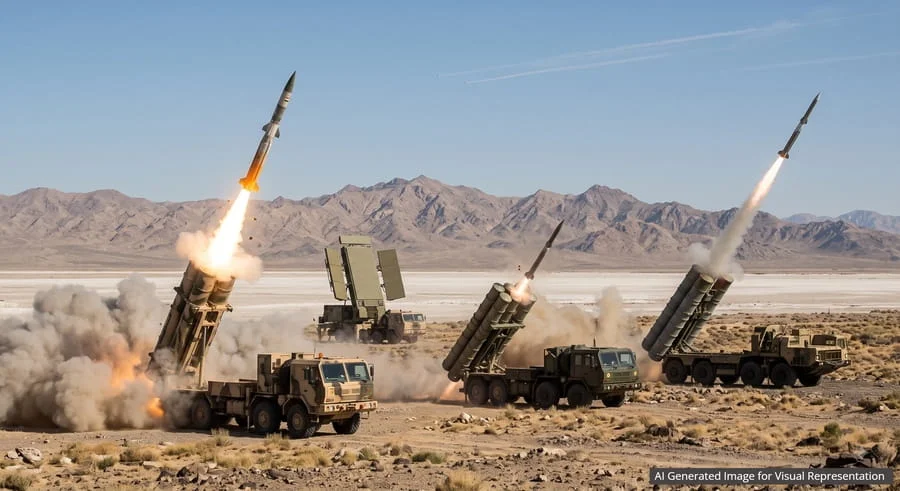
Alongside these interceptor programmes, the DRDO has been pushing forward with Project Kusha, India’s homegrown long-range surface-to-air missile system, often likened to Russia’s S-400. In recent trials, the Kusha M1 interceptor reportedly exceeded its designed range of 150 km — a strong sign the system is maturing quickly. Eventually, Kusha is meant to come in three interceptor variants, with the longest-range version reaching 350-400 km, giving India layered protection against drones, stealth aircraft and cruise missiles.
Put together, these programmes are meant to work as one integrated air defence network. While the AD-1 and AD-2 handle high-speed ballistic missile threats coming in from the upper atmosphere, Project Kusha is designed to cover a much broader range of conventional airborne threats closer to the ground. The idea is to build overlapping layers of defence so there are no obvious gaps for an adversary to exploit.
The flurry of testing since Operation Sindoor points to a clear shift in India’s strategic thinking — a stronger push toward self-reliance in defence. With regional tensions running high and recent conflicts elsewhere showing that no single system can cover every threat, India appears to be betting on a multi-layered approach that can respond to several types of aerial attacks at once.