Lucknow: A new book titled “Envisioning a Developed India through Nature and Culture: Based on Indian Geo-Cultural Traditions – An Initiative towards Sanatan and Modern Development” presents an important intellectual initiative to establish a harmonious balance between India’s development aspirations, environmental conservation, cultural heritage and modern scientific perspectives.
The book brings together India’s rich natural diversity, cultural heritage, traditional knowledge systems and contemporary scientific understanding. It seeks to encourage a holistic approach towards national development, rooted in the interrelationship between nature, society and culture.
Its central message is:
“If the Earth survives, society survives; if society survives, culture survives.”
An Innovative 15–50–86 Geo-Cultural Study Model
One of the most distinctive contributions of the book is a three-tier geo-cultural framework for understanding India:
15 Agro-Climatic Zones → 50 Physiographic Units → 86 Geo-Cultural Regions
The framework provides three complementary perspectives:
– 15 Agro-Climatic Zones: Explain India’s climatic and agricultural characteristics.
– 50 Physiographic Units: Represent the country’s natural geographical formations, including mountains, plains, plateaus, valleys, deserts and coastal regions.
– 86 Geo-Cultural Regions: Connect local languages, food habits, agricultural practices, livelihoods, folk traditions and community knowledge with their respective natural environments.
This framework offers a supplementary approach to understanding India’s geographical and cultural diversity and can support integrated studies and development planning. It does not propose any changes to the existing administrative boundaries of the country.
*Seven Major Dimensions of India’s Holistic Identity*
The book explores India’s identity through seven interconnected dimensions:
1. Mother Earth and Geosciences
2. Water Sciences and Water Resources
3. Agriculture and Culture
4. Local Economy and Livelihoods
5. Ecology and Biodiversity
6. Climate Change
7. Cultural Traditions and Heritage
It highlights the interconnected relationship between Water, Forests, Land and People. Water security directly influences agriculture; agriculture sustains livelihoods; livelihoods shape social structures; and social structures preserve cultural traditions.
Therefore, development policies must give due importance to ecological balance, local knowledge and active community participation.
*Ground-Level Experiences in Water Conservation and Community Participation*
The book gives special importance to the decades of experience of Dr. Rajendra Singh, popularly known as the Waterman of India, in water conservation and community-led development.
Through the Tarun Bharat Sangh, initiatives in Rajasthan’s Alwar region have demonstrated how the revival of traditional water structures, including johads, ponds and stepwells, can contribute to groundwater recharge, river rejuvenation, agricultural improvement and rural development.
The book also advocates integrating traditional water wisdom with modern scientific tools and technologies such as GIS, remote sensing, satellite-based investigations, digital mapping and scientific modelling.
*Useful Supplementary Reference Material for UPSC and Other Competitive Examinations*
The subject matter of this book has considerable relevance to several areas of the Union Public Service Commission (UPSC) Civil Services Examination and other competitive examinations.
It can serve as supplementary reference material for understanding topics such as:
– Indian Geography and Physiographic Diversity
– Indian Cultural Heritage and Traditions
– Environment and Ecology
– Climate Change and Disaster Management
– Agriculture and Rural Development
– Biodiversity and Natural Resource Conservation
– Water Resource Management
– Local Governance and Community Participation
– Sustainable and Inclusive Development

The book is not intended to replace prescribed textbooks, standard reference books or official examination materials. Rather, it provides an additional perspective to help students and aspirants understand these subjects through broader, interdisciplinary and practical approaches.
*Joint Intellectual Contribution of Four Eminent Experts*
The book represents the collective intellectual contribution of four experienced experts from the fields of environmental conservation, science, technology and sustainable development.
1. Dr. Rajendra Singh (Waterman of India) – Chairman, Tarun Bharat Sangh, Rajasthan. An internationally acclaimed environmentalist recognised for his outstanding contributions to water conservation, river rejuvenation and community-led rural development.
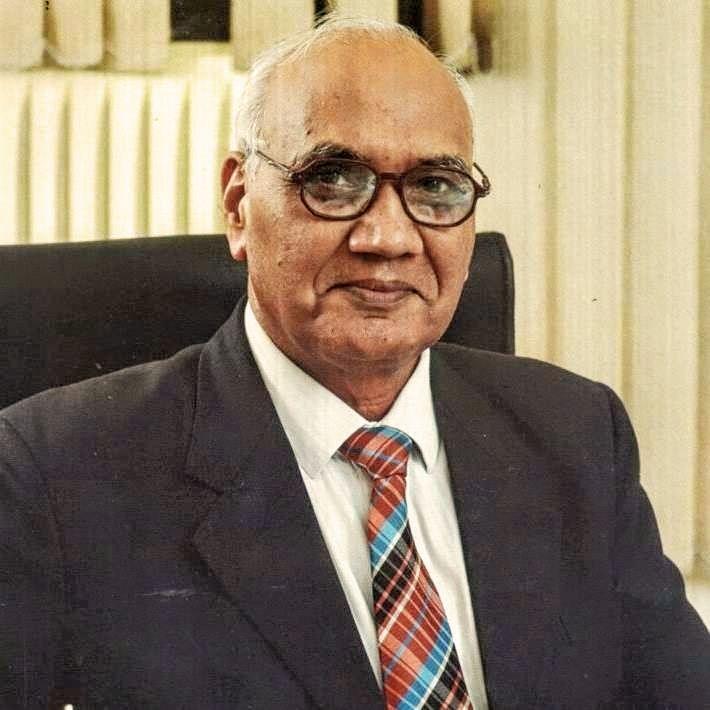
2. Prof. (Dr.) Bharat Raj Singh – Environmentalist and Director General (Technical), School of Management Sciences, Lucknow. He is actively engaged in environmental research, renewable energy, technological innovation and sustainable development, with a distinguished academic and professional background.
3. Dr. Indira Khurana – Environmentalist and Chairperson, Indian Himalayan River Basin Council, New Delhi. An expert in climate change, water resources and rural livelihoods.
4. Prof. (Dr.) Rana Pratap Singh – Environmental Scientist and former Professor at Babasaheb Bhimrao Ambedkar University, Lucknow. His areas of expertise include water and air pollution, bioremediation and environmental sustainability.
*An Idea Shaped through National-Level Deliberations*
The conceptual foundation of the book draws significantly from two important national-level intellectual engagements:
– A two-day brainstorming session held on 15–16 November 2025 at the Indian National Science Academy (INSA), New Delhi.
– A three-day Geo-Cultural Symposium organised from 11–13 September 2026 at Harijan Sevak Sangh, New Delhi.
These deliberations brought together farmers, water conservationists, rural development workers, women, youth, scientists, academicians and social activists from different parts of India.
The People’s Declaration issued on 13 September 2026 emphasised the importance of local knowledge, community participation, conservation of water, forests and land, and nature-compatible development as essential foundations for India’s future.
*A New Perspective for Building a Developed India*
The fundamental proposition of this book is that India’s development must not be restricted merely to economic growth or the expansion of physical infrastructure.
Equal importance must be given to:
– Conservation of natural resources and ecological systems.
– Participation of local communities in development planning.
– Preservation of cultural continuity and traditional knowledge.
– Rural self-reliance and sustainable livelihoods.
– Protection of natural resources for future generations.
The book offers an opportunity for students, UPSC aspirants, teachers, researchers, environmentalists, policymakers and general readers to understand India’s natural and cultural identity from a new and integrated perspective.
The central message of the book is that a balanced, inclusive and sustainable Developed India can be achieved by progressing from Geography to Culture, from Culture to Conservation, and from Conservation towards Ecological and Social Regeneration.
*Book Details*
Particulars| Details
Title| Envisioning a Developed India through Nature and Culture
*Authors*
Dr. Rajendra Singh, Prof. (Dr.) Bharat Raj Singh, Dr. Indira Khurana and Prof. (Dr.) Rana Pratap Singh
*Publisher*
Natals Publication, New Delhi
Edition| First Edition, November 2026
ISBN| 978-93-6581-530-6
Price| ₹399
Availability| Natals Publication, Amazon, Kindle, Flipkart and other book-selling platforms
*Contact*
Prof. Bharat Raj Singh
Director General (Technical)
School of Management Sciences, Lucknow, India
Mobile: +91-9415025825









 https://www.youtube.com/watch?si=RtToJsBhYBatUrym&v=mOuYNSdhjHA&feature=youtu.be