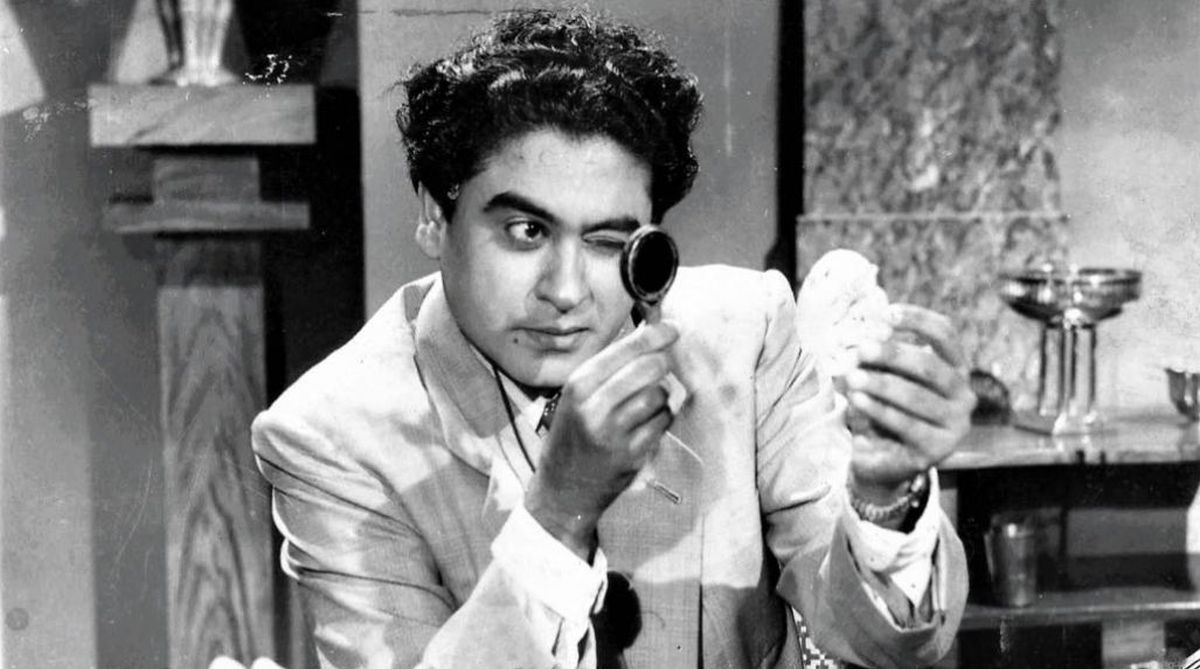
By Kriti RK Jain / Published first in Ravivar Delhi Hindi
Time takes away a great deal. But some voices simply slip past its grasp. They don’t count in years — they connect generations instead. Whenever that voice plays, doors somewhere inside us open quietly, without warning. Kishore Kumar belongs to that rare tribe of artists. Born Abhas Kumar Ganguly on August 4, 1929, in Khandwa, he never let music remain mere entertainment — he turned it into humanity’s most trustworthy companion for memory itself. His birth anniversary is remembered precisely because it marks the day of a voice that gave laughter its own melody and grief its own dignity. Nearly every shade of life lived somewhere in his singing. That’s why the moment one of his songs starts playing, the past comes rushing back into the present, unasked.

Great artists aren’t born that way — they’re made through years of quiet discipline. Abhas Kumar Ganguly’s journey from Khandwa followed exactly that path. His father, Kunjilal Ganguly, was a lawyer; his elder brother, Ashok Kumar, was already a name in Hindi cinema. It was Ashok Kumar who called him to Mumbai. He began as an actor with Shikari, but his heart was always drawn toward singing. He never had any formal training in music — listening, absorbing, and giving it voice was his only real education. Early on, K.L. Saigal’s influence was unmistakable, but he soon carved out an identity entirely his own. “Marne Ki Duayen Kyun Maangoon” from Ziddi became his first big breakthrough. Then, in 1969, Aradhana changed everything. “Mere Sapno Ki Rani” and “Roop Tera Mastana” proved something simple but powerful — sometimes it’s the voice that wins hearts long before the hero on screen does.
When an artist becomes the language of emotion itself, his songs stop belonging to any one era. For Kishore Kumar, the 1970s were exactly that kind of golden period. “Chingari Koi Bhadke” carries the burn of separation; “Yeh Shaam Mastani” the open smile of life; “Ye Jo Chilman Hai” a playful mischief; and “Zindagi Ke Safar Mein” the calm, unblinking truth of time passing. “Mere Saamne Wali Khidki Mein” proves that laughter, too, can be as deep an artistic expression as sorrow. His body of work — nearly 2,700 songs — isn’t just a body of achievement; it’s a living record of Indian emotion itself. Love, pain, joy, philosophy, hope, despair — there’s barely a shade of human experience his voice didn’t touch.
Very few voices become identities rather than just faces. Kishore Kumar’s voice was never tied to just one hero. It slipped effortlessly into Rajesh Khanna’s romantic charm, Amitabh Bachchan’s intensity, Dev Anand’s restless energy, and Dharmendra’s easy, earthy warmth. His partnership with R.D. Burman pushed Hindi film music to new heights altogether — “Dum Maro Dum,” “Jaane Jaan Dhoondta Phir Raha,” and “Chura Liya Hai Tumne” gave an entire generation of young listeners a new rhythm to move to. Alongside S.D. Burman, Laxmikant–Pyarelal, and Kalyanji–Anandji, he created countless timeless songs. “Hamein Tumse Pyaar Kitna,” “Haaye Re Woh Din Kyon Na Aaye,” and “Khaike Paan Banaraswala” all show just how naturally his voice could express any emotion at all.

Some artists are known for their craft; others for breaking past the limits of it entirely. Kishore Kumar belonged firmly to the second kind. Singing may have been his defining identity, but as an actor, composer, lyricist, and filmmaker too, he gave deeply human stories real emotional weight — in films like Jhumroo, Door Gagan Ki Chhaon Mein, and Door Ka Rahi. Door Gagan Ki Chhaon Mein, in particular, is still counted among Hindi cinema’s most moving portrayals of a soldier’s inner world. He never compromised on the dignity of his art — turning up on set with only half his makeup done, or walking away from a song mid-recording over unpaid dues, wasn’t stubbornness; it was self-respect.
Every sweet voice carries some silence of its own. Kishore Kumar’s life was no exception. He was married four times — to Ruma Guha Thakurta, Madhubala, Yogita Bali, and Leena Chandavarkar — but his time with Madhubala remains one of Hindi cinema’s most poignant love stories. Her illness and untimely death changed him deeply, and echoes of that grief can still be felt in many of his most heartbreaking songs. On October 13, 1987, a heart attack brought his journey to an end at just 58. As per his final wish, his body was brought back to Khandwa. He returned, in the end, to the soil he came from — but the silence he left behind in Indian music still echoes just as loudly today.
Popularity can fade with time, but true art only grows brighter with every passing era that tests it. Kishore Kumar’s voice is living proof of that. “Zindagi Ke Safar Mein Rahi” still inspires people to keep moving forward, while “Kuch Toh Log Kahenge” still lands as sharp a blow against rigid social judgment as it ever did. That, perhaps, is the greatest triumph of his art — his songs moved beyond mere entertainment to become part of how people actually see life. Which is why his voice keeps finding new meaning, new warmth, and new relevance with every generation that discovers it.
In the end, time only stands still before art in which people recognize their own lives reflected back at them. Kishore Kumar’s legacy is proof of exactly that truth. The voice that rose out of Khandwa reached immortality because it was never built on artifice — it was built on honesty; not performance, but genuine feeling. He proved that real art stays alive across every era, always finding new meaning. As long as his songs keep echoing as smiles at celebrations, offering quiet comfort to someone sitting alone, beating inside someone’s love story, or being hummed by a traveler somewhere on life’s road — Kishore Da will remain not just a memory, but a living heartbeat of the Indian people.