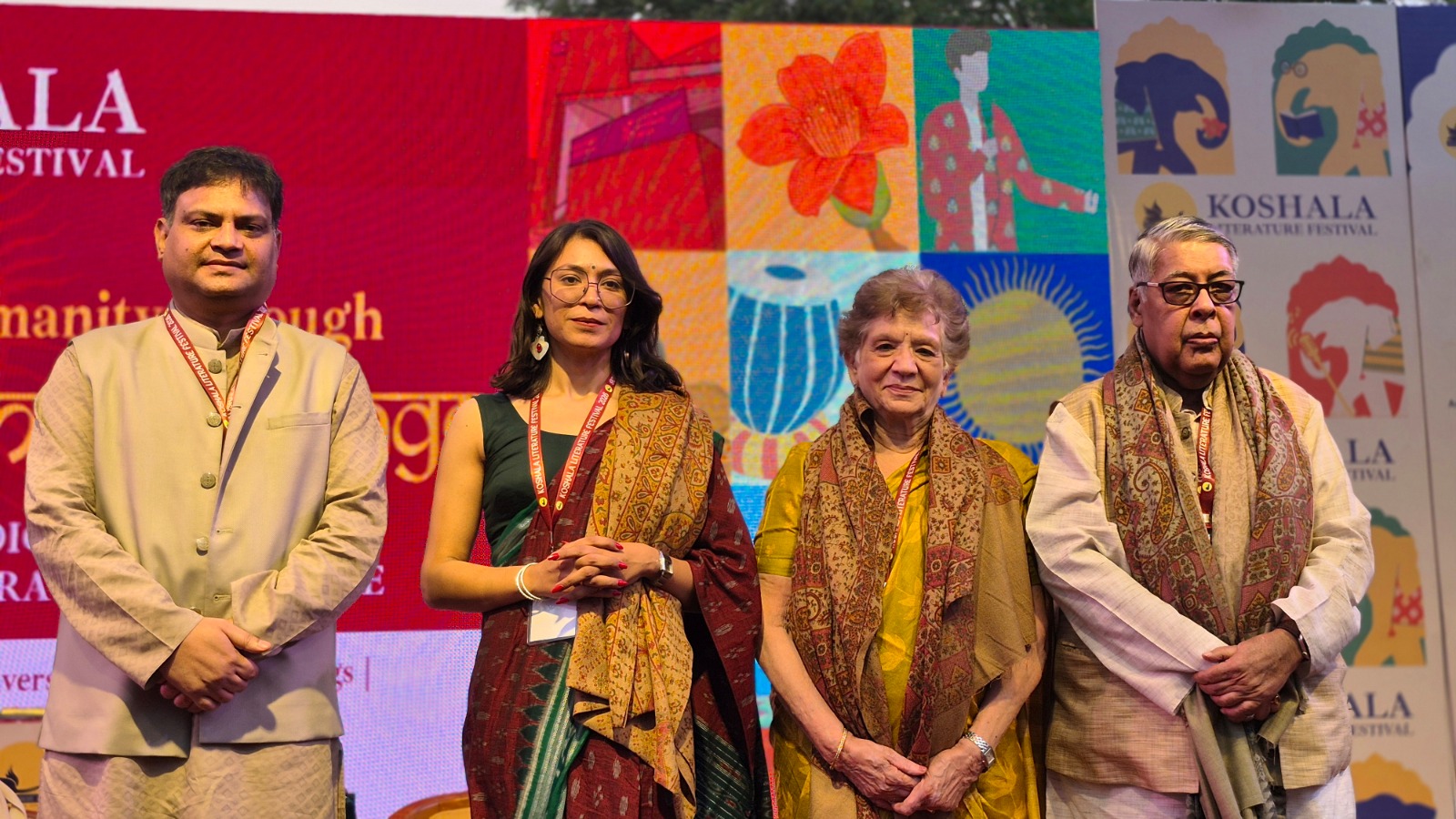
Lucknow: Purushottam Agrawal, in conversation with Satyarth Anirudh Pankaj, treated Gandhi less as a figure in a textbook and more as someone whose ideas still make us uncomfortable in today’s political arguments, about religion, nationalism, morality and violence.
Agrawal began with national identity. India can’t be understood through one narrow religious or cultural definition, he said. The national movement grew out of the country’s diversity and the effort to find common ground between different communities and traditions. He pushed back on any idea of Indianness that leaves people out because of their religion. Citizenship and belonging, he said, shouldn’t depend on faith.
On Gandhi’s own religion, Agrawal said he read scriptures with faith but never handed over his conscience to them. Every text deserved respect, but its teachings had to be tested against reason and moral judgement. For Gandhi, faith was an ongoing conversation between spirituality, thinking and ethical responsibility, not blind acceptance. He also believed no religion was perfect and that every tradition had its limits.
Agrawal argued that this spirituality didn’t keep Gandhi out of politics. It shaped how he did politics, through self-restraint, compassion and non-violence. His support for the Khilafat movement was an important political move, Agrawal noted, but in the years after, Gandhi steered clear of making religious identity the centre of mobilisation.
On the rising weight of religious identity in politics today, Agrawal said that simply dismissing or mocking Hindutva won’t get us anywhere. We need to understand the social, cultural and historical reasons it appeals to people. He also objected to lumping Bhagat Singh, Subhas Chandra Bose and Savarkar into one camp just because they chose different forms of resistance. Their ideas and views on nationalism need to be looked at separately, he said, not flattened into a shared fascination with violence.
A big part of the talk was ahimsa. It isn’t just vegetarianism or avoiding physical harm, Agrawal explained, but a wider ethical principle built on compassion, restraint and giving up the urge for revenge. Gandhi understood that states hold power and use force, but he tried to limit violence through moral responsibility and other kinds of political action. In that sense, Agrawal suggested, his thinking offers an alternative to systems that run on coercion and retaliation.
Agrawal then tied Gandhi to problems we face now: environmental damage, consumerism and unsustainable development. He criticised the push for convenience, bigger infrastructure and religious tourism at the cost of ecology, pointing to construction in fragile Himalayan areas and the commercialisation of pilgrimage. Gandhi’s emphasis on restraint still matters, he argued, and we should ask whether development and consumption should carry on without regard for their social and environmental costs.
He closed with Gandhi as a tapasvi, someone devoted to discipline, sacrifice and service. For Gandhi, spiritual practice didn’t mean retreating to the mountains. It meant staying in the thick of society, with its people, inequalities and struggles.
The takeaway: Gandhi’s thinking on faith, conscience, non-violence and social responsibility still gives us a different way to think about politics and living together.












 https://www.youtube.com/watch?si=RtToJsBhYBatUrym&v=mOuYNSdhjHA&feature=youtu.be