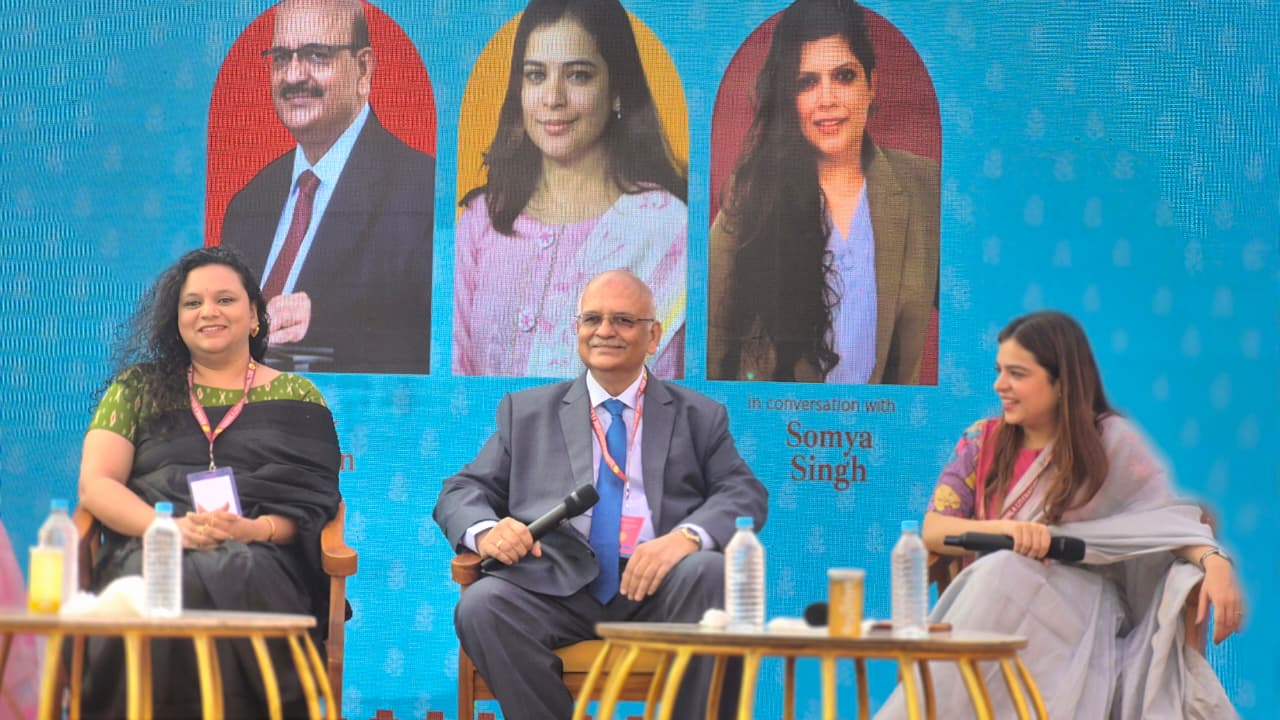
Lucknow: A session moderated by Saumya Singh looked at how government, and the people who run it, are changing. The panel featured former IAS officer Alok Ranjan and educationist-economist Saloni Khanna.
Saumya opened with a simple observation: IAS officers used to be largely unknown to the public, but social media has put them in plain view.
Alok Ranjan said the heart of a civil servant’s job hasn’t really changed. They still carry out government policy and serve people. What has changed is visibility. Citizens can now watch, discuss and question an officer’s work openly.
Saloni Khanna put it vividly. The civil services were once called the “steel frame,” she said, but today they feel more like a “glass frame.” One viral reel or video can put an officer or a government decision under instant public scrutiny, which means more care and more accountability.
The conversation then turned to why young people aspire to the services. Status, respect and power remain big draws. But Saloni pointed out that a reputed government job isn’t always as glorious as it once was, especially when influencers can sometimes earn more and become better known than civil servants.
The panel also touched on the declining prestige of the Indian Foreign Service (IFS), and on AI. It can take over many tasks, they agreed, but it can’t replace human empathy. Understanding people’s problems and feelings remains a human job.
Saloni also spoke about her book, Winning Under Pressure: 16 Things Everyone Can Learn from the UPSC–CSE, which draws on the exam journey to share lessons on handling pressure, staying resilient and preparing well.
The takeaway: the civil services need to adapt to the digital age. The duty of public service stays the same, but officers must now communicate better, welcome public feedback and use technology without losing their empathy.











 https://www.youtube.com/watch?si=RtToJsBhYBatUrym&v=mOuYNSdhjHA&feature=youtu.be