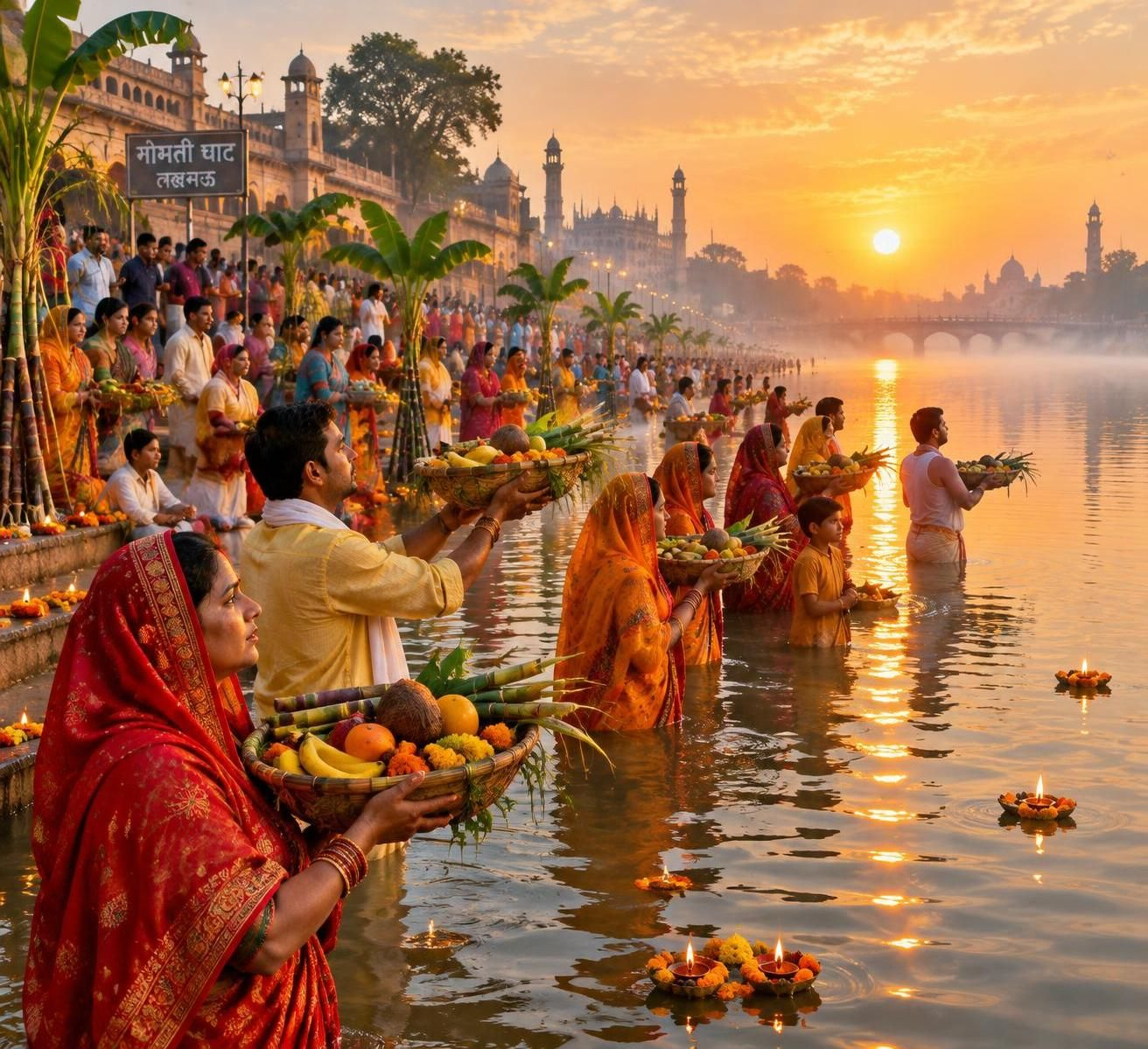
Lucknow: Chhath Mahaparv holds a special place in India’s cultural and religious traditions. Dedicated to the worship of the Sun God, the festival goes beyond religious rituals and reflects gratitude towards nature, social harmony, discipline, sacrifice and compassion. It reminds people that human life is closely connected with nature and that faith carries greater meaning when accompanied by responsibility towards society and the environment.
One of the most distinctive aspects of Chhath is the worship of natural elements, particularly the Sun and water. Devotees offer prayers to both the setting and rising Sun, expressing gratitude for the energy and resources that sustain life. Rivers, ponds and other water bodies also hold special significance during the festival. The rituals underline the importance of sunlight, water, air and earth in maintaining the balance of life.

At a time when the world is facing climate change, rising pollution, water scarcity and environmental degradation, the message of Chhath has particular relevance. While devotees worship rivers and ponds, protecting these water bodies from pollution must also become a collective responsibility. Keeping ghats clean, avoiding plastic and ensuring proper disposal of पूजा materials are necessary steps towards making the celebrations environmentally responsible.
Chhath is equally a festival of social harmony and collective participation. People from different castes, communities and economic backgrounds come together to organise celebrations. From cleaning and decorating ghats to arranging lighting, distributing prasad and helping devotees, community participation remains central to the festival. It creates an atmosphere of cooperation and mutual respect.
The four-day festival also reflects discipline and devotion. Beginning with Nahay-Khay, it proceeds through Kharna, Sandhya Arghya and concludes with Usha Arghya. Women traditionally undertake the demanding fasts with considerable dedication, although men also observe the rituals and participate actively in the celebrations. The observances promote self-restraint, cleanliness and family participation.
An important philosophical message lies in the worship of the setting Sun. While people generally associate success and achievement with the rising Sun, Chhath accords equal respect to the setting Sun. This tradition offers a reminder that every phase of life deserves recognition. Society must respect people through their struggles and difficult periods, just as it celebrates their achievements.

The traditional offerings associated with Chhath, including thekua, fruits, sugarcane and coconut, also connect the festival with rural livelihoods and local markets. Farmers, fruit sellers, potters, bamboo artisans and small traders benefit from the seasonal demand for traditional products. The festival thus supports local craftsmanship and encourages the use of natural and locally sourced materials.
However, the growing scale of celebrations in urban areas has brought challenges. Heavy crowds, inadequate sanitation, plastic waste, pressure on water bodies and traffic congestion require attention. Administrations must ensure clean ghats, safe access, drinking water, adequate lighting, medical assistance and emergency services. Devotees, too, must avoid littering and help maintain the cleanliness of public spaces.
Over the years, Chhath has expanded beyond Bihar, Jharkhand and eastern Uttar Pradesh to cities across the country and Indian communities overseas. Celebrations in Delhi, Mumbai, Kolkata, Noida, Gurugram and other urban centres demonstrate how the festival has become an expression of cultural identity and shared traditions across geographical boundaries.
The true significance of Chhath lies in the values it promotes throughout the year. Worshipping the Sun should encourage responsible energy consumption, while offering prayers beside rivers and ponds should strengthen the commitment to protecting water resources. Similarly, collective celebrations should inspire efforts to reduce social discrimination and support disadvantaged sections of society.
Chhath Mahaparv ultimately teaches that devotion must extend beyond rituals. Respect for nature, concern for the environment, social cooperation and compassion for fellow human beings are essential parts of a meaningful life. Its message is simple: faith becomes meaningful when it contributes to the welfare of society and the protection of the natural world.











 https://www.youtube.com/watch?si=RtToJsBhYBatUrym&v=mOuYNSdhjHA&feature=youtu.be