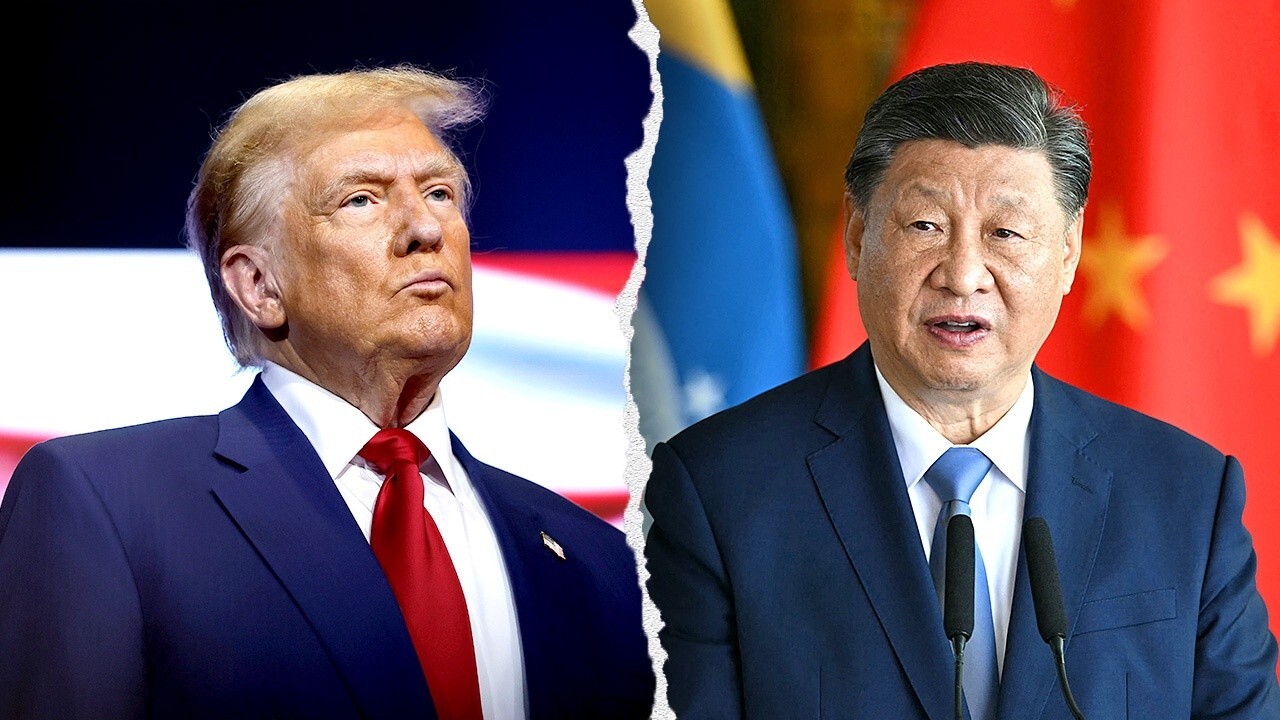
Washington/Beijing: United States President Donald Trump returned to Washington on Friday after completing a closely watched three-day visit to China, describing the trip as “historic” and “highly successful.” However, despite six high-level meetings with Chinese President Xi Jinping, the visit concluded without any formal announcement of a major breakthrough agreement between the world’s two largest economies.
The summit discussions were dominated by sensitive geopolitical and economic issues, including the Iran conflict, Taiwan, trade tariffs, rare earth minerals, artificial intelligence, semiconductor supply chains, and strategic investments. While Trump claimed that several disputes had been addressed and bilateral relations had improved, neither side released concrete details regarding binding agreements.

The visit carried significant global attention as it marked Trump’s first trip to China in nearly nine years, taking place amid escalating geopolitical tensions, uncertainty in global markets, and ongoing trade frictions between Washington and Beijing. Trump was accompanied by a delegation of 17 leading American business executives, fueling expectations of major commercial announcements involving sectors such as aviation, agriculture, technology, and energy.
Despite the anticipation, no official agreements were announced regarding large-scale Boeing aircraft purchases, expanded agricultural imports, semiconductor cooperation, or financial investment frameworks.
Still, both leaders projected a carefully managed image of diplomatic warmth throughout the visit. Chinese authorities rolled out an elaborate state reception featuring ceremonial honors, a formal state dinner, and meetings at the Zhongnanhai leadership compound, signaling Beijing’s interest in maintaining stability in ties with Washington despite ongoing strategic competition.
Following his talks with Xi, Trump claimed in an interview that China had agreed to purchase 200 Boeing aircraft and invest hundreds of billions of dollars in the United States. He also suggested that both sides had found common ground on the Iran crisis, particularly regarding maintaining open maritime routes through the Strait of Hormuz and preventing Tehran from developing nuclear weapons.
According to Trump, Xi expressed willingness to help ease regional tensions and assured that China would avoid supplying weapons linked to the conflict involving Iran. However, Beijing did not publicly confirm those claims. Chinese statements after the meetings focused instead on broader themes of cooperation, regional stability, and peaceful engagement.

Xi also reportedly accepted an invitation to visit the United States later this year, with a tentative visit expected in September.
Trade tensions remained another unresolved issue during the summit. Last year, both nations had agreed to temporarily ease tariff escalation after months of economic friction. Under that arrangement, Washington paused plans for additional tariffs on Chinese goods, while Beijing relaxed some restrictions on exports of critical rare earth materials. Observers had expected the latest summit to produce a fresh trade framework or an extension of tariff relief measures, but no agreement emerged.
Trump also indicated that the United States could reconsider sanctions imposed on Chinese companies accused of purchasing Iranian oil. He said the matter had been discussed with Xi and that a decision could be taken soon. According to energy analytics firm Kepler, Iran exported an average of 1.69 million barrels of oil per day in 2025, with China reportedly purchasing nearly 90 percent of those shipments.
On the Middle East conflict, Trump stated that the recent ceasefire involving Iran was reached partly following requests from Pakistan. He described the move as a diplomatic gesture while reiterating that the United States would continue efforts to prevent Iran from obtaining nuclear weapons capability.
Political analysts say the visit reflected a cautious attempt by both Washington and Beijing to stabilize relations without making major concessions on core strategic disputes. While the summit showcased diplomatic engagement and symbolic gestures, the absence of formal agreements highlighted the deep divisions that continue to shape the increasingly competitive US-China relationship.