- Uttar Pradesh Emerges as the Nation’s No. 1 State in Solar Panel Installation
- *Now, Over 85,000 Homes in Lucknow Are Lit by Solar Energy*
- *UPEX 2026 to be Held in Lucknow from May 7–9*
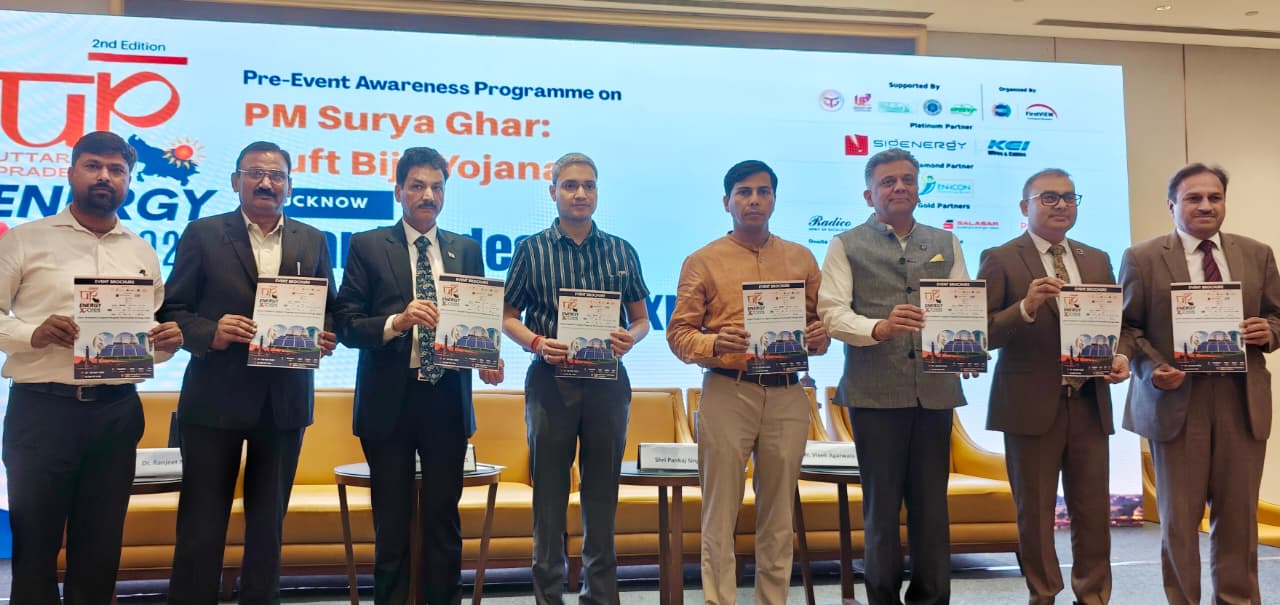
Lucknow: Taking a significant step toward establishing Uttar Pradesh as a major hub for clean energy investment, a pre-event awareness program for the ‘Uttar Pradesh Energy Expo (UPEX) 2026’ was organized today, Friday, at the Hotel Taj in Lucknow.
This initiative is being organized by the UP State Chapter of the PHD Chamber of Commerce and ‘First View,’ in collaboration with UPNEDA (Uttar Pradesh New and Renewable Energy Development Agency), Invest UP—an agency of the Government of Uttar Pradesh—and ‘SEWA.’ It also enjoys the support of Sigenergy, Icon Solar, KEI Industries Limited, SALASAR TECHNO ENGINEERING LIMITED, Polycab India, Sael Industries, Radico Khaitan, Aerem, Phintex India, Slnko Energy, and True Power.

The primary focus of the program was the ‘PM Surya Ghar: Muft Bijli Yojana’ (PM Surya Ghar: Free Electricity Scheme). Industry representatives and government officials participated in the event, engaging in discussions regarding emerging opportunities in the solar energy sector, the existing policy framework, and the growing potential for solar energy development within the state.
Jaswant Singh Saini, Minister of State for Industrial Development in the Government of Uttar Pradesh, emphasized that the India-UK Free Trade Agreement (FTA) would prove to be a transformative force, bringing unprecedented opportunities for skill development and employment for the youth. Addressing the gathering, he stated that the state government is committed to providing a transparent and investor-friendly environment; this is being achieved primarily through the ‘Nivesh Mitra’ portal—a comprehensive ‘single-window’ system designed to streamline processes and resolve issues for industrialists. Describing the FTA as a “golden opportunity,” he stated that if the industrial community focuses on international quality standards and thoroughly understands the provisions of this agreement, they can position the state as a central hub in the global market. Finally, he emphasized that this partnership between India and the UK represents a pivotal step toward a shared future grounded in innovation and sustainable economic integration.
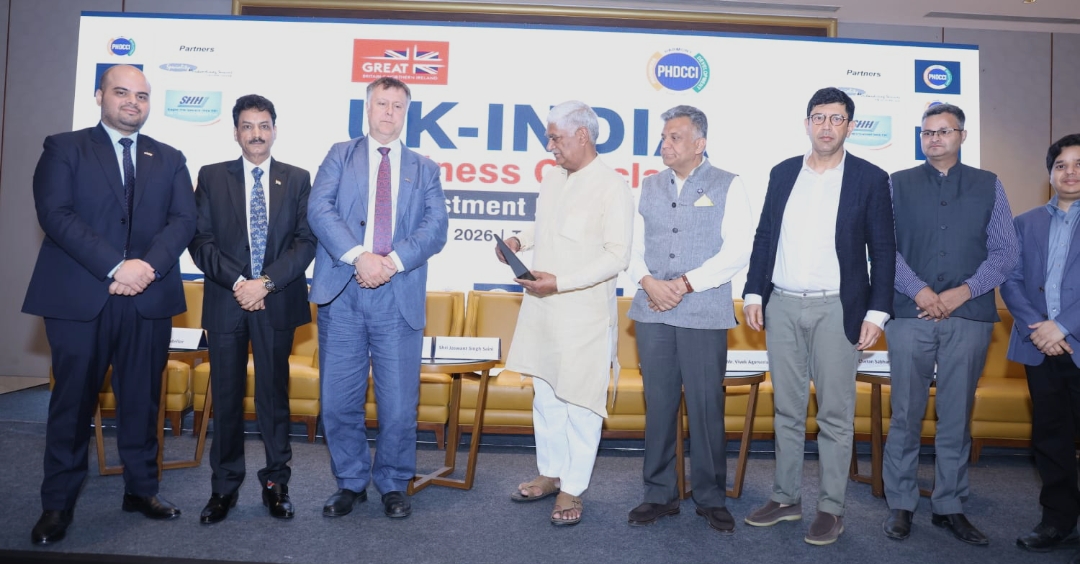
Ben Mellor, the British Deputy High Commissioner to India, emphasized that the robust partnership between India and the UK is built upon continuous dialogue, shared values, and tangible economic impact—particularly within an increasingly complex global landscape where supply chain disruptions have become commonplace. Highlighting the transformative potential of the proposed Free Trade Agreement (FTA), he noted that it is expected to significantly enhance certainty for businesses, facilitate ease of doing business, and unlock new opportunities in sectors such as AI, life sciences, financial services, and green energy. He added that this agreement has the potential to double the bilateral trade volume—estimated at approximately $60 billion in 2024—to reach $120 billion by 2030, while simultaneously generating substantial employment opportunities.
Characterizing India and the UK as trusted, long-term partners, he observed that emerging cities like Lucknow are rapidly evolving into key hubs within this global partnership.
Addressing the gathering, Chief Guest Ravinder Singh, IAS (Director, UP NEDA), stated that promoting renewable energy is absolutely essential for the sustainable development of the state. He highlighted that flagship initiatives such as the ‘PM Surya Ghar Yojana’ and the ‘PM-KUSUM Scheme’ are actively encouraging households, farmers, and industries to adopt solar energy, thereby bolstering energy security. He further stated that under the ‘PM Surya Yojana,’ the total number of solar panels installed in Lucknow had exceeded 85,000 by April 15. Uttar Pradesh ranks as the country’s number one state in terms of solar panel installations. He emphasized the need to organize such solar energy-based awareness programs across the state at regular intervals to ensure a sustained increase in the installation of solar panels. He identified end-users, vendors, banks, and the electricity department as the four pillars of green energy.

Welcoming the participants to the awareness program, Dr. Ranjit Mehta, CEO and Secretary General of PHDCCI, highlighted Uttar Pradesh’s growing economic prowess. He noted that the state is home to a population exceeding 230 million, and consumption is rising rapidly within its new urban centers. He added that increasing purchasing power—coupled with the state’s robust MSME base, ODOP products, and GI-tagged goods—positions Uttar Pradesh as a competitive and reliable market for global partnerships. Emphasizing the need to translate intentions into action, he called for deeper collaboration between India and the UK, particularly in sectors such as Compressed Biogas and agro-based energy, where the UK’s technical expertise could facilitate the generation of energy from agricultural waste.
Co-Chairman Vivek Agarwal highlighted India’s agility. He described India as a rapidly learning and adaptable economy, bolstered by a vibrant ecosystem of entrepreneurs and innovators. He further noted that significant opportunities exist in sectors such as green energy, fintech, and agro-processing, where the UK’s research prowess and precision can effectively complement India’s scale and skill base.
Chetan Sabbarwal, Co-Chairman of the Uttar Pradesh Chapter of PHDCCI, shed light on the evolving landscape for Indian exporters, particularly within the garment sector. He pointed out that Indian manufacturers have long competed with suppliers from China, Bangladesh, Cambodia, and Vietnam—often facing a tariff disadvantage of 10–12%, particularly in the garment industry. However, the India-UK Free Trade Agreement (FTA) has now paved the way for zero-duty access.
Alok Dwivedi, Joint DGFT (Director General of Foreign Trade) at the Ministry of Commerce and Industry, elaborated on the government’s efforts to strengthen India’s export ecosystem through streamlined policies and digital platforms. He explained that the DGFT serves as the implementing arm for export promotion, offering schemes such as the Export Promotion Capital Goods (EPCG) scheme and Duty Credit Scrips, while also collaborating with Export Promotion Councils to facilitate trade and mitigate procedural challenges for exporters.
Parag Mishra, Conference Convener for UPEX 2026, announced that this expo would showcase cutting-edge technologies related to rooftop solar systems, large-scale solar projects, Commercial and Industrial (C&I) solutions, electric vehicles, smart grids, and energy storage.
Dr. Jatinder Singh, Deputy Secretary General of PHDCCI, and Mr. Atul Kumar Srivastava, Senior Resident Director of PHDCCI, were notably present at the event.