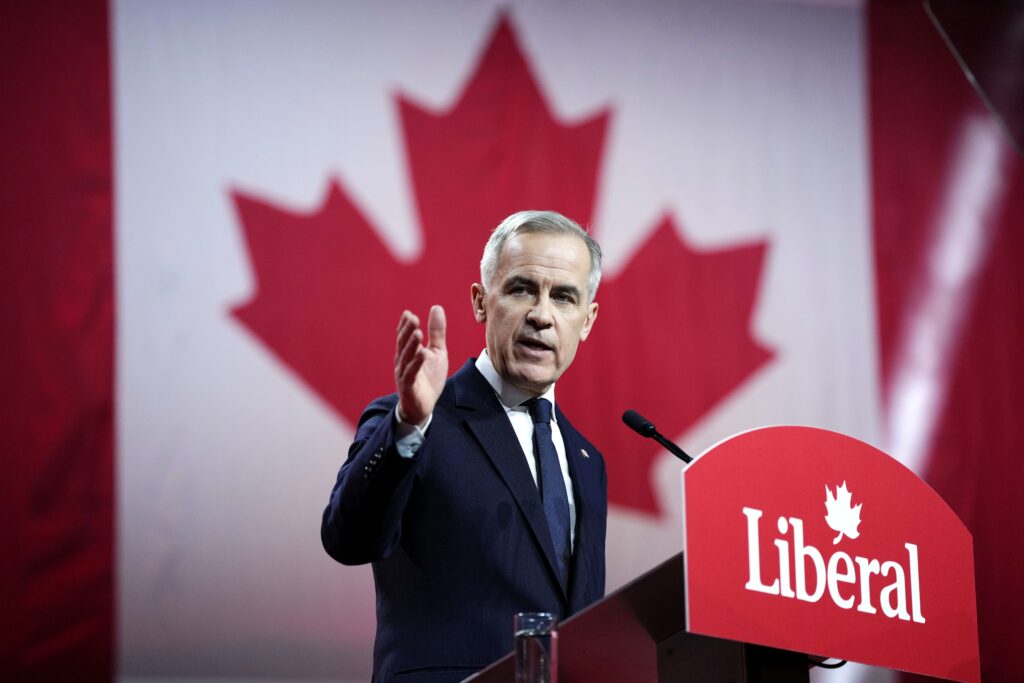
Ottawa: Mark Carney has signaled a major recalibration of Canada’s economic strategy as rising tariffs and shifting trade policies in the United States place pressure on long-standing cross-border economic ties.
In a recent video message titled “Forward Guidance,” Carney said Canada can no longer assume the stability of its traditional trade relationship with the United States, describing the current moment as a turning point for national economic planning.
Strained Canada–US trade relationship
The evolving trade environment has exposed vulnerabilities in deeply integrated supply chains between the two countries. Industries such as automotive manufacturing, steel production, and lumber exports are among the hardest hit, as new tariff measures disrupt long-established trade flows.
Since early 2025, the United States has introduced steep tariffs on Canadian goods, including duties of up to 25 percent across multiple categories and significantly higher rates—reportedly reaching 50 percent—on steel and aluminum products. These measures have created uncertainty for manufacturers, exporters, and investors on both sides of the border.
Economic impact and industry concerns
Businesses in affected sectors are increasingly cautious, with many delaying expansion and investment decisions amid unclear trade conditions. Workers in export-dependent industries are also facing growing uncertainty as cost pressures and reduced competitiveness begin to filter through the economy.
Carney emphasized that the effects extend beyond immediate trade losses, warning that prolonged instability could reshape long-term economic planning and industrial strategy.
Push for diversification and new trade alliances
In response, Canada is accelerating efforts to diversify its global trade relationships. The government has reportedly secured 20 new trade agreements over the past year, spanning partners in Europe, Asia, and other emerging markets. The objective is to reduce reliance on a single trading partner and broaden export opportunities.

At the domestic level, Ottawa is also working to streamline internal trade barriers between provinces in an effort to create a more unified national market and improve business efficiency.
Investment focus and clean energy transition
A central pillar of the revised strategy is attracting foreign investment, particularly in innovation-driven and sustainability-focused sectors. Canada is positioning itself as a stable destination for global capital, with a strong emphasis on clean energy expansion.
Officials say increasing clean energy capacity is both an environmental and economic priority, designed to strengthen resilience against global trade disruptions while supporting long-term growth.
Shift in economic assumptions
Carney stressed that Canada must move beyond outdated assumptions about automatic trade stability with its southern neighbor. He acknowledged that restructuring the country’s economic framework will take time and sustained policy effort, with ongoing updates expected from the government.
Political undertones and public reaction
Recent political remarks in the United States suggesting closer integration between the two countries have added to public sensitivity in Canada, reinforcing concerns about sovereignty and economic independence. However, Canadian policymakers maintain that the focus remains firmly on protecting national economic interests.
Outlook
Canada’s evolving approach reflects broader global shifts in trade and geopolitics, where countries are increasingly diversifying partnerships to reduce dependence and build resilience. As tariff pressures persist, Ottawa’s strategy signals a long-term pivot toward a more multipolar trade framework and a stronger domestic economic foundation.