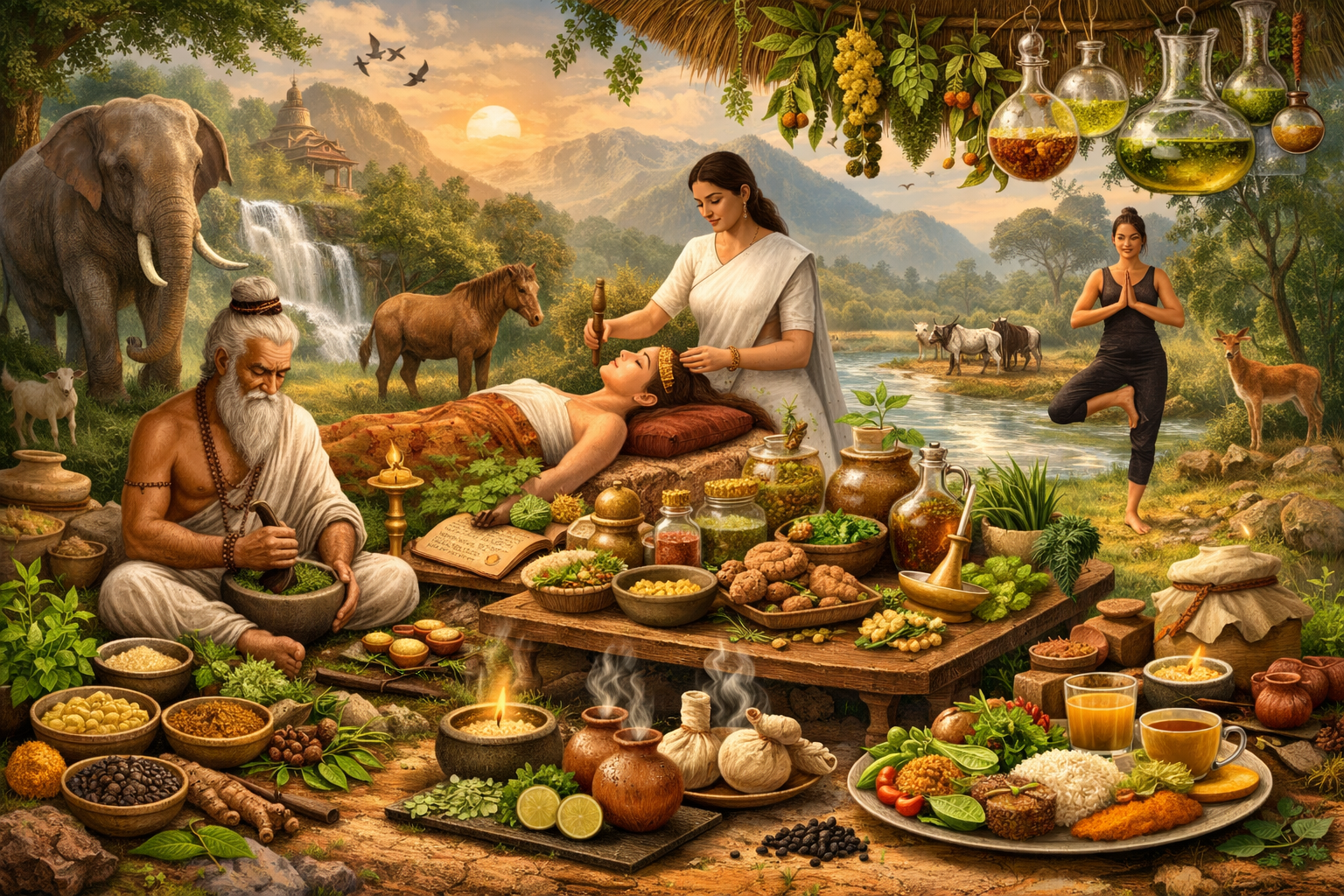
Lucknow: Ayurveda is our ancient science of medicine and well-being. It is a result of great experience of many physicians over a long period and combines the sciences of botany, physiology and medicine. In a country endowed with a wide range of geographical landscapes and rich natural vegetation, the knowledge of herbs, minerals and extraction of medicines have been perfected over centuries since ancient times. A keen observation of animal species, both domesticated and wild ones in their natural habitat, has led to further developments in applied medicine. India was well known in veterinary sciences also, as cattle, sheep, fowl, horses and elephants were valued in animal husbandry as well as in use for military purposes.
Ayurveda best embodies the Indian way of life that advocates being in harmony with nature. As a holistic system, it focuses on disease prevention through proper diet, exercise, and lifestyle choices, empowering individuals to manage their own health. Proper diet, habits and sleep enable one to live a healthy, happy and long life. It also enables early detection and treatment of diseases.

Food is basic to our life. Following three principles on what constitutes good food, Ayurveda says that it should be tasty to promote enjoyment and well-being, nutritious to provide all the required nutrients and acid-free to aid digestion and prevent allergies. Healthy cooking practices should use natural substances to maintain balance in the body. Ayurveda advocates freshly cooked meals and avoiding excess oil. Deep frying is kept at a minimum and the use of healthy natural fats such as mustard oil, ghee and coconut oil are recommended. The knowledge of fatty liver was well understood and suitable steps to prevent and even cure such maladies are advised. Lifestyle issues such as high blood pressure and diabetic tendencies were also known and addressed. Many hidden health problems were recognised from the physical appearance of the person and the steps to cure the ailments were recommended. Stale food is believed to lack praana (life force) and contribute to health problems such as depression and malnutrition.
For people requiring weight reduction, avoiding fried foods and sugary drinks were advocated, a healthy, brisk lifestyle being the safest and surest means to good health. Moderation in food intake is always suggested. Even sweet fruits should be had in moderation; juices are not recommended as they are devoid of fibre. Modern agriculture promotes genetically modified fruits and vegetables which may score well in terms of size and taste but lack the nutrients of indigenous varieties grown on natural manure.
The impact of seasonal changes on the health as well as the food items were well understood and Ayurveda advocates changes in food habits according to the hot or cold weather. The regional variations are also important and traditional diets for different times of the year, often connected with festivals, reflect this awareness and experience. The combination of specific foods plays an important role in the therapeutic importance of diet, which is an important part of Ayurveda. For example, black pepper helps the body absorb turmeric’s beneficial properties. Many aromatic compounds in herbal extractions are fat-soluble, which makes ghee an important ingredient in Ayurvedic medicines. Again there are many compounds which are alcohol-soluble or work effectively in an alkaline solution and hence fermentation is a preferred manner of preparation in Ayurvedic medicines. So it is not only the knowledge of nutrition, but the practical application that improves absorption by the body should be taken into account.
A unique feature of Ayurveda is that treatment is personalized or tailored to individual requirements of the patient. The body type – whether it is ‘vaata’, ‘pitta’ or ‘kapha,’ and the specific factors are taken into account while prescribing medicines and dosage. The dietary requirements are also given importance in planning the schedule. Proper sleep patterns are also recommended. Invariably, Western medicine does not take into account a holistic view as compared to Ayurveda.

Ayurveda encourages practices to cultivate inner peace and joy. True health includes mental and emotional well-being also and not just physical well-being. Chronic unhappiness is detrimental to good health and can negatively affect the body.We can say that aarogya is absence of disease whereas svaasthya is a state of complete well-being. Modern medicine may address aarogya but not necessarily svaasthya. Thus Ayurveda emphasizes the connection between happiness and health.
Team Siddhanta Knowledge Foundation