State to Support Chambers of Over 10,000 Lawyers; Welfare Fund to Rise to ₹5 Lakh
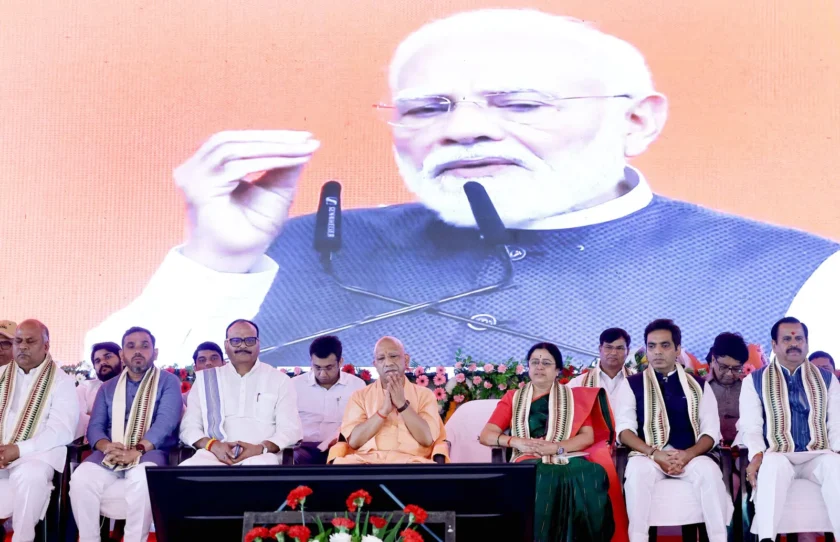
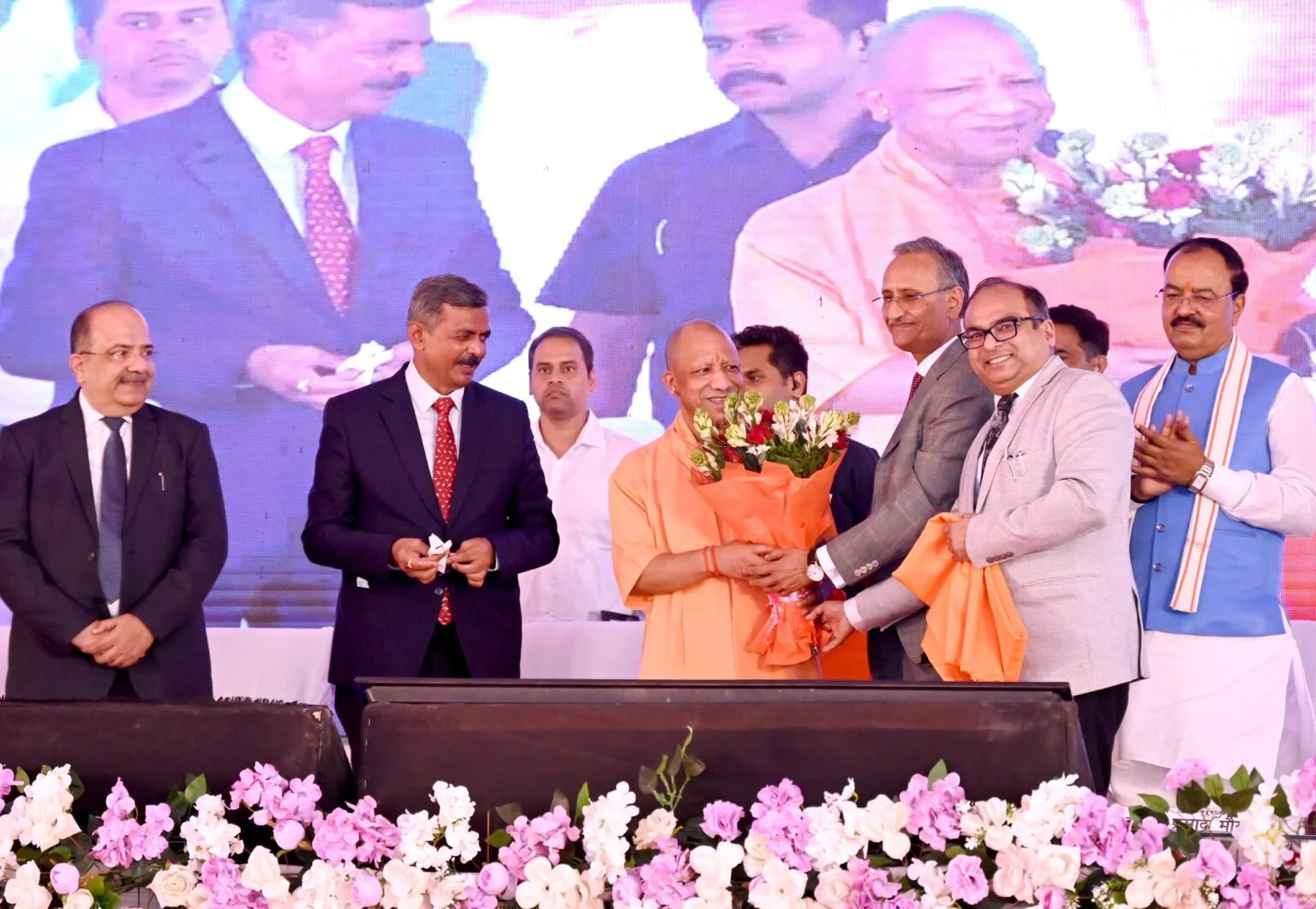
Lucknow: The Uttar Pradesh government has announced a series of welfare measures for advocates, including annual cashless medical insurance coverage of up to ₹5 lakh for active lawyers practising in the state’s High Court and district courts. Chief Minister Yogi Adityanath made the announcements during a felicitation ceremony organised by the Allahabad High Court Bar Association in Prayagraj, where he also unveiled plans to support furniture and equipment for advocates’ chambers, increase the advocate welfare fund and provide tablets to 400 state law officers.

Addressing the gathering, the Chief Minister called upon members of the legal fraternity, particularly young advocates, to become guardians of constitutional values and play a meaningful role in ensuring that justice reaches people at the grassroots. He said that a future-ready Bar was essential for building a future-ready justice system and stressed the importance of strengthening the relationship between the Bar and the Bench.
Under the announced healthcare initiative, all active advocates practising in the High Court and district courts of Uttar Pradesh will be eligible for cashless medical insurance of up to ₹5 lakh annually. The measure is aimed at providing greater financial protection to members of the legal profession against medical expenses. The government is expected to work out the implementation framework and eligibility details for the scheme.
The Chief Minister also announced that the government would extend support for furniture and essential equipment in the chambers of more than 10,000 advocates. He said that proposals submitted through the judiciary or the Bar Association under the guidance of the Chief Justice would receive cooperation from the state government. The announcement came in the context of ongoing efforts to improve working conditions and infrastructure for lawyers.
Another major decision concerns the advocate welfare fund. Yogi Adityanath announced that the welfare fund amount would be increased from ₹1.5 lakh to ₹5 lakh. He also raised the age limit for the eligibility of financial assistance to the families of deceased advocates from 60 to 70 years. The measures are intended to provide enhanced social and financial security to advocates and their dependants.
The government further announced that 400 state law officers would be provided tablets to support their professional work and access to digital resources. The fees of state law officers have also been increased by more than 50 per cent, according to the Chief Minister. The initiatives reflect the government’s stated focus on modernising legal services and strengthening the professional support available to those working in the justice system.
The announcements were made during a programme that coincided with Hindi Diwas, Hartalika Teej and Ganesh Chaturthi. Extending greetings to the people of Uttar Pradesh, Yogi Adityanath described the occasion as significant and used the gathering to reflect on the contribution of advocates to the country’s democratic and constitutional development.
Highlighting the historical role of the legal fraternity, the Chief Minister said that advocates had been an important part of India’s intellectual and public life. From the freedom movement and the making of the Constitution to the functioning of democratic institutions and the nation-building process, lawyers had contributed significantly to the country’s progress.
He referred to the contributions of prominent legal figures and freedom fighters, including Mahatma Gandhi, Pandit Motilal Nehru, Mahamana Madan Mohan Malaviya, Sardar Vallabhbhai Patel and Dr B.R. Ambedkar. He noted that Prayagraj and the Allahabad High Court had been associated with several advocates who combined their legal practice with active participation in the freedom struggle.
The Chief Minister also recalled the contribution of Dr Rajendra Prasad, India’s first President and Chairman of the Constituent Assembly, to the country’s constitutional journey. Referring to Prayagraj’s historical and cultural significance, he said that the state government had decided to establish Dr Rajendra Prasad National Law University in the city in recognition of his contribution to the Constitution and the nation.
Yogi Adityanath stressed that the Bar and the Bench were two important wheels of the chariot of justice. He said that mutual respect, courtesy, dialogue, coordination and cooperation between advocates and judges were essential for the effective administration of justice. Better communication between the two institutions, he added, would help strengthen the justice delivery system and make democracy more mature.
The Chief Minister said that discussions between the Chief Minister and the Chief Justice covered not only judicial matters but also issues concerning the welfare and working conditions of advocates. He noted that the Chief Justice, as the guardian of the judiciary, also placed the concerns of the legal fraternity before the government to facilitate solutions.
Reflecting on the challenges faced by Uttar Pradesh before 2017, Yogi Adityanath said that the state had struggled with vacancies in the police force, shortcomings in infrastructure and concerns relating to transparency, accountability and law and order. He said that the government had since taken steps to improve the functioning of the police and justice delivery institutions.
According to the Chief Minister, police training capacity in the state had increased from 3,000 to 60,000 personnel annually. He also referred to the condition of police barracks and basic facilities, stressing that personnel expected to protect citizens around the clock should be provided with adequate working and living conditions.
He said that the condition of subordinate courts had also been a major concern, with courts in several districts operating from temporary or rented buildings. The government had taken steps to improve judicial infrastructure, strengthen witness protection and modernise the process of bringing accused persons from jails to courts.

The Chief Minister said that better coordination between the executive and judiciary had produced improvements in the justice system. He referred to police-prosecution coordination, online prosecution platforms, timely filing of charge sheets and the use of scientific evidence in court proceedings. District courts and jails, he said, had been connected through high-speed internet and video conferencing facilities.
He also mentioned the use of the Nyay Shruti system for recording testimony virtually, along with the ongoing scanning and digitisation of court documents. These measures, he said, were intended to improve efficiency, reduce delays and strengthen access to justice.
Yogi Adityanath said that the construction of integrated court complexes in 10 districts was progressing rapidly. He credited Chief Justice Arun Bhansali with efforts to advance the project. The proposed complexes would bring various judicial functions under one roof and include facilities such as residences for judicial officers, advocates’ chambers, sports and indoor stadium facilities and affordable canteens for lawyers.
He also stated that fast-track courts had been expanded to promote speedy justice, with approval granted in the first phase for the establishment of 900 district-level courts.
The Chief Minister highlighted the development of advocates’ chambers in Prayagraj, stating that facilities for more than 10,000 advocates had been created at a cost of approximately ₹700 crore. The infrastructure includes multilevel parking, dining halls, common rooms and libraries. Funding has also been provided for advocates’ chambers at the district level, with projects completed or under construction in districts including Kaushambi, Lucknow, Kasganj and Shravasti.
He said that the government would extend further assistance for furniture and equipment in the chambers, subject to proposals submitted through the appropriate judicial or Bar Association channels. The announcement is expected to provide additional support to advocates working in the High Court complex.
Emphasising the importance of public confidence in the justice system, the Chief Minister said that the greatest strength of the judiciary was the trust of ordinary citizens. He stressed that the judiciary, executive and legislature could meet the standards of democracy only when people had confidence in the institutions.
Timely justice, impartial hearings, equal treatment before the law and transparency, he said, were essential to maintaining that trust. He also urged advocates to remain sensitive to the circumstances of litigants and recognise that their professional efforts could influence the lives and future of individuals seeking justice.
The Chief Minister noted that the implementation of three new criminal laws introduced under the leadership of Prime Minister Narendra Modi had created the need for extensive training among members of the legal profession. He appreciated the efforts of the Bar in adapting to the new legal framework and encouraged advocates to remain prepared for emerging challenges.
He said that developments in cybercrime, artificial intelligence, data privacy, digital commerce, fintech, intellectual property and climate litigation were creating new opportunities and challenges for the legal profession. Advocates, he added, would need to develop a deeper understanding of technology, the changing economy and evolving social conditions to remain effective in the modern justice system.
Calling upon the younger generation of lawyers to carry forward the rich legacy of the Allahabad High Court, Yogi Adityanath said that professional success should not be their only objective. He urged them to uphold constitutional values, remain socially responsible and contribute to strengthening public faith in justice.
Deputy Chief Minister Keshav Prasad Maurya, speaking at the event, described Prayagraj as a land associated not only with the Sangam but also with justice and the legal profession. He praised the contribution of advocates to the protection of democracy and said that the government and the legal fraternity shared the responsibility of ensuring justice for citizens.
Maurya said that efforts were being made to promote ease of justice and modernise the legal system. Referring to the replacement of older colonial laws, he said that the government’s policy was clear: the innocent would not be harassed and the guilty would not be spared.
The felicitation ceremony was attended by Allahabad High Court Chief Justice Arun Bhansali, senior judge Justice Arindam Sinha, Deputy Chief Minister Keshav Prasad Maurya, Jal Shakti Minister Swatantra Dev Singh, Industrial Development Minister Nand Gopal Gupta Nandi, Advocate General Ajay Mishra, Allahabad High Court Bar Association President Rakesh Pandey and General Secretary Akhilesh Kumar Sharma, among others.
The announcements at the ceremony underline the Uttar Pradesh government’s stated efforts to improve the welfare of advocates, modernise legal infrastructure and strengthen coordination between the judiciary and the executive. With enhanced medical insurance, a larger welfare fund, support for chambers and digital resources for law officers, the measures are expected to provide greater institutional and professional support to the legal fraternity across the state.