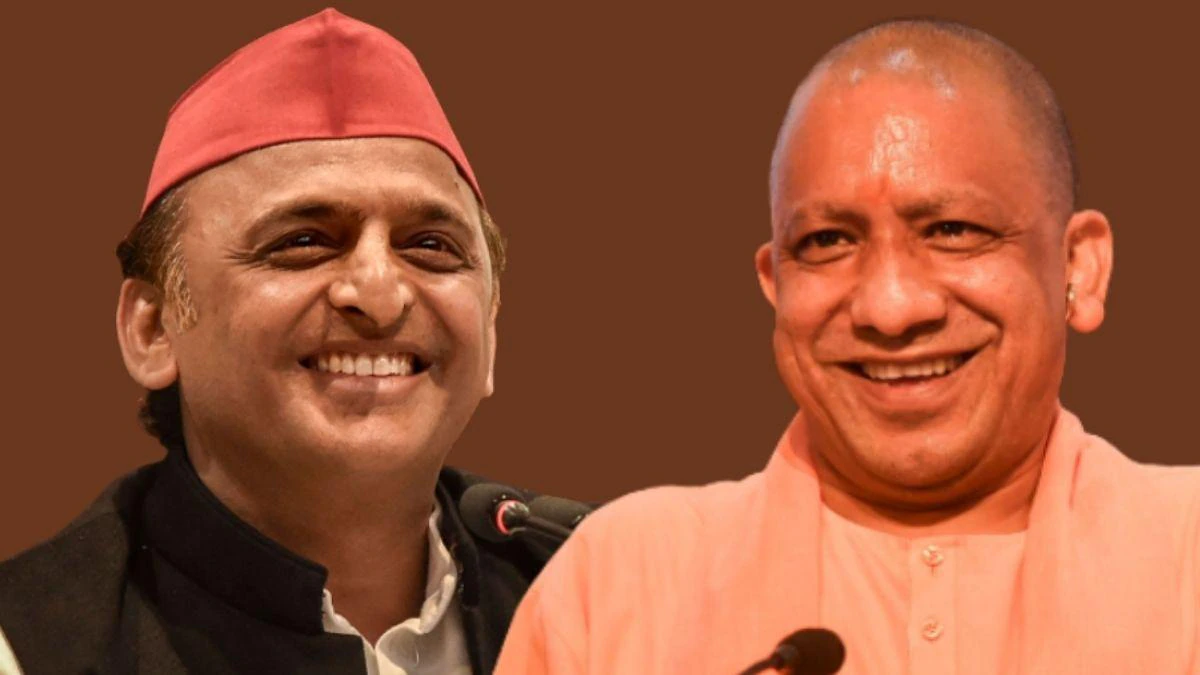
Lucknow: Political activity in Uttar Pradesh is gathering momentum ahead of the 2027 Assembly elections, with a reported challenge between Chief Minister Yogi Adityanath and Samajwadi Party president Akhilesh Yadav over contesting from Ayodhya adding a new dimension to the state’s political contest.
The exchange has intensified speculation over whether Ayodhya could emerge as a high-profile battleground in the upcoming elections, with both leaders using the constituency to challenge each other’s political standing.

The controversy reportedly began after Akhilesh Yadav visited Ayodhya and alleged that the ruling Bharatiya Janata Party (BJP) was conducting repeated surveys because it was struggling to identify a suitable candidate for the constituency following the Samajwadi Party’s announcement of its nominee. He challenged Yogi Adityanath to contest from Ayodhya, questioning the BJP’s confidence in its electoral prospects.
Yogi responded by challenging Akhilesh to contest from the same constituency, suggesting that both leaders should file their nominations and test their political strength against each other. Akhilesh subsequently indicated that the Samajwadi Party could defeat the BJP through its young PDA representatives, referring to the party’s political coalition of Pichhda, Dalit and Alpsankhyak (backward classes, Dalits and minorities).
However, a direct contest between the two leaders from Ayodhya has not been established, and their eventual constituency choices remain to be seen.
Candidate selection to test party organisations
The nomination process is expected to present significant organisational challenges for political parties as they prepare for the Assembly elections. Candidate selection, internal rivalries and dissatisfaction among leaders denied tickets could trigger defections, rebel candidatures and attempts to undermine official nominees.
Both the BJP and the Samajwadi Party will need to maintain organisational discipline while accommodating competing local interests. The management of sitting legislators’ candidatures and the induction of new faces could become particularly sensitive issues as the election approaches.
Candidates must also comply with electoral requirements while filing nomination papers and affidavits disclosing assets, liabilities, educational qualifications and criminal cases, where applicable. Inaccuracies or omissions may invite scrutiny and can result in rejection if the relevant legal requirements are not met.
Security and misinformation pose additional challenges
Maintaining law and order around nomination centres will be another major responsibility for district administrations and police authorities. Large crowds, vehicle convoys and competing political demonstrations can create congestion and increase the risk of clashes between rival groups.


Authorities may need to deploy additional police personnel, use CCTV surveillance and enforce restrictions to ensure that nominations are filed peacefully and in accordance with election rules.
The circulation of misleading information on social media about election schedules, nomination dates and procedures could also complicate preparations. Timely clarification by election authorities will be essential to prevent confusion among candidates and voters.
BJP faces anti-incumbency challenge
Having secured two consecutive Assembly election victories, the BJP will seek to defend its position while addressing possible anti-incumbency sentiment. The selection of candidates will be a crucial test, particularly if sitting legislators are replaced or denied tickets.
Managing internal dissatisfaction while communicating the government’s achievements will be important to the party’s electoral strategy.
The Samajwadi Party, meanwhile, will seek to strengthen its position through its PDA strategy, which focuses on backward classes, Dalits and minorities. Its challenge will be to translate this social coalition into effective grassroots mobilisation and electoral support while balancing representation and local political considerations during candidate selection.
Ayodhya’s symbolic significance adds to the contest
Ayodhya occupies a prominent place in Uttar Pradesh’s political landscape, making the reported exchange between Yogi Adityanath and Akhilesh Yadav particularly significant. A direct contest between the two leaders, if it materialises, would attract considerable national attention.
The broader electoral battle, however, will depend on several factors, including candidate selection, local issues, governance, social coalitions and voter sentiment across the state.
As preparations for the 2027 Assembly elections gather pace, both the BJP and the Samajwadi Party face the task of strengthening their organisations and maintaining public confidence. Whether Ayodhya becomes the centre of a direct contest between the two leaders remains uncertain, but the exchange has added a high-profile dimension to the emerging political battle in Uttar Pradesh.












 https://www.youtube.com/watch?si=RtToJsBhYBatUrym&v=mOuYNSdhjHA&feature=youtu.be