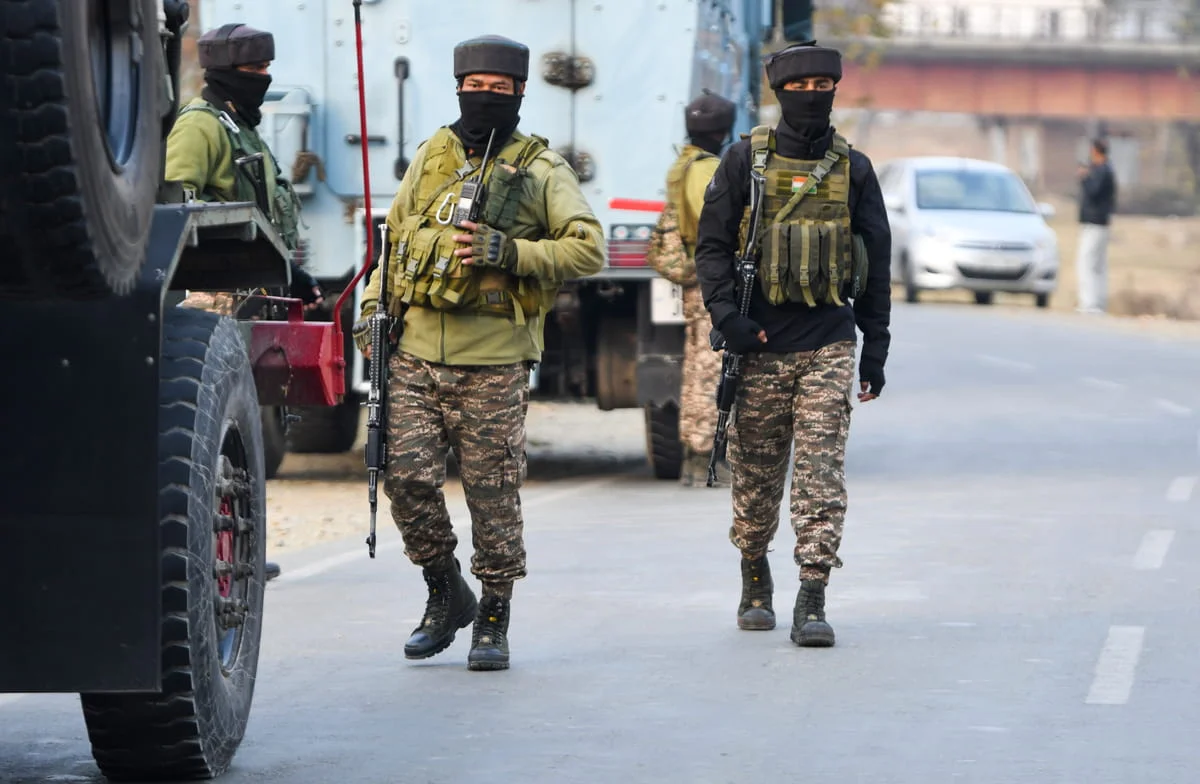
New Delhi: The recent terrorist attack on a Central Reserve Police Force (CRPF) checkpoint in the Akhran area of Mir Bazar in Jammu and Kashmir’s Kulgam district has renewed calls for a stronger Indian response against cross-border terrorism and the infrastructure allegedly supporting militant groups in Pakistan.
The attack, in which three personnel of the CRPF’s 46th Battalion were injured, involved motorcycle-borne assailants who reportedly fired around 30 rounds within 15 seconds before fleeing. The injured personnel retaliated despite their injuries, forcing the attackers to escape.

The incident, which coincided with a scheduled visit by the Jammu and Kashmir Lieutenant Governor to Kulgam for an official programme, has raised concerns over attempts to disrupt security and create fear among local residents and tourists.
The attack has also drawn attention to Pakistan’s internal challenges, including economic instability, insurgency in Balochistan, militant violence in Khyber Pakhtunkhwa and public protests in Pakistan-occupied Kashmir (PoK).
Pakistan’s Internal Crisis and Cross-border Terrorism
Pakistan continues to face economic pressures, political instability and security challenges on multiple fronts. The Tehreek-e-Taliban Pakistan (TTP) has intensified attacks in parts of the country, while Baloch insurgent groups have targeted security forces and strategic installations.
Public protests in PoK over electricity shortages, rising prices and demands for basic rights have added to the country’s domestic difficulties.
Against this backdrop, the article argues that elements within Pakistan’s military establishment and intelligence apparatus continue to use anti-India rhetoric and support cross-border terrorism to divert attention from domestic problems.
Calls for a Stronger Counterterrorism Strategy
India’s previous responses to major terror attacks, including the surgical strikes following the Uri attack and the Balakot airstrike after Pulwama, are cited as examples of its willingness to take military action against terrorist infrastructure.


The article argues that India’s counterterrorism policy should combine stronger intelligence gathering, diplomatic pressure and appropriate security measures against terrorist networks operating across the border.
It also calls for greater international attention to alleged human rights violations in Balochistan and PoK, along with the grievances of people living in these regions.
Strengthening Security Within Kashmir
The attack has also highlighted the need to strengthen intelligence networks and identify militant support structures within Jammu and Kashmir.
Security agencies need to improve local intelligence gathering and take legal action against individuals found to be providing logistical or financial assistance to terrorist organisations.
The central message is that India must maintain a firm response to cross-border terrorism while ensuring that security operations effectively dismantle the networks responsible for attacks.
The Kulgam incident has once again brought the security situation in Jammu and Kashmir into focus, with calls for a sustained strategy to protect security personnel, civilians and the region’s return to normalcy.











 https://www.youtube.com/watch?si=RtToJsBhYBatUrym&v=mOuYNSdhjHA&feature=youtu.be