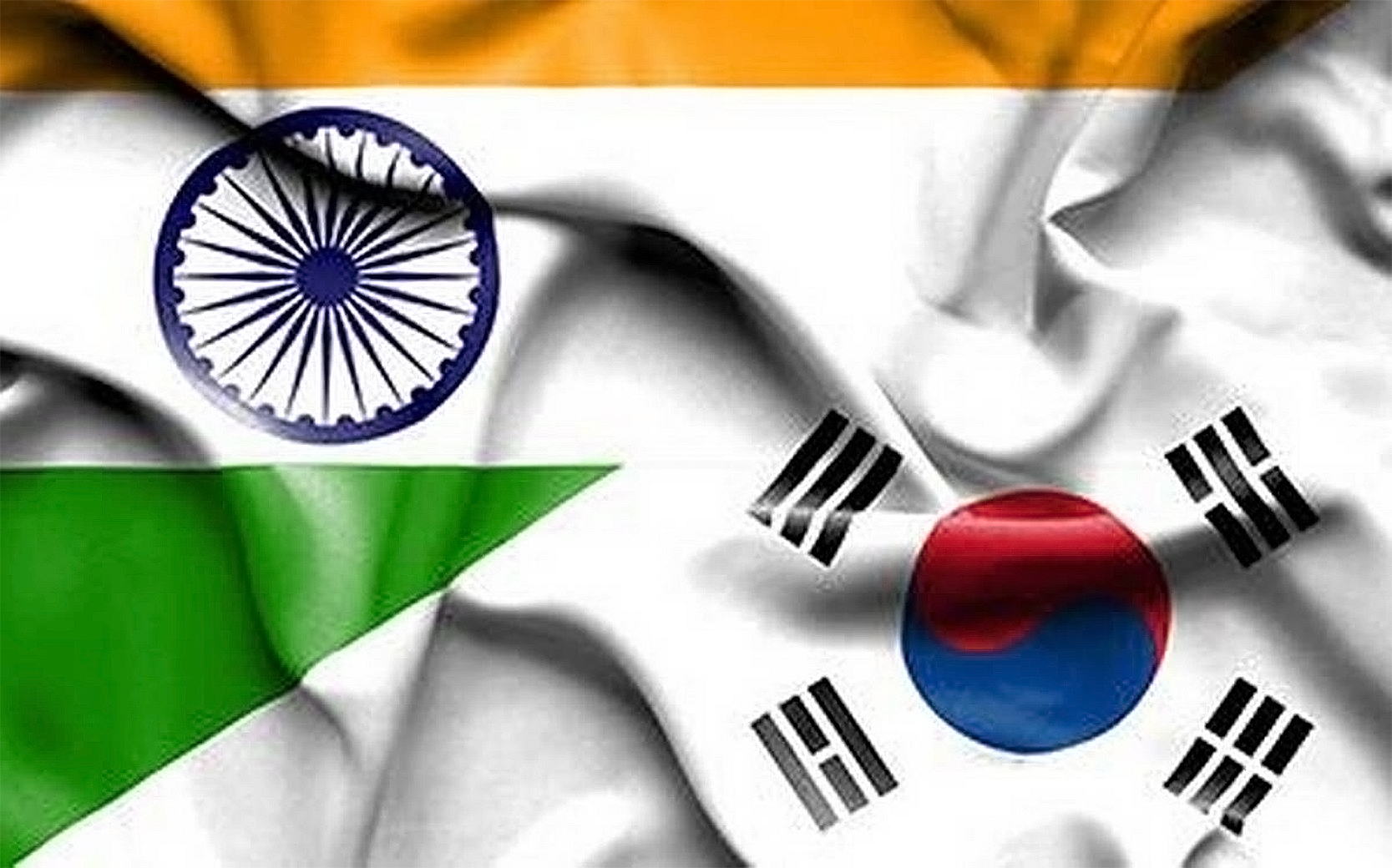
New Delhi: Relations between India and South Korea are entering a new phase of strategic importance, shaped by evolving geopolitical realities, economic opportunities, and technological collaboration.
Shared Values and Growing Strategic Alignment
Both nations, rooted in democratic values and committed to economic growth and regional stability, are finding greater convergence in their global outlook. Changing power dynamics in Asia, supply chain disruptions, and rising competition in the Indo-Pacific have created fresh opportunities for closer cooperation.

Diplomatic ties between the two countries were formally established in 1973 and have steadily strengthened over the decades. In 2010, the relationship was elevated to a strategic partnership, later upgraded to a “Special Strategic Partnership,” reflecting deepening trust and long-term commitment.
Cultural and Historical Connect
Beyond modern diplomacy, India–South Korea ties are anchored in historical and cultural linkages. The legend of Queen Heo Hwang-ok, believed to have origins in Ayodhya, continues to symbolise the civilisational bond between the two nations. This shared heritage supports expanding cultural exchanges, tourism, and people-to-people connections.
Expanding Economic Engagement
South Korea remains a key economic partner for India, with strong investments across sectors such as electronics, automobiles, steel, shipbuilding, and infrastructure. Major Korean companies have established a significant presence in India, contributing to manufacturing and employment.
Bilateral trade between the two countries has reached approximately $27 billion in recent years, though experts believe this remains below its full potential. While India offers a vast consumer market and a young workforce, South Korea brings advanced technology and industrial expertise.
Government initiatives like Make in India, Digital India, and green energy transitions present opportunities for deeper collaboration, particularly in high-growth sectors.
Challenges in Trade and Investment
Despite the progress, certain challenges persist. The Comprehensive Economic Partnership Agreement (CEPA), implemented in 2010, has not fully delivered expected outcomes. Issues such as non-tariff barriers, regulatory complexities, and market access limitations continue to hinder trade expansion.
Addressing these concerns through policy reforms and improved market access will be key to unlocking the partnership’s full economic potential.
Supply Chains and Emerging Opportunities
Global supply chain realignments, especially efforts to reduce dependence on single-country manufacturing hubs, are opening new avenues for cooperation. South Korean firms are increasingly looking at India as a viable production base.
Sectors such as semiconductors, batteries, electric vehicles, defence manufacturing, and shipbuilding are expected to drive future collaboration. Joint ventures and technology transfers could significantly boost India’s manufacturing capabilities while offering Korean firms strategic advantages.

Defence and Security Cooperation
Strategically, both countries share an interest in maintaining a free, open, and inclusive Indo-Pacific region. While South Korea’s primary security focus remains on North Korea and its alliance with the United States, there is growing scope for cooperation with India in areas such as maritime security, cyber defence, and counter-terrorism.
South Korea’s advanced defence manufacturing capabilities align well with India’s push for self-reliance in defence production, creating opportunities for joint development and research.
Technology and Innovation Partnership
Technology is emerging as a central pillar of bilateral relations. South Korea is a global leader in sectors like semiconductors, robotics, and telecommunications, while India is rapidly advancing in software, digital innovation, and startups.
Collaboration in areas such as artificial intelligence, 5G and 6G technologies, green energy, and electric mobility could position both countries as key players in the global tech landscape.
Education and Cultural Exchange
Educational cooperation is also gaining traction, with increasing opportunities for student exchange, research collaboration, and skill development. Indian students are exploring higher education in South Korea, while Korean students are showing interest in India’s cultural and academic offerings.
Culturally, the growing popularity of Korean music, films, and television in India, along with rising interest in Indian traditions like yoga and cuisine in South Korea, is strengthening mutual understanding.
Looking Ahead
Experts suggest that both countries should move beyond formal engagements and focus on actionable collaboration. Simplifying investment processes, setting clear trade targets, and fostering innovation partnerships could significantly enhance bilateral ties.
With the right policy direction, bilateral trade could surpass $50 billion by 2030, making the partnership a key pillar of regional and global stability.
A Partnership for the Future
India and South Korea today stand at a crucial juncture, with immense potential to shape a mutually beneficial and forward-looking partnership. As global uncertainties continue, stronger cooperation between the two nations could contribute not only to their own growth but also to broader stability and prosperity in Asia and beyond.